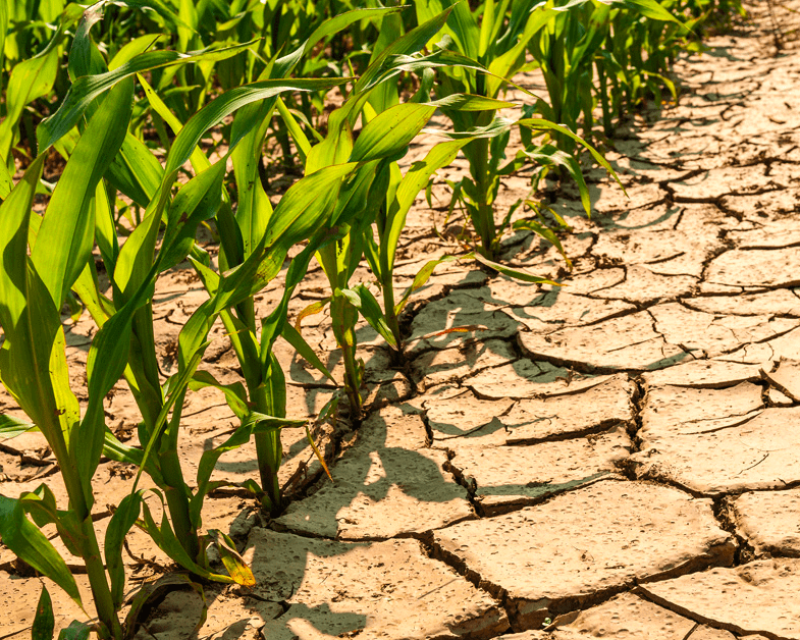

Promoting smart agriculture is one step nations can take to help mitigate the negative effects of farming on the climate, Nigerian scientists say.
Climate change is upon us, and its impacts are getting more severe with each passing year. Global actions to slow climate change are promising, but insufficient. Experts across the planet have underscored the need for the world to invest in a massive effort to adapt to conditions that are now inevitable: higher temperatures, rising seas, fiercer storms, unpredictable rainfall patterns and more acidic oceans.
Nigerian scientists have added their voices to the millions who are calling for decisive actions to mitigate the negative effects of climate change. The scientists are emphasizing that biotechnology has a role to play in conserving the environment and tackling the enormous climate challenges.
Prof. Celestine Aguoru, a plant biotechnologist and president of Nigeria’s National Biotechnology and Biosafety Consortium (NBBC), told the Alliance for Science that promoting smart agriculture is one step nations can take to help mitigate the negative effects of farming on the climate. Biotechnology can help advance climate friendly agriculture, he noted.
“Smart agriculture means planting more on less land,” Aguoru said. “Arable land is fast depleting as the world’s population becomes larger. So, there is urgent need to deal away with the old practice of tilling land to farm, which is quite inefficient and detrimental to the environment. What we need to do more is employ safe technologies like biotechnology, which enable farmers to grow crops smartly and still get more output. Smart agriculture ensures we do not use excessive chemicals in protecting our crops from pest infestation. With crops which have been genetically modified to resist pests, we won’t have to release harmful chemicals into the environment.”
Using the tools of biotech could also help prevent the loss of vegetation that serves as carbon sink, in terms of having vegetation cover to reduce the increased atmospheric temperature, he added.
Aguoru also named environmental biotechnology, which makes use of many organisms to carry out pollution control, waste management and effluent treatment with reduced chemical use, as another means to promote climate action.
“Currently the world is dealing with the challenge of the coronavirus disease and while many governments have prescribed lockdown as one of the approaches to reduce the spread, the issue of waste management becomes very important in terms of managing the waste generated within the [lockdown] period,” he noted. “Environmental biotechnology provides a way for managing this brewing environmental challenge.”
Prof. Bamidele Solomon, the former director-general of the National Biotechnology Development Agency (NABDA), told the Alliance for Science that there are many ways the climate can be influenced if the carbon dioxide levels affecting the earth are managed positively.




“The problem is the build-up of CO2 in the environment, which is causing global warming,” he explained. “Currently, the earth is cleaning itself because of the COVID-19 epidemic lockdown. You see the world is recording less greenhouse gas release into the atmosphere because of the drastic reduction in human activities. However, what do we need to do better post-pandemic? These are the things world governments should be looking at now. How do we make the world a better place? How do we adopt technologies to help us reduce activities that harm the atmosphere?”
Solomon, a chemical and biochemical engineering expert, opined that agricultural biotechnology still remains one of the best technologies for helping to reduce greenhouse emissions associated with agriculture.
“Biotechnology can put in genes that can make plants drought-tolerant,” he said. “Drought-tolerant traits reduce the demand on water for plants to grow and thrive. For instance, Israel is a nation surrounded by deserts, but its environment is green because they have developed plants with deep roots. Biotech has potentials that if rightly harnessed can significantly help fight climate change.”
Similarly, Dr. Rufus Ebegba, director-general of the National Biosafety Management Agency, called for concerted action to change lives and the world for the better.
“Climate change represents one of the biggest challenges to the future of humanity and the life-support systems that make our world habitable,” he said. “The novel COVID-19 pandemic has taught us that there is an urgent need to take climate action very seriously as the pandemic has reminded us that humans and the planet are very vulnerable.
“This is the time for all to address every unchecked damage to our environment,” Ebegba continued, noting that science and technology should be explored in our efforts to address climate change. “It beholds on us all to take decisive measures that will make the earth a better place for us and the future generations.”
This article ran at Cornell Alliance for Science and has been republished here with permission. Follow the Alliance for Science on Twitter @ScienceAlly