To build trust, scientists should be fighting for transparency, not against labels

why we science should accept gmo labelings
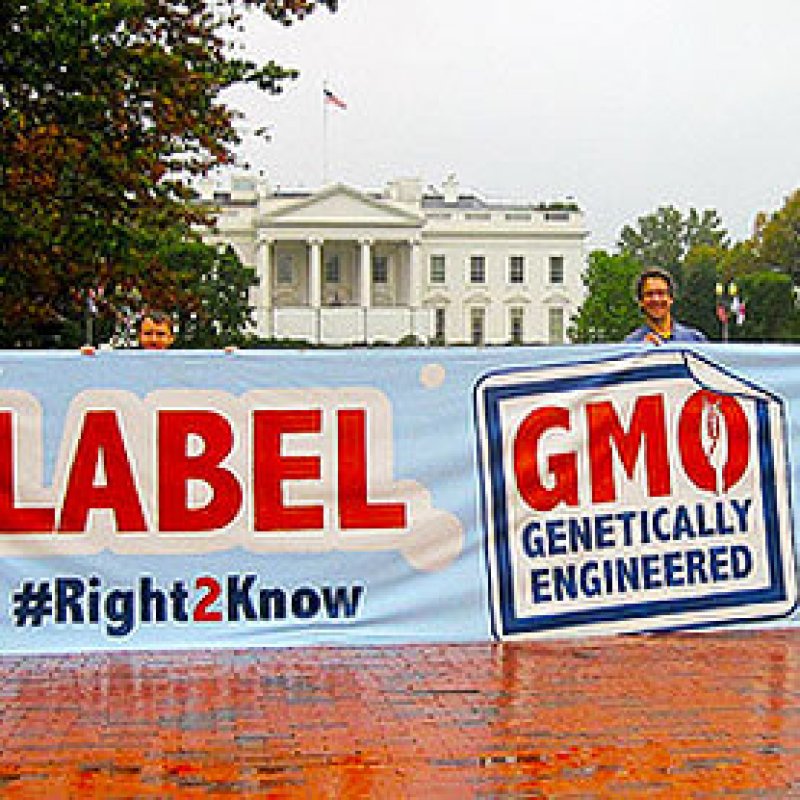
Via Alexis Baden-Mayer/Flickr

“I’m certain that fighting [labeling] is not where the scientific community should be putting its energy,” writes Dan Fagin, journalism professor and director of NYU’s Science, Health and Environmental Reporting program, in Scientific American.

In his essay, Fagin notes that when Monsanto and some scientists fight labeling propositions, consumers lose trust and “assume the worst,” despite the fact that GMOs have been proven to be just as safe as any conventionally bred crop.

Scientists who spend their time fighting labeling also risk eroding their standing with a distrustful public, especially those in the middle who are suspicious of GMOs but may yet be persuaded the technology is worthwhile—unless they sense that information is being withheld from them. Transparency is a hallmark of good science (and good journalism), but when we push for more of it only when it benefits us directly, yet oppose the types of disclosure the public overwhelmingly wants, we look like hypocrites or worse.

Instead of fighting labeling, Fagin argues, scientists should be working to increase public awareness about the benefits of genetic engineering, such as nutrient-fortification, pesticide-resistance or sever weather resistance. While he disagrees with the mandatory labeling policy itself, he is optimistic that labeling can do more good than harm for biotechnology as a whole.
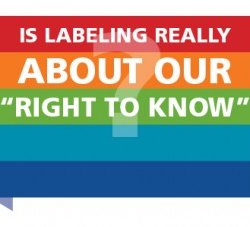
For all their shortcomings, label laws would at least partially disarm the conspiracy theorists and nudge the mainstream debate in the right direction: toward a clear-eyed, case-by-case discussion of the costs and benefits of specific GMOs.

Read the full, original story here: “Why We Should Accept GMO Labels”

Additional Resources:

  • “Why we need to label GMOs,” Mark Lynas Blog

Related Articles

Infographic: Global regulatory and health research agencies on whether glyphosate causes cancer

Infographic: Global regulatory and health research agencies on whether glyphosate causes cancer

Does glyphosate—the world's most heavily-used herbicide—pose serious harm to humans? Is it carcinogenic? Those issues are of both legal and ...

Most Popular

ChatGPT-Image-Mar-10-2026-01_39_01-PM
Viewpoint—“Miracle molecule” debunked: Why acemannan supplements don’t work
Screenshot-2026-09-17-at-1.07.08-PM
'We are dangerously addicted to antidepressants': Should we heed RFK Jr.’s sobering warning?
Screenshot-2026-09-24-at-3.25.18-PM
No, organic eggs are not more nutritious or necessarily healthier than regular eggs. They are far more expensive.
Screenshot-2026-09-28-at-2.41.21-PM
Viewpoint: 7-OH controversy: An opioid is available over-the-counter–even at gas stations. Should we be concerned?
ChatGPT-Image-Sep-2-2026-02_03_32-PM
How much of a problem is AI’s water use?
ChatGPT-Image-Sep-25-2026-11_36_56-AM
Now AI almost started a war with China
ChatGPT-Image-Sep-25-2026-10_36_43-AM
New federal autism committee head has financial ties to leucovorin
ChatGPT-Image-Sep-22-2026-11_17_31-AM
The exploding controversy over AI’s built-in survival drive
ChatGPT-Image-Sep-25-2026-11_57_15-AM
RFK, Jr. likely violated federal ethics guidelines in accepting more than $4,275,000 in gifts and book advances from MAHA allies
Woman_Vaping_Electronic_Cigarette_50687233623
Trump administration clears the way for speedy approvals of once-restricted tobacco vapes and pouches
Screenshot-2026-09-16-at-10.27.33-AM
Viewpoint: SCOTUS poised to address First Amendment tension between mandatory vaccines, children’s health and religious freedom 
ChatGPT-Image-Sep-27-2026-10_00_17-AM
Current and future RFK Jr. aides criticize his science-rejectionist vaccine views
glp menu logo outlined

Get news on human & agricultural genetics and biotechnology delivered to your inbox.