Infographic: Power of evolution? How oak trees came to dominate North American forests

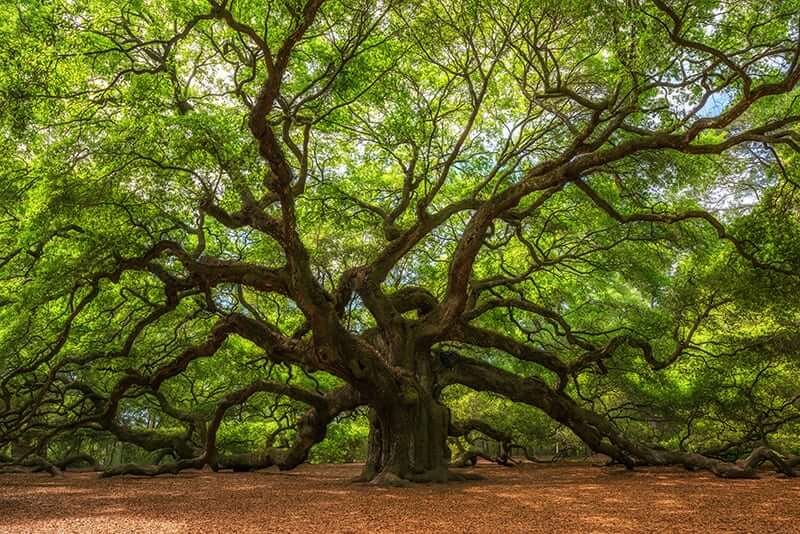
types of oak trees
Credit: Green and Vibrant

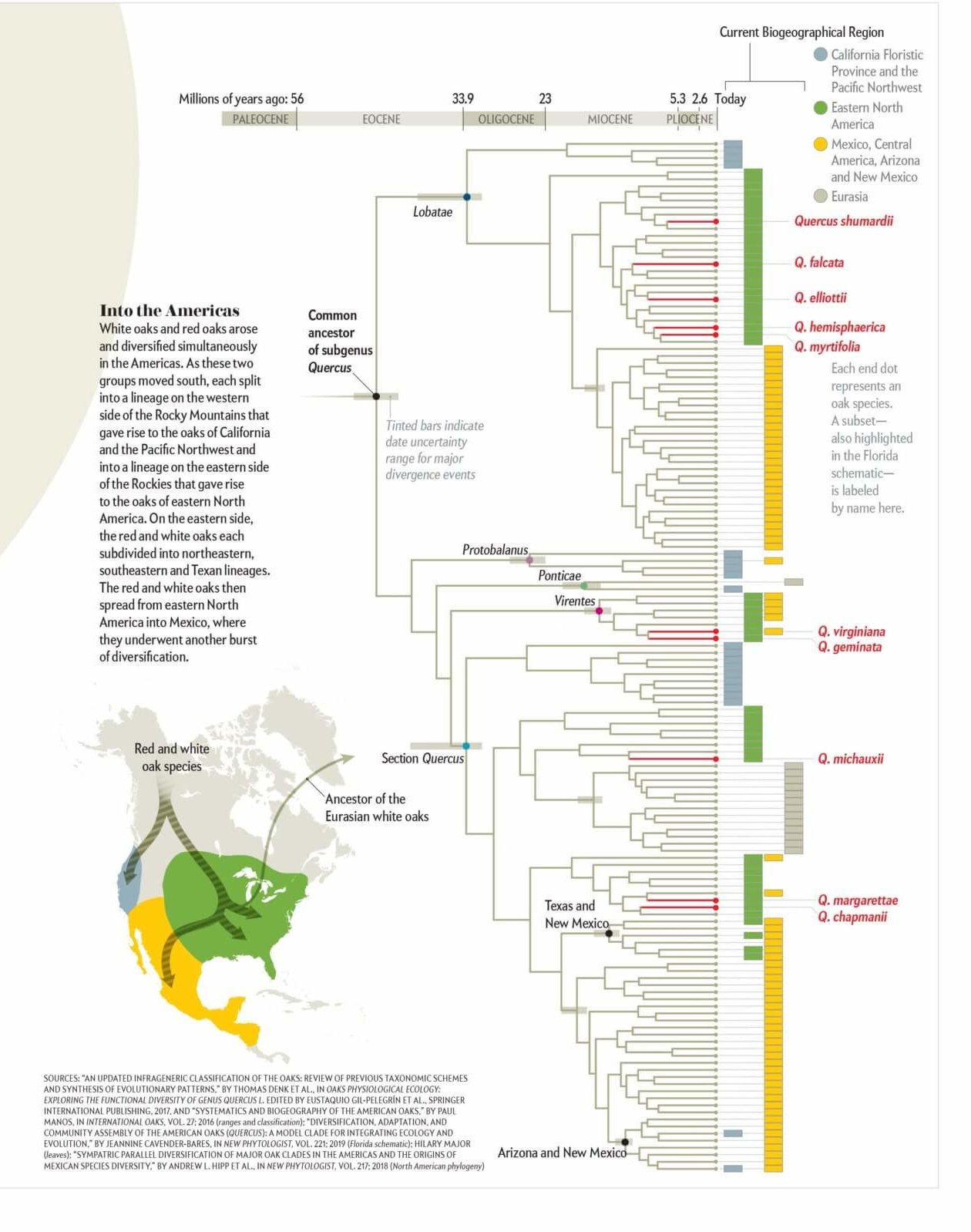
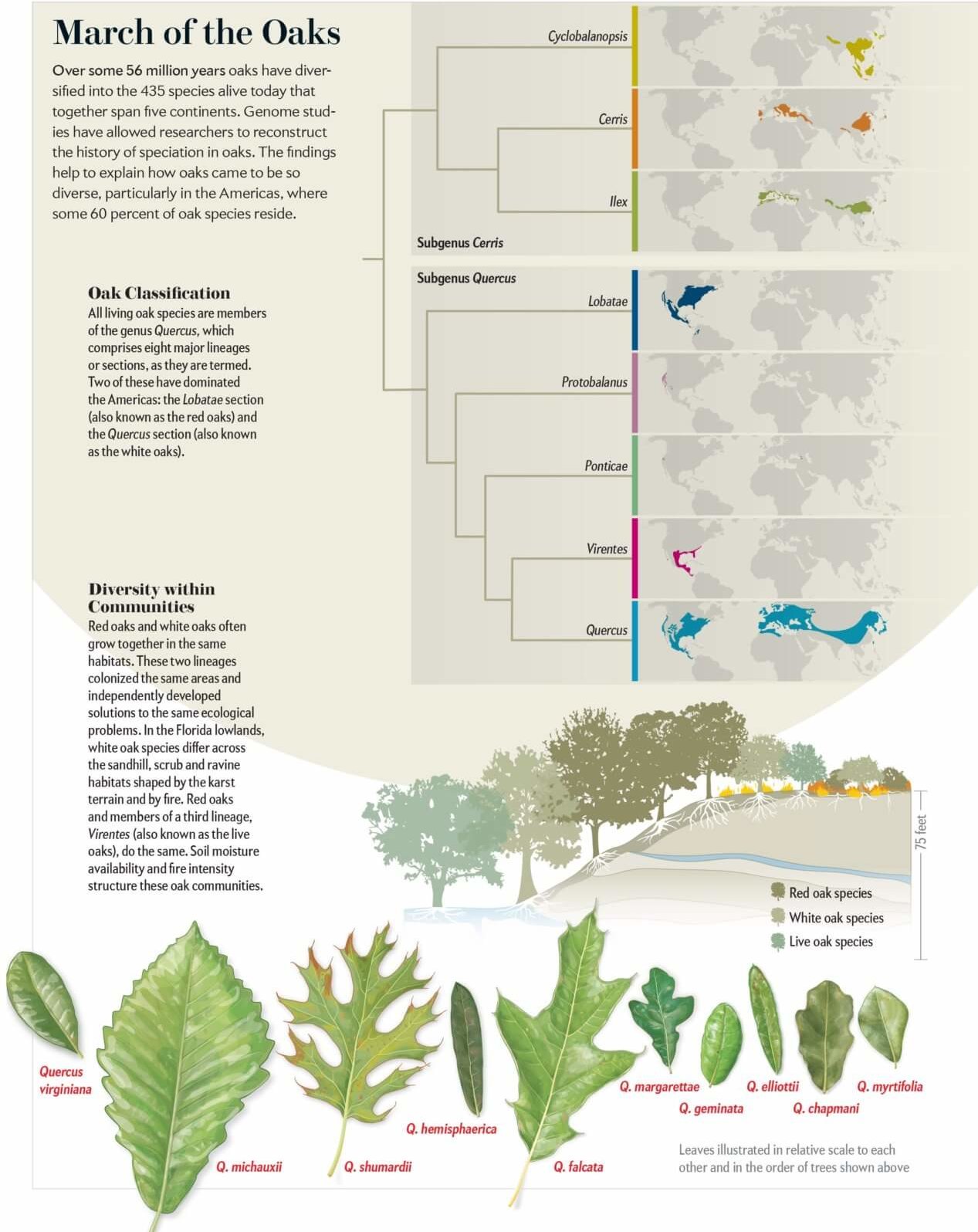
Over the course of some 56 million years, oaks, which all belong to the genus Quercus, evolved from a single undifferentiated population into the roughly 435 species found today on five continents, ranging from Canada to Colombia and from Norway to Borneo. Oaks are keystone species, foundational to the functioning of the forests they form across the Northern Hemisphere. They foster diversity of organisms across the tree of life, from fungi to wasps, birds and mammals. They help clean the air, sequestering carbon dioxide and absorbing atmospheric pollutants. And they have shaped human culture, feeding us with their acorns and providing wood to build our homes, furniture and ships.

Mis- and disinformation are distorting science and public policy. Subscribe to our Daily and Weekly Digests for incisive coverage of ‘disruptive’ innovations in AI, agricultural biotechnology, food, chemicals, nuclear energy, vaccines, and other disruptive innovations.

For decades scientists could only speculate about much of the evolutionary history of oaks because of gaps in their fossil record and limitations of the biomolecular techniques used to infer evolutionary events from the DNA of living organisms. But recent advances in genome sequencing and analysis have allowed us and our colleagues to reconstruct a detailed picture of the origin, diversification and dispersal of oaks. It is a remarkable evolutionary success story, one that will have important implications for predicting how these essential trees will fare in the face of climate change—and for developing management plans to ensure their survival.

saw hipppanzoom

saw hipppanzoom

Read the original post

Related Articles

Infographic: Global regulatory and health research agencies on whether glyphosate causes cancer

Infographic: Global regulatory and health research agencies on whether glyphosate causes cancer

Does glyphosate—the world's most heavily-used herbicide—pose serious harm to humans? Is it carcinogenic? Those issues are of both legal and ...

Most Popular

ChatGPT-Image-Mar-10-2026-01_39_01-PM
Viewpoint—“Miracle molecule” debunked: Why acemannan supplements don’t work
Woman_Vaping_Electronic_Cigarette_50687233623
Trump administration clears the way for speedy approvals of once-restricted tobacco vapes and pouches
Screenshot-2026-09-17-at-1.07.08-PM
'We are dangerously addicted to antidepressants': Should we heed RFK Jr.’s sobering warning?
ChatGPT-Image-Sep-2-2026-02_03_32-PM
How much of a problem is AI’s water use?
ChatGPT-Image-Sep-25-2026-11_36_56-AM
Now AI almost started a war with China
Screenshot-2026-09-16-at-10.27.33-AM
Viewpoint: SCOTUS poised to address First Amendment tension between mandatory vaccines, children’s health and religious freedom 
Screenshot-2026-09-24-at-1.24.47-PM
80% of Americans take (mostly useless) supplements for their health
ChatGPT-Image-Sep-27-2026-10_00_17-AM
Current and future RFK Jr. aides criticize his science-rejectionist vaccine views
ChatGPT-Image-Sep-21-2026-11_54_00-AM
Viewpoint: Activist environmental NGOs are turning from public funding to activist billionaires to support their campaigns. It won’t end well.
Screenshot-2026-09-16-at-2.26.42-PM
Viewpoint: How to ecologically damage America’s forests: Ban glyphosate
Screenshot-2026-08-19-at-6.19.42-PM
Facts & Fallacies podcast: 'Regenerative farming'? RFK Jr.’s federal push romanticizes the past and risks food security
Screenshot-2026-09-16-at-3.14.20-PM
19%: Plunging support for Trump-RFK, Jr. measles vaccine safety oversight
glp menu logo outlined

Get news on human & agricultural genetics and biotechnology delivered to your inbox.