COVID stay-at-home orders have ramped up anorexia, bulimia and binge-eating

eating disorders during the covid pandemic round nologo b d e c a e db cb b
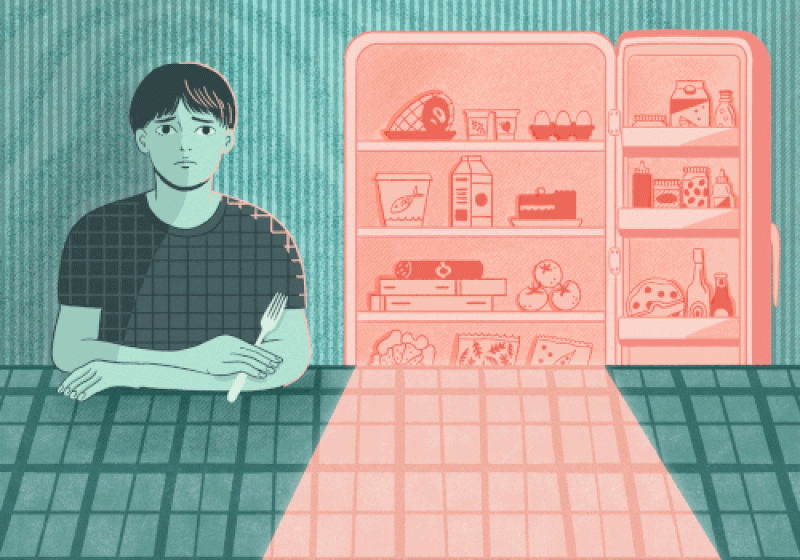
Credit: Alison Czinkota/Verywell

Recent research indicates that pandemic-related stay-at-home orders have ramped up anorexia, bulimia and binge-eating disorder symptoms.

A study published last month in the International Journal of Eating Disorders revealed that during the first few months of the pandemic, many individuals with anorexia reported restricting their eating more. Meanwhile others with bulimia and binge-eating disorder reported more bingeing urges and episodes. Respondents also noted increased anxiety and concern about COVID-19’s impact on their mental health. More than one third of the 1,021 participants (511 in the U.S. and 510 in the Netherlands) said their eating disorder had worsened—and they attributed this change to issues such as a lack of structure, a triggering environment, the absence of social support and an inability to obtain foods that fit their meal plans.

“While no one knows for sure what causes eating disorders, a growing consensus suggests that [they result from] a range of biological, psychological and sociocultural factors,” says Claire Mysko, CEO of the National Eating Disorders Association, who was not involved in the study. She notes that many of those who struggle with these disorders have a co-occurring condition, such as anxiety or depression.

Follow the latest news and policy debates on sustainable agriculture, biomedicine, and other ‘disruptive’ innovations. Subscribe to our newsletter.

These disorders “also thrive in isolation, so it’s not surprising we’re seeing an increase in disordered behaviors and even some relapse among those who were doing well prior to lockdown,” says [psychiatry professor Ellen E.] Fitzsimmons-Craft.


Read the original post

{{ reviewsTotal }}{{ options.labels.singularReviewCountLabel }}
{{ reviewsTotal }}{{ options.labels.pluralReviewCountLabel }}
{{ options.labels.newReviewButton }}
{{ userData.canReview.message }}

Related Articles

Infographic: Global regulatory and health research agencies on whether glyphosate causes cancer

Infographic: Global regulatory and health research agencies on whether glyphosate causes cancer

Does glyphosate—the world's most heavily-used herbicide—pose serious harm to humans? Is it carcinogenic? Those issues are of both legal and ...

Most Popular

Screenshot-2026-06-17-at-12.31.01-PM
Viewpoint: The dangerous influence of ‘woke’ post-modernism in science
ChatGPT-Image-Jun-25-2026-12_23_17-PM
No, Bill Gates did not secretly engineer ticks to promote veganism
ChatGPT-Image-Mar-10-2026-01_39_01-PM
Viewpoint—“Miracle molecule” debunked: Why acemannan supplements don’t work
Sampling_a_strawberry_32206461974
Viewpoint: Which is worse: Trace PFAS ‘forever chemicals’ on strawberries or the fear that scares people away from eating them?
marijuana-pot-in-hand-nveri-st-xpm-t-abq-fkifeos-s-rws-cmpx-
Facts & Fallacies podcast: Legalized weed drives drug addiction, psychosis?
NYPICHPDPICT000011561063
Viewpoint: From magnetizing your head to taking useless supplements, the wellness craze has morphed into an obsession of the affluent
photodune farming tractor s
Viewpoint: Glyphosate may be hazardous, but it is not dangerous as used by farmers. Critics of the Supreme Court’s Roundup ruling garble hazard with risk
covid-vaccine
Blocked by Kennedy’s CDC, validated by peer-reviewed scientists: Suppressed COVID vaccine study published in JAMA finds 50% risk cut
ChatGPT-Image-Jun-30-2026-11_55_58-AM
Viewpoint—Junk science: How predatory mass tort lawyers twist facts, scare the public about phantom chemical risks, and cash in on billion-dollar settlements
ChatGPT-Image-Jun-25-2026-01_14_50-PM
Viewpoint: Disinformation grift: The wellness industry is a lucrative and mostly worthless marketplace of ‘balms, brews, and baloney’
ChatGPT-Image-Mar-4-2026-09_39_03-AM
Transgender female athletes and Title IX: Separating ‘policy’ from ‘legality’
Podolay_1_transplantacia_srdca_1968
From printers to pigs: The precarious future of organ transplants
Screenshot-2026-06-25-at-4.08.41-PM
Even in blue states, hospitals have continued to drop gender-affirming care for youths
glp menu logo outlined

Get news on human & agricultural genetics and biotechnology delivered to your inbox.