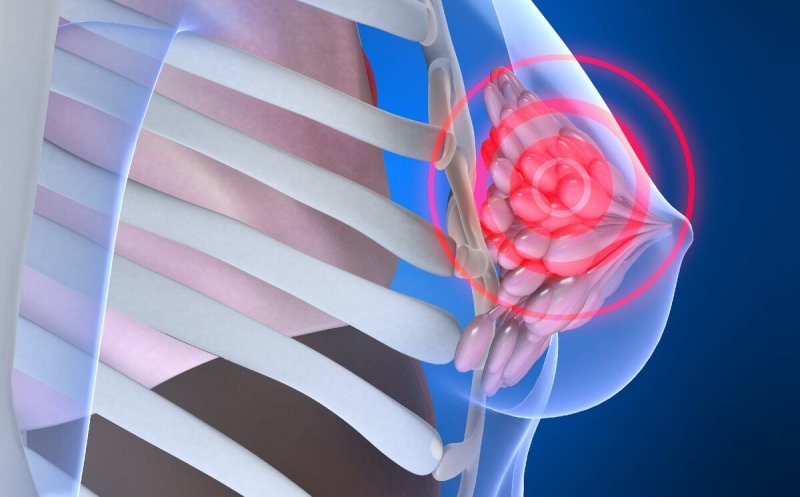
Combining immunotherapy and nanotechnology to fight deadly metastatic breast cancer

dkevnfwxcaaexps
Credit: Nanomedicine Journal

Efstathios “Stathis” Karathanasis, an associate professor of biomedical engineering, is directing [a] novel technique—sending nanoparticles into the body to wake up “cold” tumors so they can be located and neutralized by immune cells. The team also includes researchers from Cleveland Clinic and Duke University.

Nanotechnology manipulates matter at the nanoscale—microscopically at dimensions measured by nanometers or one-billionth of a meter—to create structures, devices and systems for medical and other uses.

Immunotherapy uses drugs to help a patient’s immune system fight cancer, as opposed to chemotherapy, which uses drugs to directly kill cancer cells, according to the National Cancer Institute (NCI).

Follow the latest news and policy debates on sustainable agriculture, biomedicine, and other ‘disruptive’ innovations. Subscribe to our newsletter.

The NCI recently awarded a five-year, $3 million grant to Karathanasis and his team to continue their research, initially on animal models with an eye toward human trials. Much of the groundwork behind the project is described in a paper published in Cancer Research, the official journal of the American Association for Cancer Research.

“We believe our work shows that this combination of nanotechnology with cancer immunotherapy encompasses an inherent promise to treat the most hard-treat metastatic cancers,” Karathanasis said.

“Our work has been to design a nanoparticle that triggers an activation of antigen-presenting cells in the tumor. Within a few weeks, the patient can have adapted T cells that recognize and fight the cancer.”


Read the original post

{{ reviewsTotal }}{{ options.labels.singularReviewCountLabel }}
{{ reviewsTotal }}{{ options.labels.pluralReviewCountLabel }}
{{ options.labels.newReviewButton }}
{{ userData.canReview.message }}

Related Articles

Infographic: Global regulatory and health research agencies on whether glyphosate causes cancer

Infographic: Global regulatory and health research agencies on whether glyphosate causes cancer

Does glyphosate—the world's most heavily-used herbicide—pose serious harm to humans? Is it carcinogenic? Those issues are of both legal and ...

Most Popular

ChatGPT-Image-Jun-17-2026-10_52_43-AM
Utah is sad illustration of the dangers of America’s alarming—and expanding— anti-vaccine movement
Screenshot-2026-06-24-at-2.57.41-PM
Viewpoint: Trump’s Reflecting Pool algae fiasco points to a bigger culprit: Climate change
Screenshot-2026-06-22-at-9.04.46-PM
Kennedy’s nutrition prescription for medical schools: Real problem, bad cure
Screenshot-2026-06-24-at-2.40.46-PM
Hegseth reversal: As Air Force flu outbreak continues to surge, military reinstitutes mandatory vaccines for recruits
Screenshot-2026-06-15-at-1.17.09-PM
Viewpoint: More and more younger men are falling outside our health system. What can reverse this?
ChatGPT-Image-Jun-23-2026-01_12_57-PM
After Mel Gibson’s Joe Rogan comments, grifters promoting ivermectin, without evidence, as a hantavirus preventive 
Screenshot-2026-06-23-at-12.00.12-PM
Desperate patients of autistic children paying up to $20,000 for bogus stem cell injections recommended by RFK, Jr.
ChatGPT-Image-Jun-19-2026-04_11_20-PM
Daubert for Dummies—Scientific Reliability in U.S. Courts: Daubert, Rule 702, and Made-for-Litigation Evidence
ChatGPT-Image-Jun-22-2026-01_30_11-PM
Facts & Fallacies podcast: Psychedelics for PTSD? Examining RFK, Jr's claims about ibogaine
ChatGPT-Image-Mar-10-2026-01_39_01-PM
Viewpoint—“Miracle molecule” debunked: Why acemannan supplements don’t work

ChatGPT-Image-Jun-22-2026-02_03_24-PM-2
AI’s promotion of ‘fake news’ erodes everyday thinking, MIT study reveals
ChatGPT-Image-Jun-18-2026-04_15_29-PM
Viewpoint: RFK, Jr. ignores oversight of vast HHS programs to focus on his pet obsessions—and gets much of the science wrong
Screenshot-2026-06-25-at-1.48.40-PM
Glyphosate affirmed as safe: Supreme Court rejects lawsuit claiming Roundup herbicide causes cancer, upholding EPA determination
ChatGPT-Image-Jun-9-2026-01_11_37-PM
Turmeric supplements: More risks than benefits
glp menu logo outlined

Get news on human & agricultural genetics and biotechnology delivered to your inbox.