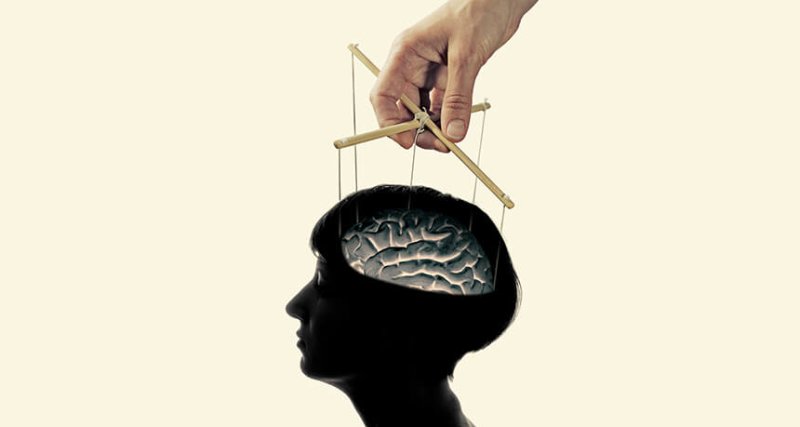
Lazy brains: How can we avoid falling for misinformation

ee fakenews free
Credit: SvetaZi

Our brains are lazy. The more effort it takes to process information, the more uncomfortable we feel about it and the more we dislike and distrust it.

By contrast, the more we like certain data and are comfortable with it, the more we feel that it’s accurate. This intuitive feeling in our gut is what we use to judge what’s true and false.

Yet no matter how often you heard that you should trust your gut and follow your intuition, that advice is wrong. You should not trust your gut when evaluating information where you don’t have expert-level knowledge, at least when you don’t want to screw up. Structured information gathering and decision-making processes help us avoid the numerous errors we make when we follow our intuition. And even experts can make serious errors when they don’t rely on such decision aids.

Mis- and disinformation are distorting science and public policy. Subscribe to our Daily and Weekly Digests for incisive coverage of ‘disruptive’ innovations in AI, agricultural biotechnology, food, chemicals, nuclear energy, vaccines, and other disruptive innovations.

In the modern environment, we can take our time to make much better judgments by using structured evaluation processes to protect yourself from cognitive biases. We have to train our minds to go against our intuitions if we want to figure out the truth and avoid falling for misinformation.

Yet it feels very counterintuitive to do so. Again, not a surprise: by definition, you have to go against your intuitions. It’s not easy, but it’s truly the only path if you don’t want to be vulnerable to fake news.


Read the original post

Related Articles

Infographic: Global regulatory and health research agencies on whether glyphosate causes cancer

Infographic: Global regulatory and health research agencies on whether glyphosate causes cancer

Does glyphosate—the world's most heavily-used herbicide—pose serious harm to humans? Is it carcinogenic? Those issues are of both legal and ...

Most Popular

Screenshot-2026-10-01-at-10.52.08-AM
Non-browning CRISPR gene-edited bananas move one step closer to British markets
AI-Force-Leadership-Portrait
Jay Clayton controversy: The divisive history of Trump’s newly-appointed AI czar
Screenshot-2026-09-22-at-10.54.12-AM
‘They misunderstand science’: Research attempting to tie autism to changes in the gut microbiome comes under fire
ChatGPT-Image-Mar-10-2026-01_39_01-PM
Viewpoint—“Miracle molecule” debunked: Why acemannan supplements don’t work
Elderly-Speaker-at-MAHA-Institute
At anti-vaccine MAHA conference, RFK Jr. pledges to unify federal health information and combat vaccine safety ‘misinformation’
ChatGPT-Image-Sep-21-2026-11_21_39-AM
Viewpoint: Food cults: Online ‘nutrition communities’ can pose unique dangers
Screenshot 2026-10-01 at 12.30
Combating ‘narrative distortion’: Will pharma companies step up to challenge health misinformation?
ChatGPT-Image-Sep-10-2026-10_36_07-AM
Viewpoint: Even lousy scientific articles can shield authors when they hype dubious health claims and products
Screenshot-2026-10-01-at-11.21.27-AM
Vaccine hesitancy, like malaria, surges globally, topping 35% in some countries
ChatGPT-Image-Sep-21-2026-03_15_09-PM
Viewpoint: Chipotle-inspired lesson: 10,000 sick customers suggest that processed foods can be safer than fresh ones
glp menu logo outlined

Get news on human & agricultural genetics and biotechnology delivered to your inbox.