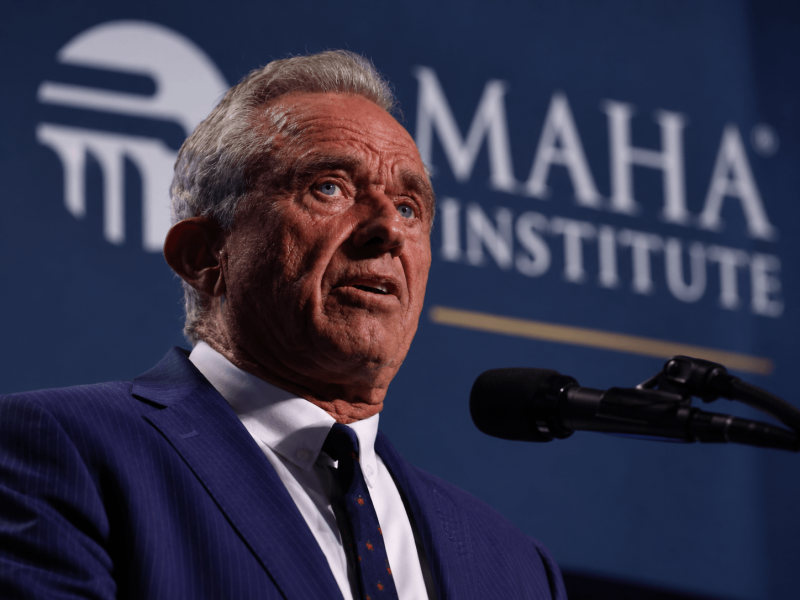

Health and Human Services Secretary Robert F. Kennedy Jr. wants Americans’ medical records, insurance claims and lifestyle data stitched together, opened to outside researchers and fed to artificial intelligence, with vaccines high on the list of things to investigate. As The Guardian’s Melody Schreiber reports, Kennedy laid out the plan at an event hosted by the MAHA Institute, whose president, Mark Gorton, recently called himself “the boldest anti-vaxxer in the anti-vax conference.”
“We need to use America’s health data to determine whether the food we eat, the chemicals we encounter, the vaccines that we’re administering, the other environmental and lifestyle exposures are contributing in one way or another to the chronic disease epidemic,” Kennedy said.
He pointed to Medicaid, Medicare, FDA surveillance systems and commercial platforms such as HealthVerity as data sources, and dismissed state datasets reported to the CDC as “unusable.” Federal officials are already using AI to crunch the numbers, he said: “Studies that used to take years, you can do them literally in seconds.”
Vaccines came up again and again. Kennedy said the CDC is using the Vaccine Safety Datalink (VSD) to compare vaccinated and unvaccinated people and to examine aluminum adjuvants and the timing of the infant hepatitis B shot, while FDA researchers revisit work on maternal flu vaccines and autism. “We will have answers soon,” he said.





He also revived an old grievance. Mark and David Geier, who tried to link vaccines to autism, lost VSD access in the early 2000s after violating confidentiality agreements; Maryland’s physician board later suspended Mark Geier’s medical license. Kennedy called the VSD an “unworkable system,” arguing that “a qualified researcher with a legitimate hypothesis should not need permission from a gatekeeper to test it.”
Less than two weeks earlier, at a Children’s Health Defense meeting, Gorton called the success of vaccination a “complete fabrication” and declared, “More vaccines, more autism. It’s that simple.”