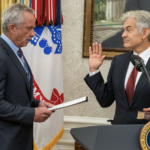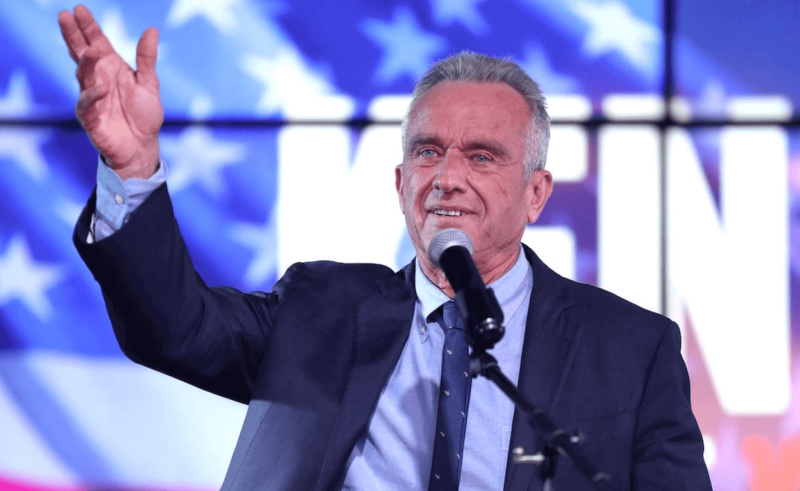
In the seven months since he was sworn in as secretary of the Department of Health and Human Services (HHS), Robert F. Kennedy Jr. has presided over the dismantling of large swathes of the biomedical and health infrastructure of the United States, which, for eighty years, has been the envy of the world.
Under the guise of reducing waste and eliminating politically motivated programs, RFK Jr. has fired roughly a quarter of the 82,000-employee work force at HSS. At the Centers for Disease Control and Prevention (CDC), programs addressing chronic-disease prevention have been shut down; members of the highly respected Advisory Committee on Immunisation Practices (ACIP) were dismissed for alleged conflicts-of-interest and replaced by “new members with histories of anti-vaccine rhetoric and with actual conflicts.” And the newly appointed head of the CDC was fired after less than a month in office for refusing to sign off on changes drafted by Kennedy advisors that would weaken vaccination standards. Several top scientists at the agency, including senior vaccine scientists and CDC’s chief medical officer, resigned to protest the firing.
At the National Institutes of Health (NIH), 2,282 research grants totalling US$3.8 billion have been cut. Research projects have been terminated that addressed cancer, AIDS and other infectious diseases, cardiovascular disease, Alzheimer’s, and rural health. Huge additional cuts are expected in next year’s budget. The firing of 3,500 employees at the Food and Drug Administration (FDA) will likely lead to disrupted drug safety and inspections, setbacks in bird flu monitoring, and reductions in lead poisoning prevention. Nearly US$500 million in grants for the development of mRNA vaccines have been cancelled at the Biomedical Advanced Research and Development Authority (BARDA). As Lawrence Gosten, a law professor specialising in public health law, wrote recently, “Kennedy’s campaign … will weaken science and leave the country less safe, less healthy, and less prepared. And the saddest reality is that all this damage cannot be easily undone.”
Back in April, RFK Jr. pledged that in September he would announce new findings that would “identify precisely what the environmental toxins are that are causing autism,” and identify “interventions, certain interventions, now that are clearly, almost certainly, causing autism.” Last week, he announced that his department would link autism to Tylenol (acetominophen) and folate deficiencies. Extensive research has failed to show any link between pharmaceuticals or vaccines and autism.
September’s announcement is also expected to provide an update on the Autism Data Science Initiative (ADSI) a US$50 million program announced by NIH in May to use data science to understand the causes of autism and to improve treatment outcomes. The initiative is to fund projects that create new privacy-protected datasets by combining existing research and clinical data, with a focus on identifying contributing factors and validating findings. Thousands of researchers from top universities have applied for these grants, 25 of which are to be funded. However, the winners have not yet been announced, making it difficult to see how Kennedy can showcase any results.
Autism researchers and advocates are particularly concerned about the involvement of a discredited researcher named David Geier, who first caught Kennedy’s attention in 2004. Geier has a bachelor’s degree in biology and collaborated with his physician father on studies investigating the association of vaccines and the preservative thimerosal with risk of autism. They published thirteen studies purporting to show an association. One paper has been retracted, and their work has been repeatedly rejected by federal courts and criticised by academic scientists for using sleights-of-hand to obtain a desired result.
Kennedy has hired Geier to use the Vaccine Safety Datalink, the CDC’s system for post-approval surveillance of immunisations, initiated in 1990 and containing millions of anonymised patient records. Geier has used the datalink for twenty years, but his access was cut off for improper conduct regarding confidentiality and analysis. Many scientists at CDC are concerned that Geier will use the database to come up with results that support his, and Kennedy’s, long-standing belief that vaccines are responsible for autism.
RFK Jr. believes his mission is to purge a corrupt system beholden to the pharmaceutical industry and academic institutions that are focused on the wrong questions. He has pledged to promote “gold-standard science.” But, although he trumpets high-flown initiatives to improve health and reduce what he has called the “epidemic of chronic disease,” he has a long history of embracing discredited findings and spreading conspiracy theories, and he has a disturbing preoccupation with issues that have been settled or that don’t make sense from a scientific point-of-view. Foremost among these is his insistence on the dangers posed by vaccines generally and, specifically, the ability of the MMR vaccine to cause autism, which appears to amount to an idée fixe.
In anticipation of RFK Jr’s September reveal, it is timely to examine what is known about autism and its possible causes.
Why diagnoses rose without a true “autism epidemic”
RFK Jr. has drawn attention to what he calls an “epidemic of autism,” claiming that the prevalence of the condition has increased from 1 in 10,000 to 1 in 34. Although it is not clear where the 1 in 10,000 figure comes from, he is right that there has been a huge increase in the frequency of diagnosis of the condition. Where he is wrong is the reason for this increase, which he attributes to vaccines. In fact, the dramatic increase in diagnoses of autism is well-understood and well-explained by changes in diagnostic criteria, increased societal awareness of the condition, and increased resources allocated for care of children with autism, which has led to a huge increase in diagnoses of “autism spectrum disorder.” Use of the word “epidemic” in regard to the increase in diagnoses of autism is entirely inappropriate.
In a recent article for the New York Times, Allen Frances, the psychiatrist who oversaw the revision of the American Psychiatric Association’s Diagnostic and Statistical Manual to broaden the definition of autism, explains the reason for the increased rates. In 1980, according to Diagnostic and Statistical Manual III (DSMIII), autism was a tightly defined diagnosis and was considered extremely rare. The criteria required a very early onset (before the age of three) of severe cognitive, interpersonal, emotional, and behavioural problems. In 1994, the DSMIV widened the criteria to include Asperger’s syndrome, which is much more mild and much more common. To the surprise of the editors, this change resulted in a sixteen-fold increase in the prevalence of autism. Rates of autism have been increasing ever since.
In 2013, the next edition, DSMV, folded Asperger’s disease into the new entity “autism spectrum disorder,” which further opened the door to increased diagnoses of autism by including more individuals with social awkwardness. With the relaxation of the criteria for a diagnosis of autism, there has been a surge in over-diagnosis and the inclusion of children with behaviours of social awkwardness and avoidance, which can moderate or disappear with age. As a result, over a 33-year period, the rate of diagnosis of autism increased sixty-fold.
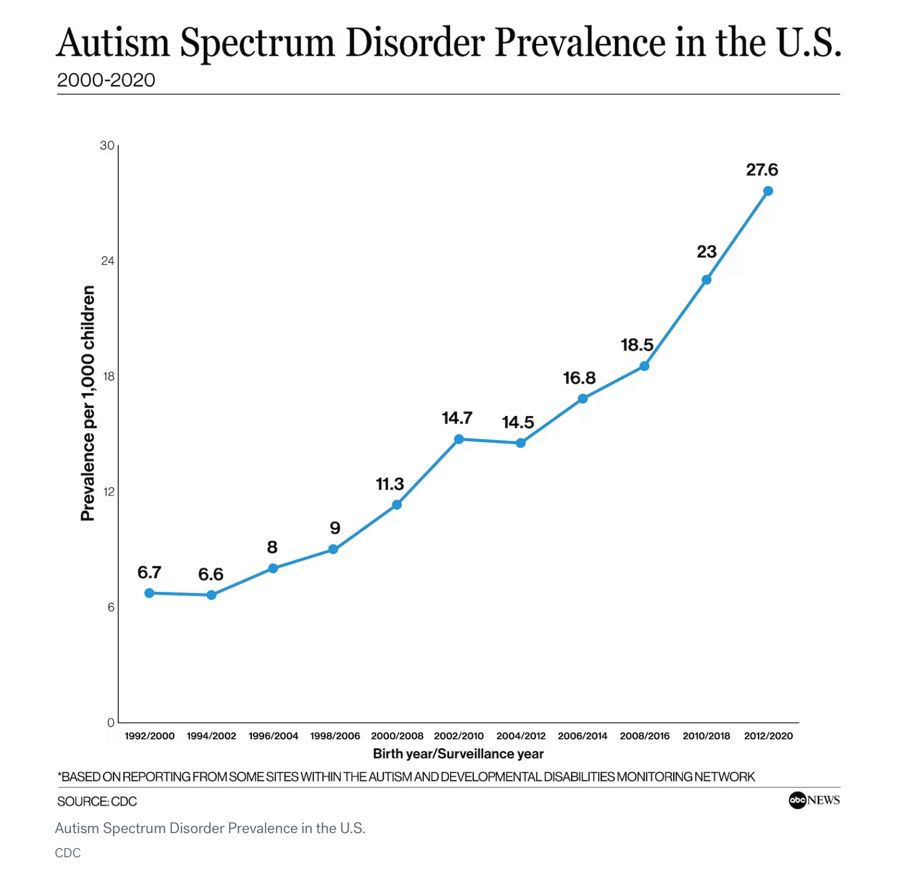
When thinking about the causes of autism, it is important to realise that the more varied and heterogeneous the definition of what constitutes a case is, the greater the difficulty in pinpointing a cause. What, then, do we know from the extensive scientific research on autism about the condition’s origins, causes, and possible contributing factors, such as environmental exposures?
Genetics and heritability
What we know, first and foremost, is that autism is a biologically based disorder of brain development. Studies have estimated that between 74 and 93 percent of the likelihood of developing autism is heritable. Over the past decade, scientific research has shed light onthe origins of the condition. Although autism is typically diagnosed in toddlers between the ages of one and two, changes in the brains of children with autism leading to brain overgrowth can be detected by six to twelve months of age. Furthermore, changes in the prefrontal and temporal cortex actually occur much earlier and during pregnancy. These prenatal changes are set in motion by genetic and epigenetic alterations happening around the time of conception or shortly thereafter. Approximately 65 new genes have been identified as playing a role in this process. Thus, autism is a condition that begins in the womb, and early in gestation, long before any vaccines are administered.
Consistent with the heterogeneity of cases of autism spectrum disorder mentioned above, recent work by a research team at Princeton has identified four distinct genetic and clinical types of autism, the findings of which “suggest that autism is not a single condition but a collection of biologically distinct disorders.” It has been known for several decades that certain exposures during early gestation are capable of causing autism. These include: thalidomide (a drug used in the 1950s and 1960s and taken during pregnancy to treat morning sickness), misoprostol, valproic acid, maternal rubella infection, and the organophosphate insecticide, chlorpyrifos. (Note that the MMR vaccine actually protectsagainst one known cause of autism—rubella infection.)
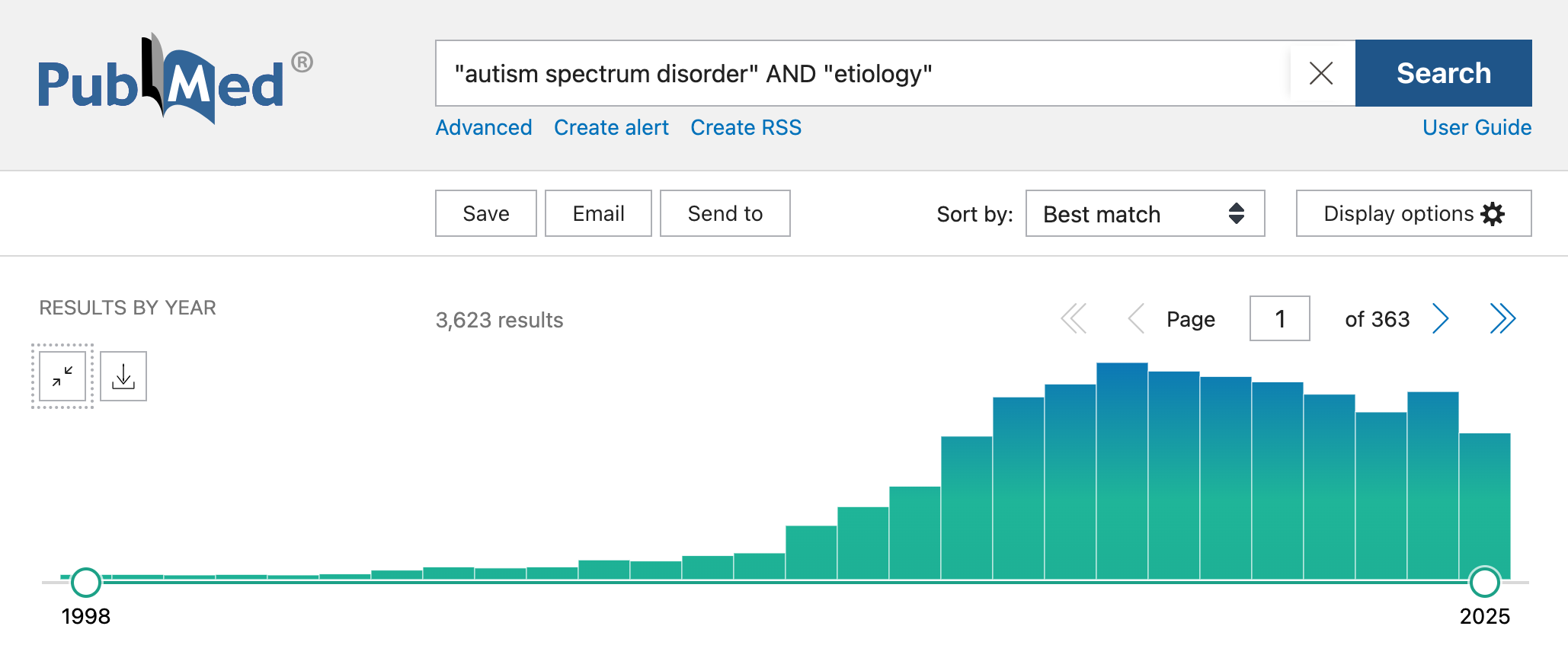
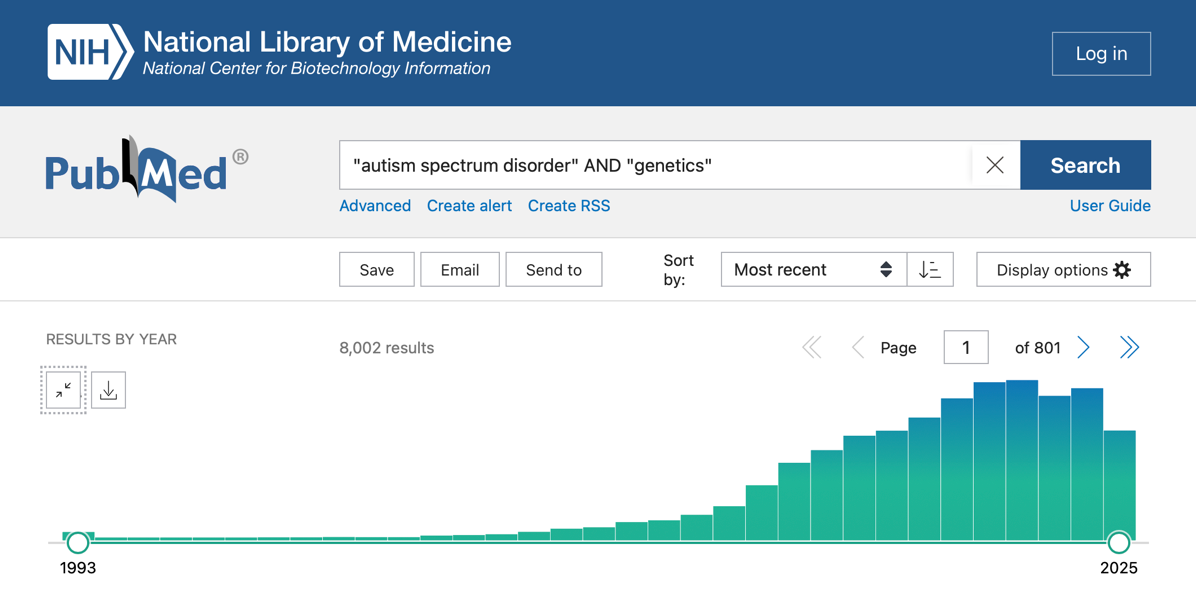
Amid the heated discussions of autism and vaccines and RFK Jr.’s repeated assertions that we need “gold-standard” research, there appears to be little awareness of the fact that there already is a mountain of published research on autism. A search of the National Library of Medicine’s PubMed database using the terms “Autism spectrum disorder” and “etiology” turns up 3,616 peer-reviewed papers. A search on the terms “Autism spectrum disorder” and “genetics” yields 8,002 published studies. From 1998 to 2003, there were between zero and two articles published per year mentioning autism in their title. In 2004 there were nine publications; in 2012, there were 92; in 2018, 395. And publications with these terms have remained at a high level. In 2019 and 2020 alone, over 7,000 autism research papers were published.
Over a dozen papers addressing the causes of autism are based on two studies set up by the CDC and the NIH. These studies go by the acronyms SEED (Studies to Explore Early Development) and CHARGE (Childhood Autism Risks from Genetics and the Environment), respectively, and they are designed to address different aspects of the question of what causes autism. To date, the SEED case-control study has identified environmental exposures such as air pollution, and pregnancy factors such as maternal infections and a lack of prenatal vitamin supplementation, as risk factors for autism.




The CHARGE case-control study examines differences between participants, aged between two years and five years at recruitment, from three groups: children with an autism spectrum disorder (ASD), children with developmental delay but not ASD, and general population controls in order to identify factors associated with ASD. Information on diet, consumer products, lifestyle, and health history is collected by interview. Biological specimens including blood, hair, urine, cheek cells, and newborn blood spots, are collected to assess exposures. To date, this study has examined the interaction between specific genes and prenatal vitamin supplementation and exposure to pesticides and phthalates.
This research conveys the enormous complexity of autism, involving dozens of identified genes but thought to involve as many as 1,000, each of which makes a small contribution. In addition to the direct effect of genetic variants, epigenetics—that is, changes that influence the activity of specific genes, without altering the underlying DNA sequence—is also believed to play a role. One can imagine the daunting complexity of the task of trying to pinpoint those changes that have a detectable effect in causing autism against the background of genetics, epigenetics, and environmental exposures (including maternal health, diet, use of medications, environmental exposures, etc.), and to learn about early life exposures from analysing the urine of children aged between two and five, years after the initiating events of autism, in the CHARGE study.
According to Karen Pierce, a professor in the department of neuroscience at the University of California at San Diego and co-director of the UCSD Autism Center of Excellence, the evidence suggests that autism is a genetic disease, and that environmental factors may play a role, but “to a small degree.”
In my field of epidemiology, we speak of avoiding bias that distorts the truth one is trying to reach. We also speak of threats to validity. Since, for ethical reasons, one can’t conduct clinical trials of humans to answer a question like what causes autism, we have to rely on epidemiologic studies. It takes large, carefully designed, high-quality—and, therefore, expensive—studies to come to grips with the complexity of the etiology of autism. Many associations that are picked up in one study may be incidental or spurious, so findings must be reproducible. For this reason, multiple studies from independent groups are needed to see what stands out and what stands up. Which signals are consistent among the best and most powerful studies?
It is impossible to conceive of RFK Jr looking at a question in this way. It is fine to have a hypothesis, but a hypothesis has to be subjected to rigorous testing that could refute it in order to see if it holds up. As secretary of HHS, RFK Jr. is in charge of the NIH, the CDC, and the FDA. One would think that a government official concerned about vaccine safety and with a large following among parents concerned about autism would be eager to tell his followers about the findings from these serious studies, what they were designed to clarify, and what they have shown to date. But RFK Jr. appears never to have referred to these studies. Had he done so, he would have had trouble asserting that “studies show” vaccines are the leading cause of autism, rather than a complex interplay of multiple genes and environmental exposures that still needs to be worked out.
In fact, RFK’s approach is antithetical to the conduct of science outlined above. He latches on to simple explanations that are dredged up from the internet or pet ideas with which he has been obsessed for the past twenty years. Tellingly, he never refers to the background sketched above, and he has shown no interest in the painstaking, incremental work that has been going on for the past twenty years. His ignorance allows him to latch on to shiny things that attract clicks on social media, and which he exploits in books and tort litigation he and his associates bring against vaccine manufacturers. He deals in catchy, if discredited, threats and conspiracy theories, including vaccines and the mercury-containing preservative thimerosal as a cause of autism; Wi-Fi and 5G radiofrequency waves as a cause of cancer and neurodegenerative diseases; and fluoridation as a threat to health.
RFK is appealing to people who are not aware of the long and painstaking process that, over time, holds the prospect of yielding important new knowledge that can result in treatments for diseases like amyotrophic lateral sclerosis (Lou Gehrig’s disease), multiple sclerosis, and scleroderma. Other lines of research can lead to new treatments, like mRNA vaccines, which saved millions of lives during the COVID-19 pandemic and may yet help us to prevent cancer, cardiovascular disease, autoimmune diseases, and other conditions. When such research is successful, it seldom gets the recognition and appreciation it deserves. Or it can become ensnared in political contests, as has happened with the COVID vaccines.
Few people are aware that it took roughly thirty years to identify the cause of cervical cancer, which was initially thought to be the Herpes simplex virus-2 (HSV-2). It was finally demonstrated by Harald zur Hausen to be caused by specific variants, among more than 100 variants, of the human papilloma virus (HPV). This made the development of the first vaccine against the virus possible—work that has put the virtual eradication of cervical cancer within reach. But rather than acknowledging this triumph over a worldwide scourge, RFK Jr. has brought tort suits against the manufacturer of the HPV vaccine. This story alone epitomises his relationship to the truth.
Vaccines and autism
For twenty years, Kennedy’s signature issue has been the false claim that the measles, mumps, and rubella (MMR) vaccine causes autism. This claim is based on the fraudulent study of twelve cases (with no control group) by the gastroenterologist Andrew Wakefield that was published in the Lancet in 1998. That notorious but widely publicised paper led to a sustained drop in MMR vaccination rates, which resulted in the resurgence of measles in Europe and the United States. It took twelve years for Wakefield’s study to be retracted by the journal and for Wakefield himself to have his medical licence revoked.
Since then, eleven studies have examined the association of the MMR vaccine with risk of autism. These well-designed studies have been carried out in children in different countries with different vaccine registries and using different study designs. They consistently show no difference in the rate of autism in children who received the MMR vaccine and those who did not, and no relationship between the date of receiving the shot and the timing of a diagnosis of autism.
RFK Jr’s September announcement is anticipated with apprehension by current and former scientists at HHS and by the medical and public health communities at large. Given his past performance, many observers are bracing for a dredged-up and reheated analysis that supports his pre-existing conviction that vaccines are causing more harm than the conditions they are designed to prevent. Since he is not impressed by the weight of tens of thousands of hours of research dedicated to understanding the issues he is obsessed with, he will not see any incongruity in holding up his new results. Standing at the pinnacle of the US health establishment, he will have a huge megaphone to spread this latest disinformation.
Public-health authorities are worried that Kennedy will use this latest finding to justify changes to the childhood vaccination schedule and recommend fewer vaccines. This could result in vaccines not being covered by insurance and expose manufacturers to lawsuits for alleged injuries produced by vaccination. This could drive some vaccine manufacturers out of business, which is what happened in the 1980s. Autism advocates are also alarmed by Kennedy’s impending announcement. Both the Autism Society of America and the Autistic Self-Advocacy Network have spoken out against his impending demonstration.
In the past few weeks, there have been protests by government scientists and a call from a large physician group for RFK Jr. to resign. Last week, at an extraordinary three-hour senate hearing, numerous Democrats and several Republicans tore into Kennedy for his attacks on science and the agencies he leads. Republican Senators Bill Cassidy and John Barrasso (both MDs) strongly condemned Kennedy’s distortions. All of which provided good theatre. But the time to have prevented the massive damage now being inflicted on the nation’s health and society was at Kennedy’s confirmation hearing in February, where he won by a four-vote margin. We are now about to discover the wages of that particular sin.
Geoffrey Kabat is an epidemiologist and the author of Hyping Health Risks: Environmental Hazards in Daily Life and the Science of Epidemiology and Getting Risk Right: Understanding the Science of Elusive Health Risks. He writes frequently about controversies pertaining to environmental and personal health risks. Find Geoffrey on X @GeoKabat or his website geoffreykabat.com
A version of this article was originally posted at Quillette and is reposted here with permission. Any reposting should credit both the GLP and original article. Find Quillette on X @Quillette