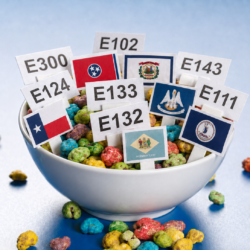
USDA bioengineered food labels are coming in 2021. Will they change consumer behavior?

Credit: Getty Images/USDA

Four years after the thunder in Congress over labeling foods made with GMO ingredients, the deadline for compliance with the USDA labeling regulation is in sight — the end of 2021 — despite complaints that the rule is riddled with loopholes that exempt many foods.

Under the rule, food makers have four options for indicating GMO ingredients, ranging from saying so on the package to a fingernail-size QR code, so consumers may find it difficult to identify a GMO food. The labels will say bioengineered, rather than the more commonly used GMO, which also might dilute their impact. And disclosure is discretionary for some GMO ingredients, most prominently corn and soy oils from biotech plants.

…

As many as one of every six foods containing GMOs may be exempt from labeling because of USDA loopholes, says the Environmental Working Group. Highly refined sugars and oils from corn, soybeans, canola, and sugar beets were exempted because they do not contain detectable amounts of genetic material, but food companies can disclose them if they want.

Mis- and disinformation are distorting science and public policy. Subscribe to our Daily and Weekly Digests for incisive coverage of ‘disruptive’ innovations in AI, agricultural biotechnology, food, chemicals, nuclear energy, vaccines, and other disruptive innovations.

But an amble through the grocery aisles will find few GMO labels, at least at this point, on breakfast cereals, many of which are sugar-sweetened; on pancake syrups, many of which are made with corn syrup; or crackers, chips, and cookies, which use sweeteners and cooking oils.


Read the original post

Related Articles

Infographic: Global regulatory and health research agencies on whether glyphosate causes cancer

Infographic: Global regulatory and health research agencies on whether glyphosate causes cancer

Does glyphosate—the world's most heavily-used herbicide—pose serious harm to humans? Is it carcinogenic? Those issues are of both legal and ...

Most Popular

Screenshot 2026-10-16 at 5.38
PFAS in Agriculture: Science, Uncertainty, and Risk Communication
Discarded Green Cap on Public Trash Can
'Blatant slap in the face': MAHA activists turn on RFK Jr. and Trump administration
newborn baby spit up gerd
Vaccine-preventable congenital infections are a leading driver of autism
Screenshot 2026-10-16 at 11.17
Viewpoint: Latest attack on renewable energy and farmers, new USDA rules could put solar grants out of reach for small producers
ChatGPT-Image-Mar-10-2026-01_39_01-PM
Viewpoint—“Miracle molecule” debunked: Why acemannan supplements don’t work
Government Briefing on Autism Trends
Viewpoint: ‘Statistical murder’: Kennedy’s expanding record of “duplicity and mendacity”
FDA Vials and Syringes Flat Lay
Online gold rush of unapproved peptides is outrunning federal regulators
Screenshot-2026-10-12-at-10.44.38-AM
Widely condemned as unethical, hepatitis B vaccine study funded by RFK Jr’s CDC gets a final greenlight
Screenshot-2026-10-15-at-9.51.15-AM
 Viewpoint: Selective pronatalism: The radical “ethical” case challenging parents’ right to end a pregnancy when a fetus has a severe genetic disorder
Screenshot-2026-10-08-at-10.41.33-AM
Viewpoint: Wellness patches: Most vitamin supplements are useless and sometimes even dangerous, but this craze is even worse
Screenshot-2026-10-15-at-12.13.33-PM
Ahead of the midterms, Meta has paid at least 29 anti-LGBTQ accounts for their posts
Prescription Capsules Scattered on Twenty-Dollar Bills
Facts & Fallacies podcast: America's health care system is broken. A doctor explains how to fix it, Part 2
glp menu logo outlined

Get news on human & agricultural genetics and biotechnology delivered to your inbox.