The ancient origins of close friendships

Credit: Medium
Credit: Medium

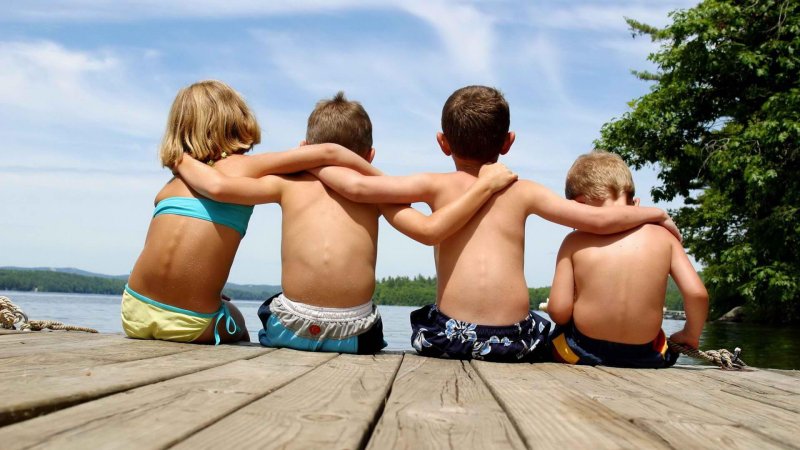
Quite possibly, our strong desire for close friends evolved among our early ancestors because having a close friend improved one’s chances of survival and the survival of one’s children.

In part, we make friends because we don’t want to be alone, and that’s a proximate cause. We want a helpmate and a companion who makes us feel valued. We want someone to love us, despite our faults, and defend us when maligned. Close friends help us navigate the stormy seas of life and comfort us when we fail. Close friends make us feel better.

In a study of 323,000 people across 99 countries, friendship was linked to better health, greater happiness, and a higher level of well-being. If close, loving friendships are an adaptive trait that evolved among early humans, we should expect that close friendships are common and valued across cultures.

[For example,] among the Akwe-Shavante, indigenous people of western Brazil, parents encourage their sons to develop one or two close friends, their i-amo (“my other” or “my partner”), who become their companion for life. Among the Bangwa of Cameroon… when a man dies, his best friend pays for the funeral.

Follow the latest news and policy debates on sustainable agriculture, biomedicine, and other ‘disruptive’ innovations. Subscribe to our newsletter.

While the expression of friendship differs across cultures, close loving friendships are quite common, suggesting an underlying evolutionary trait.


Read the original post

{{ reviewsTotal }}{{ options.labels.singularReviewCountLabel }}
{{ reviewsTotal }}{{ options.labels.pluralReviewCountLabel }}
{{ options.labels.noReviewsLabel }}
{{ options.labels.newReviewButton }}
{{ userData.canReview.message }}

Related Articles

Infographic: Global regulatory and health research agencies on whether glyphosate causes cancer

Infographic: Global regulatory and health research agencies on whether glyphosate causes cancer

Does glyphosate—the world's most heavily-used herbicide—pose serious harm to humans? Is it carcinogenic? Those issues are of both legal and ...

Most Popular

Picture1
Hiroshima at 81: America’s new nuclear bomb, a buried Iranian target, and a question no one wants to ask
ChatGPT-Image-Mar-10-2026-01_39_01-PM
Viewpoint—“Miracle molecule” debunked: Why acemannan supplements don’t work
ChatGPT Image Jul 29, 2026, 06_26_01 PM 2
Facts & Fallacies podcast: Organic food myths make a comeback on Instagram, with Dr. Kevin Folta
Screenshot-2026-07-09-at-1.09.25-PM
Anti-vaccine myths rattle health care
ChatGPT-Image-Jul-10-2026-09_42_12-AM-1
Peptides, patient autonomy, and the limits of medical freedom
ChatGPT-Image-Jul-10-2026-12_21_03-PM
Viewpoint: Is there new evidence that the animal deworming drug ivermectin decreases the risk of Covid and cancer? Don’t waste your money.
ChatGPT-Image-Jun-25-2026-12_23_17-PM
No, Bill Gates did not secretly engineer ticks to promote veganism
ChatGPT-Image-Jul-22-2026-09_13_07-AM
Viewpoint—The Strategic Litigation boom: Understanding the tightening coalition among NGOs, foundations, journalists, and tort lawyers
leeteam
How Kennedy and his family could pocket millions from Merck’s $50 million vaccine injury settlement that he oversaw
organic scaled
Facts & Fallacies podcast: Organic food cuts pesticide exposure? A response to Dr. Rhonda Patrick

Sorry. No data so far.

glp menu logo outlined

Get news on human & agricultural genetics and biotechnology delivered to your inbox.