Modifying plants is harmful in crops and food but not to fight COVID? Tobacco plant-derived vaccine under evaluation for approval in Canada

Credit: Brian Stauffer

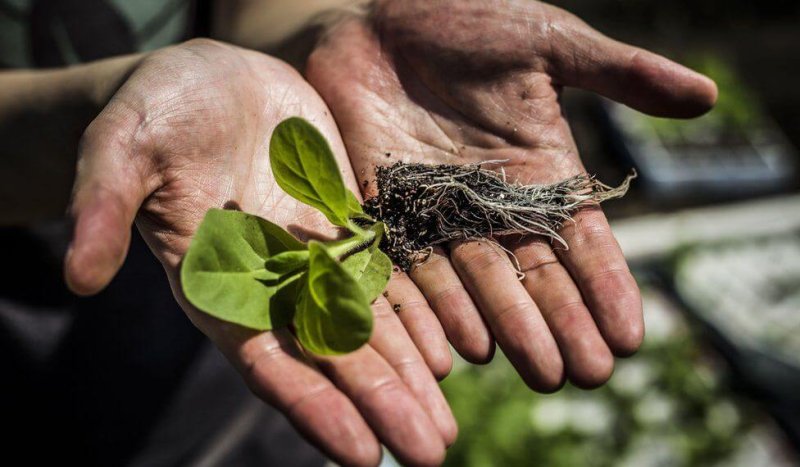
Medicago is a pioneer of plant-derived therapeutics. Its tech takes the idea of traditional vaccine manufacturing – based on using eggs to produce viruses – and instead uses living plants as the bioreactor that produces a protein particle that mimics the target virus. 

The first step is to create the required protein particle and introduce it into a plant-specific bacterial vector. This is then taken up by plants which multiplies the vector. It takes just four to six days for the ‘mini-factories’ to produce the Virus-Like-Particles (VLPs) – compared to around six months for egg-based production (The company highlights that plants are not genetically modified; rather, the plants’ natural cellular processes are used). 

While initial experiments had used alfalfa (Medicago is the Latin word for alfalfa), today the company uses N. benthamiana​ plants: a relative of tobacco which has a weakened immune system meaning genetic material can be hosted rather than rejected by the plant.

A Phase 3 trial, which started in March, is enrolling up to 30,000 participants across 11 countries.

Follow the latest news and policy debates on sustainable agriculture, biomedicine, and other ‘disruptive’ innovations. Subscribe to our newsletter.

If the vaccine is authorized, commercial production could then be ramped up – ultimately reaching 1 billion doses a year. “Depending on final dosage, we should be able to produce up to 80 million doses of the vaccine by the end of 2021,” ​said Landry. 

Read the original post

{{ reviewsTotal }}{{ options.labels.singularReviewCountLabel }}
{{ reviewsTotal }}{{ options.labels.pluralReviewCountLabel }}
{{ options.labels.newReviewButton }}
{{ userData.canReview.message }}

Related Articles

Infographic: Global regulatory and health research agencies on whether glyphosate causes cancer

Infographic: Global regulatory and health research agencies on whether glyphosate causes cancer

Does glyphosate—the world's most heavily-used herbicide—pose serious harm to humans? Is it carcinogenic? Those issues are of both legal and ...

Most Popular

Screenshot-PM-24
Viewpoint: The herbicide glyphosate isn’t perfect. Banning it would be far worse.
d-b
Blocked arteries, kidney stones, nausea, constipation, fatigue: Long list of health problems caused by too much vitamin D 
79d03212-2508-45d0-b427-8e9743ff6432
Viewpoint: The Casey Means hustle—Wellness woo opportunism dressed up as medical wisdom
ChatGPT-Image-Mar-27-2026-11_27_05-AM
The myths of “process”: What science says about the “dangers’ of synthetic products and ultra-processed foods
ChatGPT-Image-Apr-30-2026-12_21_05-PM-2
The tech billionaires behind the immortality movement
ChatGPT-Image-Mar-3-2026-01_17_14-PM
MAHA wellness influencers deride proven anxiety medications, tout lifestyle fixes
ChatGPT-Image-Mar-10-2026-01_39_01-PM
Viewpoint—“Miracle molecule” debunked: Why acemannan supplements don’t work

Sorry. No data so far.

glp menu logo outlined

Get news on human & agricultural genetics and biotechnology delivered to your inbox.