Viewpoint: Here’s one key thing the Biden administration can do to seriously address climate change

Credit: Jean-Paul Pelissier/Reuters

President Biden and his administration need to take concerted actions to advance an area of research that could prove decisive in battling climate change: biotechnology.

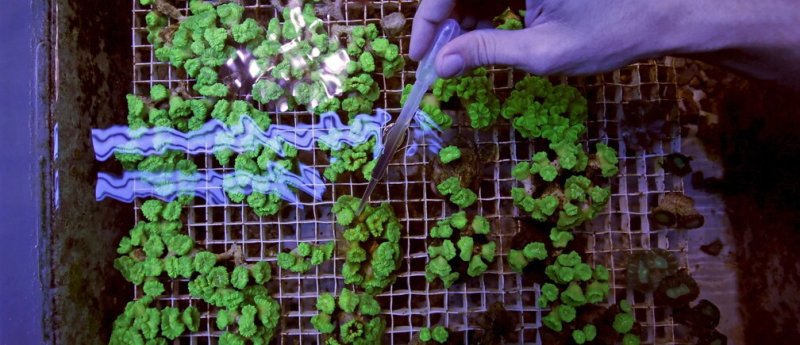
In recent years, scientists have found a host of surprising and innovative ways that biotechnology can be used to reduce emissions, capture carbon from the atmosphere, and make the ecosystem more resilient to changing temperatures. These strategies could revolutionize how humans adapt to climate change. 

Plants have been removing carbon dioxide from the air since long before humans walked the earth. Much of it is released back into the atmosphere once a plant dies. Now, though, researchers at the San Diego-based Salk Institute have identified a molecule, suberin, which enables plants to retain more carbon dioxide in their roots even as they decompose.

Through gene editing, the scientists could create plants that produce higher levels of suberin, and thus store more carbon for longer. Combined with efforts to promote more substantial root systems, this could lead to a huge reduction in the amount of carbon dioxide entering the atmosphere.

Follow the latest news and policy debates on sustainable agriculture, biomedicine, and other ‘disruptive’ innovations. Subscribe to our newsletter.

[B]iotechnology is on the cusp of delivering climate innovations that were unthinkable just a few years ago. As we devise new strategies for preserving our planet, this burgeoning field of research deserves to play a central role.


Read the original post

{{ reviewsTotal }}{{ options.labels.singularReviewCountLabel }}
{{ reviewsTotal }}{{ options.labels.pluralReviewCountLabel }}
{{ options.labels.newReviewButton }}
{{ userData.canReview.message }}

Related Articles

Infographic: Global regulatory and health research agencies on whether glyphosate causes cancer

Infographic: Global regulatory and health research agencies on whether glyphosate causes cancer

Does glyphosate—the world's most heavily-used herbicide—pose serious harm to humans? Is it carcinogenic? Those issues are of both legal and ...

Most Popular

Screen Shot at AM
Facts & Fallacies Podcast: Right-wing politics bad for your health? Separating speculation from science
ChatGPT-Image-Jun-13-2026-11_51_39-AM
Viewpoint: COVID lab leak? Misguided backers of the lab leak theory refuse to give up
drug look like ozempic
Six key health insights from taking weight-loss drugs
ChatGPT Image Jun 3, 2026, 03_54_37 PM
Viewpoint: “Turn on, tune in, drop out”—Kennedy embraces the Timothy Leary psychedelic revolution
ChatGPT-Image-Jun-11-2026-01_15_03-PM
Selective Pressure, Selective Silence
Screenshot-2026-06-14-at-9.14.26-AM
‘Humanitarian catastrophe’: Trump’s USAID shutdown could help drive nearly 23 million deaths — including 5.4 million children — by 2030, Lancet study warns
ChatGPT-Image-Jun-14-2026-09_41_44-AM-2
Viewpoint—‘The gleeful efficiency of an arsonist’: Administration’s health and science research cuts are ‘sabotaging’ America’s future
ChatGPT Image Jun 3, 2026, 03_14_43 PM
Viewpoint: How Earthjustice became the poster child for the abuse of special interest activist funding
ChatGPT-Image-Mar-10-2026-01_39_01-PM
Viewpoint—“Miracle molecule” debunked: Why acemannan supplements don’t work
Screenshot-2026-06-14-at-9.53.54-AM
Is the World Cup a perfect storm for the spread of infectious diseases?
ChatGPT Image Jun 12, 2026, 02_32_14 PM
‘Have you asked your doctor?’: AMA launches campaign to counter health misinformation
Screenshot-2026-06-05-at-2.12.30-PM
Some plants can poison you. So how did humans figure out what is safe to eat?
Screenshot-2026-06-11-at-3.40.06-PM
'Toxin' detox: A gastroenterologist weighs in on $71 billion health trend
glp menu logo outlined

Get news on human & agricultural genetics and biotechnology delivered to your inbox.