RNA technology brought us effective COVID vaccines. Next up: ‘Precisely targeted, environmentally-friendly’ techniques that dramatically reduce use of problematic chemicals

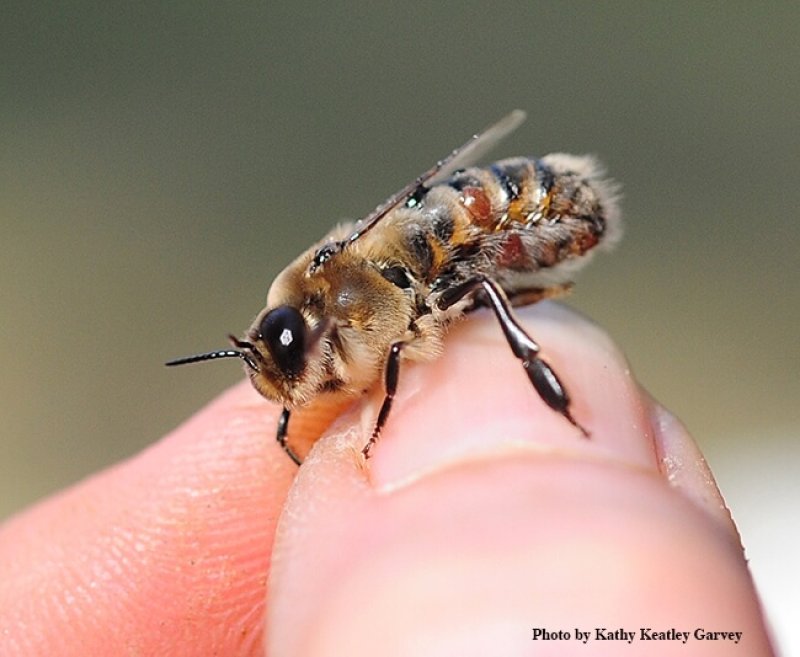
Varroa mite on a bee. Credit: Kathy Keatley Garvey

[RNA-based COVID vaccines let] a vaccine-recipient’s immune system learn to recognise a crucial part of the enemy before the real thing turns up.

Helping to make proteins is not, however, RNA’s only job. Among many other things it is central to a process called RNA interference, which prevents, rather than facilitates, the manufacture of specific proteins, [called RNAi].

Some biologists, though, think RNAi may have an important non-medical use as well, as a precisely targeted, environmentally friendly pesticide.

The theory is simple. Identify a protein crucial to the survival of the pest in question. Tailor a specific interfering RNA molecule to sabotage production of that protein. Deliver it into the bodies of the pests. Then wait for them all to die.

Follow the latest news and policy debates on sustainable agriculture, biomedicine, and other ‘disruptive’ innovations. Subscribe to our newsletter.

Top of the list of potential beneficiaries are honeybees. These semi-domesticated insects, important not only for their eponymous product, but also as pollinators, are plagued by Varroa destructor, a mite a couple of millimetres across 

GreenLight Biosciences, a company in Boston, wants to help. It has bought from Bayer, a German pharmaceutical and life-science firm, the rights to an experimental Varroa pesticide based on RNAi. Andrey Zarur, GreenLight’s boss, hopes this will succeed where other methods fail.


Read the original post

{{ reviewsTotal }}{{ options.labels.singularReviewCountLabel }}
{{ reviewsTotal }}{{ options.labels.pluralReviewCountLabel }}
{{ options.labels.newReviewButton }}
{{ userData.canReview.message }}

Related Articles

Infographic: Global regulatory and health research agencies on whether glyphosate causes cancer

Infographic: Global regulatory and health research agencies on whether glyphosate causes cancer

Does glyphosate—the world's most heavily-used herbicide—pose serious harm to humans? Is it carcinogenic? Those issues are of both legal and ...

Most Popular

Picture1-5
Science Disinformation Gap: The transatlantic battle over social media and censorship
Screenshot-2026-04-23-at-11.00.36-AM
Regulators' dilemma: Thalidomide, Metformin, and the cost of getting drug approvals wrong
ChatGPT-Image-May-12-2026-08_39_41-PM
GLP podcast: Big Pharma, Big Ag, Big Food—health harming industries or life-saving innovators?
ChatGPT Image May 10, 2026, 08_16_59 PM 2
Overmedicalization? RFK Jr.’s antidepressant crackdown raises conflict questions over his fee stake in Wisner Baum, the tort firm built on suing drug makers
Screenshot-2026-05-12-at-9.58.31-PM
'He seems fine': Marty Makary out as FDA commissioner
Picture1-1
Cooling the planet with balloons: Could a geoengineering gamble slow global warming?
Screenshot-2026-05-12-at-10.05.11-AM
Pro-vaccine “hero” vs. an anti-vax “villain”: ‘Bad Vaxx’ video stirs MAHA backlash
Picture1-14
When superbugs threaten vulnerable children: Can AI help solve antibiotic resistance?
Screenshot-2026-05-11-104424
Hantavirus outbreak research: Trump administration shut down study last year on rodent-to-human transmission
ChatGPT Image May 12, 2026, 10_19_00 AM 2
Viewpoint— 'Muscular governance': How authoritarianism is surging corporate-linked energy misinformation
S
As vaccine rejectionism spreads, measles may be taking a more dangerous turn
Screenshot-2026-05-01-at-1.29.41-PM
Viewpoint: What happens when whole grains meet modern food manufacturing? Labels don’t tell the whole story.
Screenshot 2026-05-11 at 11.30
Despite politicized disinformation, Midwest AI data centers are fueling a solar energy boom
glp menu logo outlined

Get news on human & agricultural genetics and biotechnology delivered to your inbox.