‘Would you wear clothing, shoelaces or a belt made of muscle fibers?’ Microbe-made synthetic proteins might be stronger than Kevlar

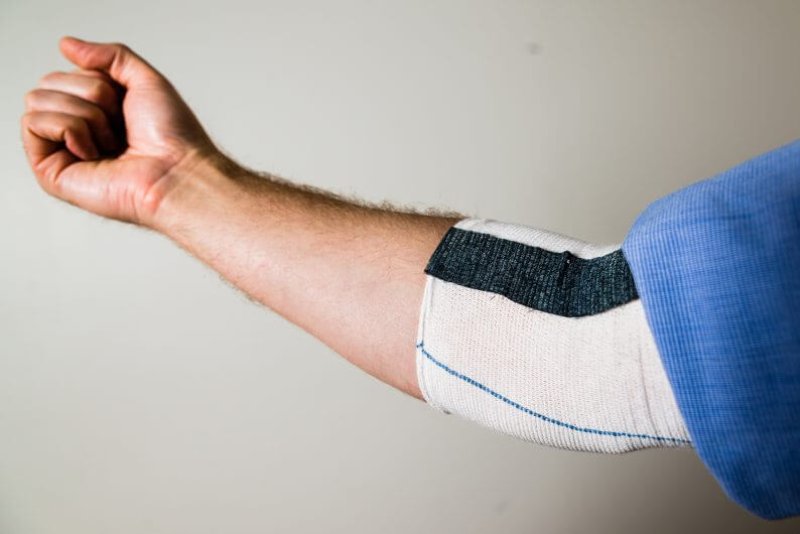
Credit: Thor Balkhed/Linköping University

Would you wear clothing or, say, shoelaces or a belt made of muscle fibers? What if those fibers could endure more energy before breaking than cotton, silk, nylon, or even Kevlar, and be produced without harm coming to any animals?

Researchers at the McKelvey School of Engineering at Washington University in St. Louis have now developed a synthetic chemistry technology that could make this feasible. The method allows them to polymerize proteins inside of engineered microbes. Using the technology, the team engineered microbial production of the high molecular weight muscle protein, titin, which was then spun into fibers. Tests showed the fibers outperformed many synthetic and natural polymers.

“The beauty of the system is that it’s really a platform that can be applied anywhere,” said Cameron Sargent, a PhD student in the division of biological and biomedical sciences. 

Mis- and disinformation are distorting science and public policy. Subscribe to our Daily and Weekly Digests for incisive coverage of ‘disruptive’ innovations in AI, agricultural biotechnology, food, chemicals, nuclear energy, vaccines, and other disruptive innovations.

Aside from its potential use in fancy clothes or protective armor, Sargent pointed out that the material could have biomedical applications as well. Because it’s nearly identical to the proteins found in muscle tissue, this synthetic material is presumably biocompatible and could therefore be a great material for sutures, tissue engineering, and so on.


This is an excerpt. Read the original post here. 

Related Articles

Infographic: Global regulatory and health research agencies on whether glyphosate causes cancer

Infographic: Global regulatory and health research agencies on whether glyphosate causes cancer

Does glyphosate—the world's most heavily-used herbicide—pose serious harm to humans? Is it carcinogenic? Those issues are of both legal and ...

Most Popular

ChatGPT-Image-Mar-10-2026-01_39_01-PM
Viewpoint—“Miracle molecule” debunked: Why acemannan supplements don’t work
ChatGPT-Image-Sep-10-2026-10_36_07-AM
Viewpoint: Even lousy scientific articles can shield authors when they hype dubious health claims and products
Screenshot-2026-10-01-at-10.52.08-AM
Non-browning CRISPR gene-edited bananas move one step closer to British markets
ChatGPT-Image-Sep-23-2026-02_36_39-PM
Viewpoint: After firing the entire National Science Board, Trump reshapes funding initiatives. Here’s the good and the bad.
generated-1790707585414
Facts & Fallacies podcast: America's health care system is broken. A doctor explains how to fix it
ChatGPT-Image-Sep-21-2026-03_15_09-PM
Viewpoint: Chipotle-inspired lesson: 10,000 sick customers suggest that processed foods can be safer than fresh ones
Screenshot-2026-09-22-at-10.54.12-AM
‘They misunderstand science’: Research attempting to tie autism to changes in the gut microbiome comes under fire
ChatGPT-Image-Sep-21-2026-11_21_39-AM
Viewpoint: Food cults: Online ‘nutrition communities’ can pose unique dangers
glp menu logo outlined

Get news on human & agricultural genetics and biotechnology delivered to your inbox.