
The startup Living Carbon claims their fast-growing genetically engineered (GE) trees could increase forest carbon capture by 1.4-2 gigatons per year, at least 18% of yearly carbon sequestration by forests globally. While Living Carbon and others are right that fast-growing GE trees have huge climate mitigation potential, they are missing the most effective way to use them. Forests do indeed draw down a massive amount of carbon every year, but interventions to increase their sequestration potential face daunting challenges. Regardless of carbon sequestration potential, the underappreciated potential for fast-growing trees to mitigate climate change is by increasing timber yields.
Information about Living Carbon is still sparse — their website is just an animation of a growing tree, and media coverage is limited and sometimes contradictory. The company is genetically engineering or gene editing trees (maybe poplar-aspen hybrids, maybe poplars and pines) that grow faster and might also be resistant to decay. Despite limited information about Living Carbon’s technology and others to come, we should focus on the most effective ways to grow these trees.
Faster-growing trees for timber production could effectively mitigate climate change by reducing deforestation. Global demand for timber is growing and contributing to deforestation, which releases the carbon stored in forests into the atmosphere, contributing to greenhouse gas emissions. Higher timber yields could help meet growing demand with less land and therefore less deforestation. With high enough yields, land that is currently harvested for lumber could even be freed up for restoration and preservation. Increasing yields not just of trees but also of crops and animals is key to slowing deforestation and its large climate impact. In previous work, we estimated that genetically engineered crops that increase yields by 15% could decrease global food system emissions from land conversion by 5%. Unfortunately, the climate mitigation potential of increasing timber yields is not currently part of the hype about fast-growing trees.
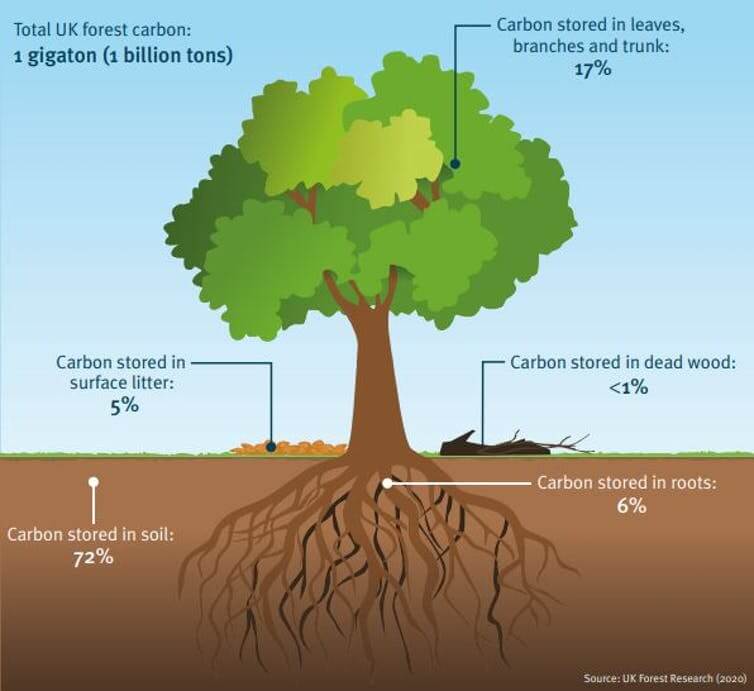
The potential of fast-growing GE trees is different if planted in existing or restored forests. Reforestation could contribute significant carbon sequestration: in a highly optimistic future scenario, full reforestation of almost 6 million hectares of agricultural land globally — 60% of US land area — could offset about 4 gigatons of emissions yearly by 2050, or 8% of 2016 global GHG emissions. Aside from the difficult task of liberating enough agricultural and other lands for reforestation, considerations include ensuring that wildlife habitat, water filtration, and other forest functions are enhanced, not just carbon sequestration, and minimizing the sometimes negative climate impacts of reforestation. Monocultures do not satisfy these varied goals of reforestation, so the potential of fast-growing genetically engineered trees to increase carbon sequestration in reforested areas is limited by the percentage of reforested area they can make up. Fast-growing GE trees could seemingly increase the carbon sequestration potential of reforested areas by reaching old-growth status faster, but considering these challenges it certainly wouldn’t be by a yearly 1.4–2 gigatons (Living Carbon’s claim), which is 35% of carbon sequestered in a highly optimistic reforestation scenario.
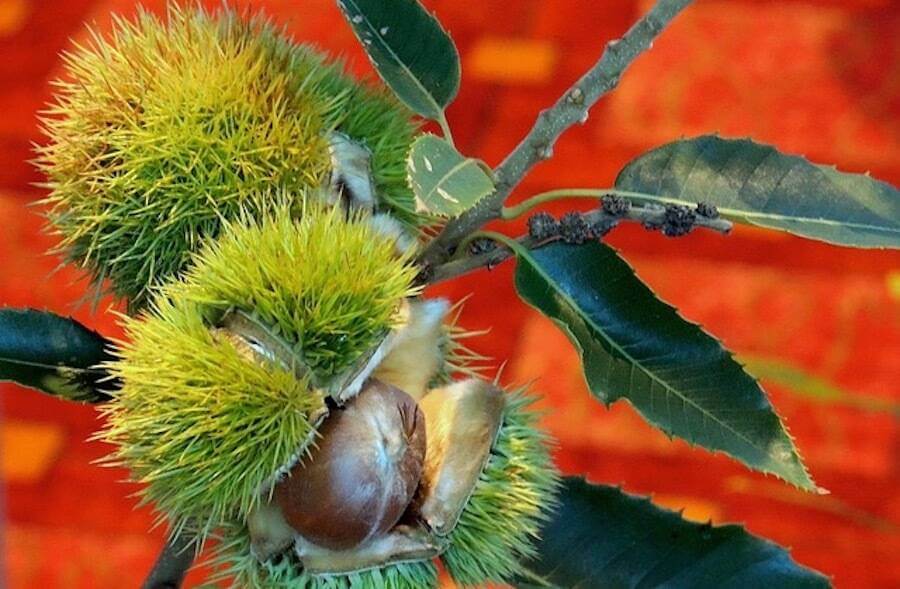
If fast-growing GE trees can increase the carbon sequestration potential of reforested areas, regulation and public perception still pose barriers. On a global scale, there is only one commercialized fast-growing[1]genetically engineered tree — approved in Brazil in 2015, but yet to be grown in another country — because public opposition limits commercialization, and many country-level regulations and widespread sustainable forest management certifications prohibit genetically engineered organisms. In the US, a promising genetically engineered disease-resistant American Chestnut is being considered for planting in the wild and seems to be shaking up some environmental groups’ opposition to GMOs. But even if Living Carbon’s trees are gene-edited in a way that keeps them from being covered by the most time-consuming regulation, public opposition may still constitute a significant hurdle.

Unlike the American Chestnut, which is only engineered for resistance to the blight that wiped it out of US forests, trees engineered for faster growth could face more public opposition due to fears of them out-competing other trees or becoming invasive. Living Carbon seems to have addressed this fear by engineering trees that don’t produce seeds and can only spread via cuttings, which could mean they can only be planted by humans (or potentially that they spread clonally via root systems underground as aspen do). This may assuage public concerns, but the threshold is potentially high considering that a third of Americans still think food with GMO ingredients is worse for health, despite decades of research and scientific consensus supporting their safety; on the other hand, 70% believe that genetically engineering mosquitoes to prevent the spread of disease by limiting their reproduction is an “appropriate use of technology”.
Ultimately, reforestation is a crucial part of climate mitigation, and more productive trees, crops, and animals are critical to reducing deforestation. It will take decades to develop new more productive varieties, but addressing climate change is a long-term challenge and we’ll need innovative technologies even decades from now. Regardless, regulatory reforms are necessary to take fuller advantage of the modern breeding tools that can increase productivity.
Notes:
-
A few genetically engineered trees with other traits are commercialized: virus-resistant papaya and non-browning apple in the US, and insect-resistant poplar in China. A virus-resistant plum has been deregulated in the US but is still awaiting commercialization.
Emma Kovak is a food and agriculture analyst at the Breakthrough Institute. Follow her on Twitter @EmmaKovak
A version of this article was originally posted at the Breakthrough Institute and is reposted here with permission. The Breakthrough Institute can be found on Twitter @TheBTI