‘Life as we made it’ book review: Why ‘intervening in nature’ is not new and should not be feared

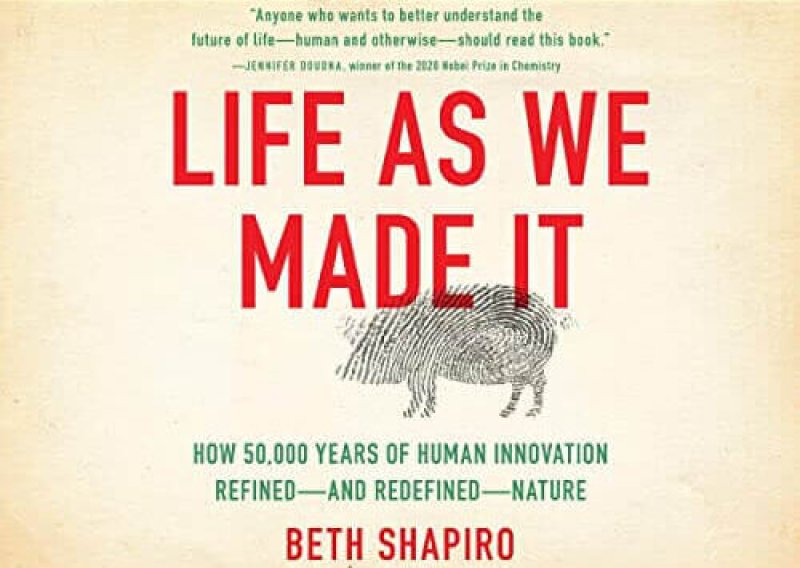
Life as We Made It by Beth Shapiro, an exploration of biotechnology, human evolution and our significant and often unwelcome impact on the planet, casts doubt on whether “natural” is always best, or indeed whether there is such a thing as “natural” – understood as a pristine sphere untouched by human activity.

People often baulk at the idea of deliberately intervening in nature, but biotechnology is nothing new, argues Shapiro, an evolutionary paleobiologist at the University of California.

Follow the latest news and policy debates on sustainable agriculture, biomedicine, and other ‘disruptive’ innovations. Subscribe to our newsletter.

Ensuring a livable future – for flora and fauna, as well as humans – is not a matter of retreating from nature, but of shaping it intelligently and deliberately with our “increasingly advanced technologies”.

“We cannot step back and allow species to evolve along their prehuman trajectories,” writes Shapiro. “We are too embedded, our technologies too advanced, our population too large to disentangle ourselves.”

Shapiro does not moralise or pretend that she – or biotechnology – holds all the answers. But she is clear that humanity, the climate and biodiversity are facing unprecedented challenges and that we need to think clearly and critically about potential solutions, and not reject them reflexively out of fear or revulsion at the prospect of meddling with nature.


This is an excerpt. Read the full post here.

{{ reviewsTotal }}{{ options.labels.singularReviewCountLabel }}
{{ reviewsTotal }}{{ options.labels.pluralReviewCountLabel }}
{{ options.labels.newReviewButton }}
{{ userData.canReview.message }}

Related Articles

Infographic: Global regulatory and health research agencies on whether glyphosate causes cancer

Infographic: Global regulatory and health research agencies on whether glyphosate causes cancer

Does glyphosate—the world's most heavily-used herbicide—pose serious harm to humans? Is it carcinogenic? Those issues are of both legal and ...

Most Popular

ChatGPT-Image-Jun-11-2026-01_15_03-PM
Selective Pressure, Selective Silence
ChatGPT Image Jun 3, 2026, 03_14_43 PM
Viewpoint: How Earthjustice became the poster child for the abuse of special interest activist funding
ChatGPT Image Jun 3, 2026, 03_54_37 PM
Viewpoint: “Turn on, tune in, drop out”—Kennedy embraces the Timothy Leary psychedelic revolution
ChatGPT-Image-Mar-10-2026-01_39_01-PM
Viewpoint—“Miracle molecule” debunked: Why acemannan supplements don’t work
Screenshot-2026-06-05-at-2.12.30-PM
Some plants can poison you. So how did humans figure out what is safe to eat?
Screenshot 2026-05-26 at 10.15
Viewpoint: Double standard—Why does the wellness industry get a free pass while Big Healthcare is treated as morally suspect?
drug look like ozempic
Six key health insights from taking weight-loss drugs
ChatGPT-Image-Jun-13-2026-11_51_39-AM
Viewpoint: COVID lab leak? Misguided backers of the lab leak theory refused to give up
ChatGPT-Image-May-26-2026-07_51_21-AM-2
Viewpoint: There are more than 1,000 chemicals in a cup of coffee—including many substances that can cause cancer. Why isn’t it banned?
Screenshot-2026-06-14-at-9.53.54-AM
Is the World Cup a perfect storm for the spread of infectious diseases?
ChatGPT Image May 26, 2026, 08_42_17 AM (1)
Viewpoint: Greenpeace and poison: How environmental advocacy groups rely on compliant (and often ignorant) journalists to spread disinformation and spark litigation
glp menu logo outlined

Get news on human & agricultural genetics and biotechnology delivered to your inbox.