‘Category X’: What’s the science behind asexuality?

Credit: David Allan Barker

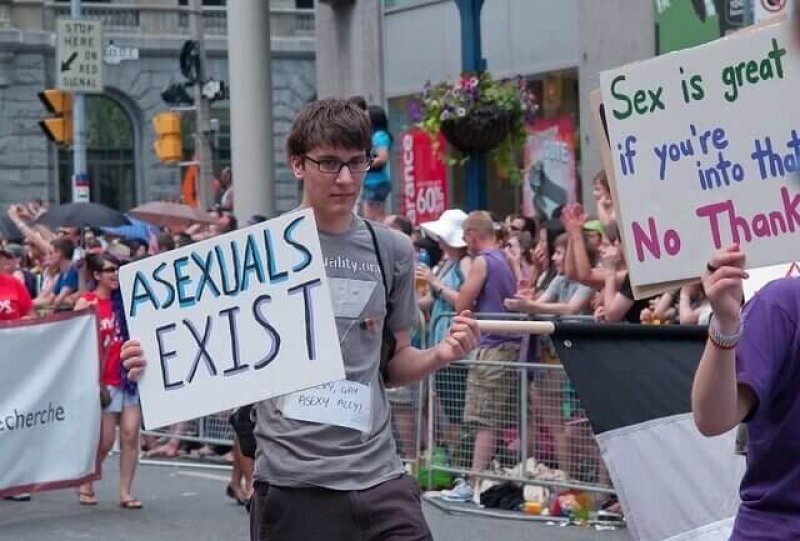
“Asexuality is an identity on equal footing with heterosexuality, homosexuality and so on”, says Sunniva Árja Tobiasen.

She is one of the few academics in Norway who has immersed herself in research on asexuality, during her master’s programme at the University of Oslo. Unlike other sexual identities, people don’t talk much about being asexual in our society.

For some individuals, it can therefore be difficult to reconcile themselves to the fact that they do not feel a sexual attraction to other people.

Follow the latest news and policy debates on sustainable agriculture, biomedicine, and other ‘disruptive’ innovations. Subscribe to our newsletter.

The first time asexuality was described in a way similar to how we think of it today was in 1954. In the Kinsey report on women’s sexual habits and behaviour, the authors introduced category X:

Finally, an individual receives the designation X if he or she does not react erotically to either heterosexual or homosexual stimuli.

Both Tobiasen and [professor Randi Elin] Gressgård believe that the medical community has contributed to pathologizing asexuality.

The definition of diagnoses labelled sexual dysfunctions overlaps with the description of being asexual.

“Experiencing little or no sexual desire does not have to mean that something is wrong,” says Tobiasen.


This is an excerpt. Read the original post here.

Related Articles

Infographic: Global regulatory and health research agencies on whether glyphosate causes cancer

Infographic: Global regulatory and health research agencies on whether glyphosate causes cancer

Does glyphosate—the world's most heavily-used herbicide—pose serious harm to humans? Is it carcinogenic? Those issues are of both legal and ...

Most Popular

ChatGPT-Image-Aug-4-2026-10_15_14-AM
Viewpoint—A hard look at the Fauci diaries: Do they change what we know about COVID’s origins?
ChatGPT-Image-Mar-10-2026-01_39_01-PM
Viewpoint—“Miracle molecule” debunked: Why acemannan supplements don’t work
ChatGPT-Image-Aug-4-2026-12_42_58-PM
Viewpoint: Fact-checking CNN interview with RFK, Jr. underscores the depth of his disinformation delusions
Picture1
Hiroshima at 81: America’s new nuclear bomb, a buried Iranian target, and a question no one wants to ask
ChatGPT-Image-Jul-17-2026-09_50_27-AM
Viewpoint: How disease tracking and prevention has cratered under the Kennedy-Trump administration
ChatGPT-Image-Aug-4-2026-07_52_00-PM
No liability for scientific due diligence: California Supreme Court rejects bizarre lawsuit faulting Gilead for fully evaluating HIV drug before release
ChatGPT-Image-Aug-4-2026-09_31_50-AM-2
Viewpoint: Could the U.S. become dependent on China to develop critical new genetic and drug therapies?
ChatGPT-Image-Aug-4-2026-02_05_46-PM
Does Congress have the guts to successfully challenge Trump’s politicization of science funding?
Screenshot-2026-07-17-at-1.34.59-PM
Poll: Vaccine hesitancy soars when patients distrust health providers and turn to social media
png livestock cow cattle a
Consumer skepticism about gene-edited milk is neither fixed nor particularly high—and falls even more if it’s priced lower
ChatGPT Image Jul 29, 2026, 09_08_15 AM 2
The retreat of environmental extremism: Why activist NGOs are losing favor
ChatGPT-Image-Jun-25-2026-12_23_17-PM
No, Bill Gates did not secretly engineer ticks to promote veganism
glp menu logo outlined

Get news on human & agricultural genetics and biotechnology delivered to your inbox.