Viewpoint: How ‘bad faith’ journalists corrupt our understanding of crop biotechnology and undermine science

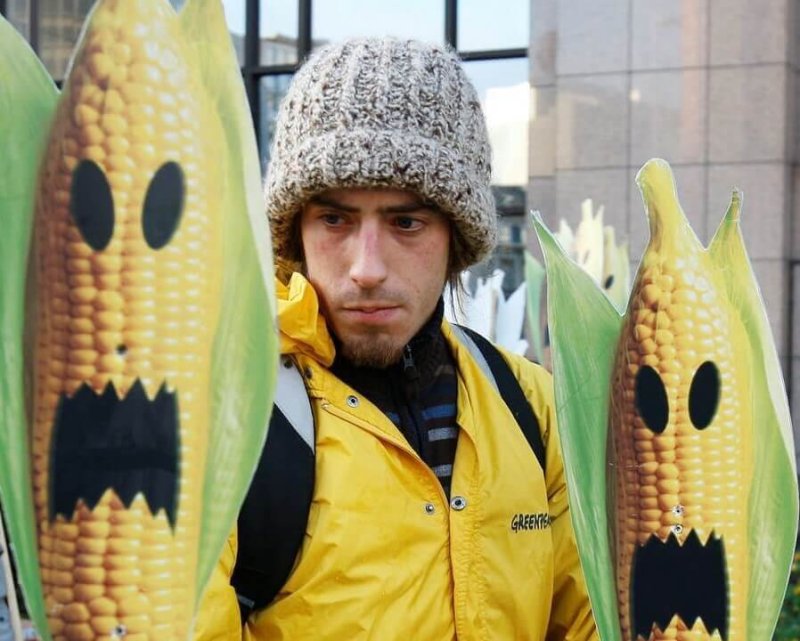
Greenpeace anti-GMO activist in Belgium. Credit: Thierry Roge

In a column published in the newspaper Le Monde, the journalist Stรฉphane Foucart, explains that GMO technology has not significantly increased yields in the United States, contrary to the promises that this discovery had announced. What is it really? Are GMOs really unproductive today?

Marcel Kuntz: This column asks important questions. Answering them supposes being as precise as possible.

Thus, it must first be said that the said journalist must precisely be qualified as a journalist-activist. And even more exactly an activist for, let’s call it, anti-technology environmentalism. That encompasses a hate of GMOs, among others.ย It is perfectly his right.ย The problem is that he does not express his activism in a medium perceived unambiguously as partisan of this cause.

Follow the latest news and policy debates on sustainable agriculture, biomedicine, and other ‘disruptive’ innovations. Subscribe to our newsletter.

The paper is right to speak of โ€œtwo antagonistic visions of agriculture.โ€ It should simply be specified that the โ€œpeasantโ€ vision, as opposed to the โ€œindustrial,โ€ is motivated by anti-capitalism, that is to say the refusal of the integration of agriculture into the market economy. .ย This choice can be understood (even if French agriculture is plural), but it is too often sheltered behind the lies of the food fear merchants.

[Editor’s note: This article was originally published in French and has been translated and edited for clarity.]


This is an excerpt. Read the original post here.

{{ reviewsTotal }}{{ options.labels.singularReviewCountLabel }}
{{ reviewsTotal }}{{ options.labels.pluralReviewCountLabel }}
{{ options.labels.newReviewButton }}
{{ userData.canReview.message }}

Related Articles

Infographic: Global regulatory and health research agencies on whether glyphosate causes cancer

Infographic: Global regulatory and health research agencies on whether glyphosate causes cancer

Does glyphosateโ€”the world's most heavily-used herbicideโ€”pose serious harm to humans? Is it carcinogenic? Those issues are of both legal and ...

Most Popular

ChatGPT-Image-Jun-16-2026-10_29_11-AM
Whatโ€™s behind Anthropicโ€™s warning about the accelerating development of AI
Screenshot-2026-06-16-at-10.02.22-PM
Viewpoint: โ€˜Industrial foodโ€™ primerโ€”Challenging the dangerous delusions of the alternative food movement
Screenshot-2026-06-17-at-11.57.12-AM
Viewpoint: Raw milk and the myth of safetyโ€”ProPublica exposes the growing anti-homogenization movement
ChatGPT-Image-Jun-16-2026-10_01_45-AM-2
Viewpointโ€”Recursive self-improvement: AI leader Anthropic calls for AI slowdown
ChatGPT-Image-Jun-9-2026-01_11_37-PM
Turmeric supplements: More risks than benefits
ChatGPT-Image-Mar-10-2026-01_39_01-PM
Viewpointโ€”โ€œMiracle moleculeโ€ debunked: Why acemannan supplements donโ€™t work
ChatGPT-Image-Jun-15-2026-02_31_28-PM-2
Trump-appointed cancer panel head backed by supplement and anti-vaccine companies promotes discredited support forย ivermectin as a potential cure
ChatGPT-Image-Jun-4-2026-03_07_27-PM
AAP v. Kennedy: While a court challenge grinds on, RFK Jr. quietly advances his anti-vaccine conspiracy agenda
Screenshot-2026-06-16-at-11.23.32-AM
In a rebuke to RFK, Jr.โ€™s anti-vax crusade, journal retracts study claiming hepatitis B vaccineโ€“autism link
newborn infant baby mother
Facts & Fallacies Podcast: The truth about vitamin K shots
ChatGPT Image Jun 16, 2026, 12_03_37 PM
Kennedy accused of trying to โ€˜bullyโ€™ science journal that retracted study linking vaccines to infant deaths
Screenshot 2025-07-30 at 10.48
Can gene editing eliminate Down syndrome? Scientists have done it in lab-grown cells
glp menu logo outlined

Get news on human & agricultural genetics and biotechnology delivered to your inbox.