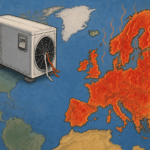
CRISPR climate game changer: What if we engineered rice to dramatically cut methane emissions?

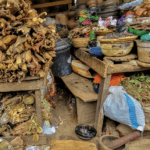
Flooded rice cultivation contributes significantly to GHG emissions. Credit: Shutterstock

The complexity of microbial communities has been a major obstacle to discovering technologies that can prevent diseases and improve agriculture. It’s a critical step toward curbing methane, a harmful greenhouse gas that is emitted during rice production.

Follow the latest news and policy debates on sustainable agriculture, biomedicine, and other ‘disruptive’ innovations. Subscribe to our newsletter.

The crop is grown in flooded fields. That water cuts off oxygen to the soil, which allows methane-producing microbes to thrive: Rice production is responsible for as much as 34 million tons of methane a year, or about 2% of greenhouse-gas emissions. China and India make up half that total.

Rice fields are like smokestacks for soil methane, and to shut down those emissions, scientists first need to understand the microbes. The trouble has been that culturing microbial communities and tinkering with them in a lab with traditional tools “could take years or might fail altogether,” IGI authors write. Their new paper demonstrates that using a Crispr-based system can “accelerate this process to weeks.”

Timothy Searchinger, a senior research scholar at Princeton University’s Center for Policy Research on Energy and the Environment, welcomes progress toward a high-ambition, high-reward genetic-engineering breakthrough in concert with proven real-world techniques—the topic of a policy paper he issued in November.

This is an excerpt. Read the original post here.

{{ reviewsTotal }}{{ options.labels.singularReviewCountLabel }}
{{ reviewsTotal }}{{ options.labels.pluralReviewCountLabel }}
{{ options.labels.newReviewButton }}
{{ userData.canReview.message }}

Related Articles

Infographic: Global regulatory and health research agencies on whether glyphosate causes cancer

Infographic: Global regulatory and health research agencies on whether glyphosate causes cancer

Does glyphosate—the world's most heavily-used herbicide—pose serious harm to humans? Is it carcinogenic? Those issues are of both legal and ...

Most Popular

ChatGPT-Image-Mar-10-2026-01_39_01-PM
Viewpoint—“Miracle molecule” debunked: Why acemannan supplements don’t work
ChatGPT-Image-Jul-8-2026-12_32_48-PM
Viewpoint: SCOTUS strikes a blow against junk science in Bayer glyphosate case. Will it deter mass tort litigators?
afb-a-b
As the EU loosens restrictions on agricultural gene editing, it remains years behind the rest of the world on equally-safe GMO foods
ChatGPT-Image-Jul-7-2026-01_57_55-PM
Viewpoint: Europe’s rejection of air conditioning is the poster child for misunderstanding how to mitigate the impact of climate change
ChatGPT-Image-Jun-25-2026-12_23_17-PM
No, Bill Gates did not secretly engineer ticks to promote veganism
Screenshot-2026-07-10-at-2.02.54-PM
Viewpoint: In abortion-restricting Florida, misinformation abounds when Republican congresswoman faces an ectopic pregnancy
Screenshot-2026-07-10-at-3.25.10-PM
Using AI for health questions? Here are 4 tips for the most accurate answers.
Screenshot-2026-07-10-at-3.10.50-PM
Snake-oil cures throughout history
Screen-Shot-at-PM-pe-vra-kipgaprbdo-vd-ms-jpule-n-jqqaxf-l-e
Viewpoint: Will new breeding techniques help make European agriculture more competitive?
Screenshot-2026-07-10-at-12.55.21-PM
Cancer health facts are particularly susceptible to online misinformation
Screenshot-2026-07-08-at-2.14.27-PM
Belief in unproven dietary regimes, vitamins, and crank therapies is putting patients’ health in danger and increasing the risk of getting cancer
ChatGPT-Image-Jul-1-2026-03_33_49-PM
‘Alternative’ cancer treatments that could kill you
ChatGPT-Image-Jun-30-2026-10_27_31-AM
Viewpoint: Europe clears the way for gene-edited crops — but fear-driven restrictions still slow their full potential
glp menu logo outlined

Get news on human & agricultural genetics and biotechnology delivered to your inbox.