‘Great potential harm to international harmony’: When COVID broke, key scientists believed virus could have leaked from Wuhan lab, but Anthony Fauci and Francis Collins suppressed debate

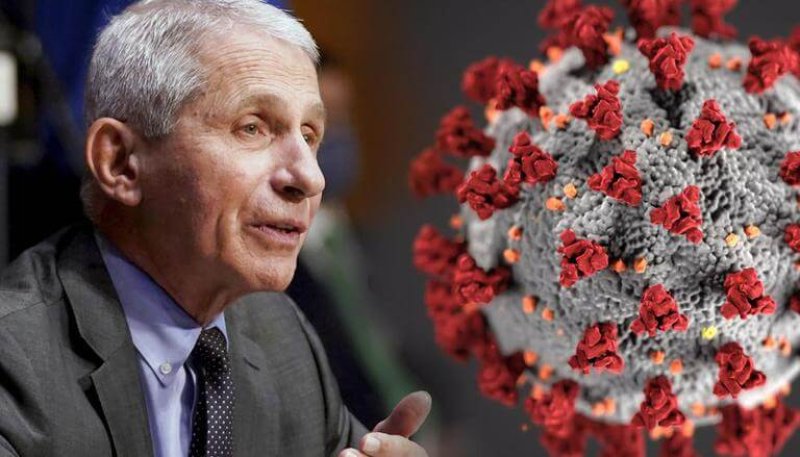
Dr. Anthony Fauci. Credit: AP

Early in the pandemic, multiple scientists urged NIAID Director Anthony Fauci and NIH Director Francis Collins to seriously consider the theory that Covid escaped from a Chinese laboratory, arguing that the lab-leak theory, which Fauci and Collins have downplayed since the pandemic began, was more plausible than the natural origin explanation.

Mike Farzan, an immunology researcher and the discoverer of the SARS receptor, Bob Garry, a virology expert, and Dr. Andrew Rambaut, a British evolutionary biologist, all observed that a particular feature of the virus, the “furin cleavage site,” was peculiar and suggested gain-of-function engineering. Their comments were made during a February 2020 conference call of experts, the notes of which were presented to Fauci and Collins and obtained by congressional Republicans.

One month later, in March 2020, Collins said the lab-leak hypothesis was “outrageous.” Similarly, in May 2020, Fauci told National Geographic that Covid “could not have been artificially or deliberately manipulated.”

Mis- and disinformation are distorting science and public policy. Subscribe to our Daily and Weekly Digests for incisive coverage of ‘disruptive’ innovations in AI, agricultural biotechnology, food, chemicals, nuclear energy, vaccines, and other disruptive innovations.

An unsigned meeting note, which was presumably signed off on by Fauci and Collins, reads: “I share your view that a swift convening of experts in a confidence inspiring framework (WHO seems really the only option) is needed, or the voices of conspiracy will quickly dominate, doing great potential harm to science and international harmony….”


This is an excerpt. Read the original post here.

Related Articles

Infographic: Global regulatory and health research agencies on whether glyphosate causes cancer

Infographic: Global regulatory and health research agencies on whether glyphosate causes cancer

Does glyphosate—the world's most heavily-used herbicide—pose serious harm to humans? Is it carcinogenic? Those issues are of both legal and ...

Most Popular

ChatGPT-Image-Sep-17-2026-12_28_43-PM
Vitamin D, omega-3 fish oil and glucosamine supplements could cause brain damage 
ChatGPT-Image-Mar-10-2026-01_39_01-PM
Viewpoint—“Miracle molecule” debunked: Why acemannan supplements don’t work
ChatGPT-Image-Sep-17-2026-10_17_15-AM
Viewpoint: Why are the less intelligent more likely to be conservative—and smarter people more socially liberal?
Screenshot-2026-09-10-at-12.20.19-PM
'Jet fuel didn't melt the steel': 9/11 conspiracy theories debunked
Screenshot-2026-08-12-at-11.31.46-AM
AI is helping develop new vaccines
Screenshot-2026-09-16-at-12.07.47-PM
The heated debate over trans athletes in the WNBA
ChatGPT-Image-Sep-9-2026-02_48_24-PM
Viewpoint: Trump-RFK Jr. report on “Gender Ideology & Left-wing Ideology’ targets LGBTQ community—and science
ChatGPT-Image-Sep-15-2026-12_15_00-PM
Viewpoint: Women, depression and empathy: Explaining the gender gap in views about child-murderer Lindsay Clancy
Screenshot-2026-09-17-at-10.24.54-AM
Viewpoint: Dubious environmental fears: Why the AI buildout is critical to America’s ecological future
Screenshot 2026-09-11 at 12.39
Child-monitoring apps: When the cure is worse than the harm—and how the technology could be tweaked
ChatGPT-Image-Sep-15-2026-11_36_23-AM
Doomsday cult? Why we should be suspicious of end-of-the-world claims
glp menu logo outlined

Get news on human & agricultural genetics and biotechnology delivered to your inbox.