Infographic: Gene editing FAQ

Credit: Columbia
Credit: Columbia

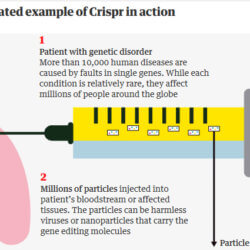
Gene editing is when a scientist makes a tiny, controlled change in the DNA of a seed or animal, including humans. In agriculture, it can improve productivity, enhance nutrition or help reduce the use of inputs, from chemicals to water. In humans, it can be used to edit harmful mutations to cure diseases with genetic origins.

CRISPR is one of the most used and well known gene editing tools. The simplest way to envision this process is to imagine editing a giant manuscript. You flip through the hundreds of pages until you reach the once sentence you wish to alter, and then carefully change a single word. This creates only a tiny change in an enormously complex word document or, in this case, genome.

Mis- and disinformation are distorting science and public policy. Subscribe to our Daily and Weekly Digests for incisive coverage of ‘disruptive’ innovations in AI, agricultural biotechnology, food, chemicals, nuclear energy, vaccines, and other disruptive innovations.

This infographic developed by the Cornell Alliance for Science explains gene editing in more detail:
screenshot pm

Download the PDF here: Gene-editing-FAQ

Related Articles

Infographic: Global regulatory and health research agencies on whether glyphosate causes cancer

Infographic: Global regulatory and health research agencies on whether glyphosate causes cancer

Does glyphosate—the world's most heavily-used herbicide—pose serious harm to humans? Is it carcinogenic? Those issues are of both legal and ...

Most Popular

Cancer mRNA Vaccine Concept
'A new frontier': Though scorned by RFK Jr., personalized mRNA vaccine offers hope for many suffering from melanoma skin cancer
Screenshot-2026-10-22-at-12.45.14-PM
Pennsylvania tells doctors to prepare for a surge in newborn measles cases—a complication unseen in decades
Diet Soda with Measuring Tape 2
Science challenges anti-soda activists: No, sodas won’t make you fat
Crimson Drips Over the White House
In Trump administration redirect, U.S. steers NIH sharply away from biodefense and pandemic preparedness
ChatGPT-Image-Mar-10-2026-01_39_01-PM
Viewpoint—“Miracle molecule” debunked: Why acemannan supplements don’t work
Screenshot 2026-10-16 at 5.38
PFAS in Agriculture: Science, Uncertainty, and Risk Communication
West-Virginia-SNAP-Water-Bottle-Sticker
A ‘shining success’ or 'empty promises’: Two years along, West Virginians assess MAHA’s food promises
Rustic Skillet of Raw Brains
‘Weird food’? Testicle- and brain-eating, supplement-gulping MAHA health food enthusiasts defend their ‘natural’ diets
Screenshot 2026-10-23 at 2.28
Climate disruption alert: Global emissions hold steady while Trump’s America fuels more warming
Healthy Food Sensitivity Test Collection
Viewpoint: That’ll be $300: The wellness industry’s junk science scam to ‘fix’ your immune system that isn’t broken
Strawberry Clamshell with Warning Sticker
Viewpoint: Activists hype ‘dangerous level’ of pesticide residues in Driscoll berries: Separating health concerns from fear-mongering
Prescription Capsules Scattered on Twenty-Dollar Bills
Facts & Fallacies podcast: America's health care system is broken. A doctor explains how to fix it, Part 2
Government Briefing on Autism Trends
Viewpoint: ‘Statistical murder’: Kennedy’s expanding record of “duplicity and mendacity”
Vibrant Social Media Confetti Explosion
Health misinformation minefield: Countering online deluge by copying its style
glp menu logo outlined

Get news on human & agricultural genetics and biotechnology delivered to your inbox.