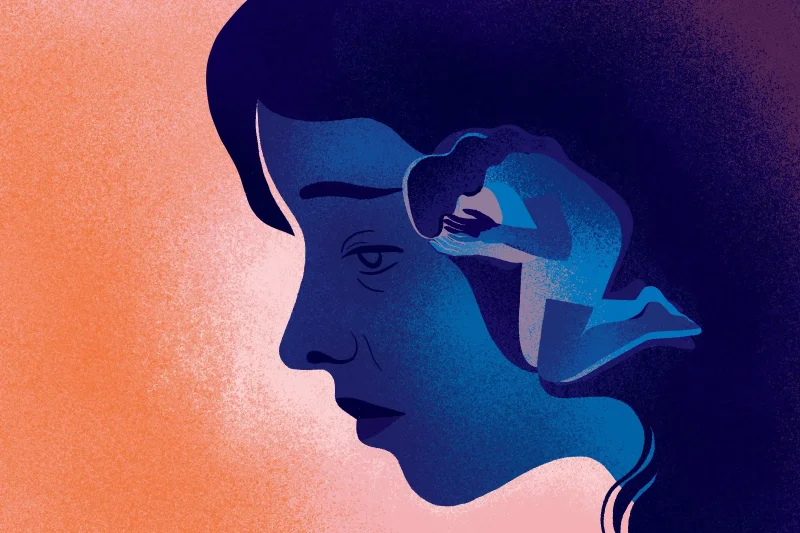
Coping with loss: Should grieving for a loved one longer than a year be considered a mental illness?

Credit: Kasia Bogdanska for TIME

After more than a decade of argument, psychiatry’s most powerful body in the United States added a new disorder this week to its diagnostic manual: prolonged grief.

The decision marks an end to a long debate within the field of mental health, steering researchers and clinicians to view intense grief as a target for medical treatment, at a moment when many Americans are overwhelmed by loss.

The new diagnosis, prolonged grief disorder, was designed to apply to a narrow slice of the population who are incapacitated, pining and ruminating a year after a loss, and unable to return to previous activities.

Follow the latest news and policy debates on sustainable agriculture, biomedicine, and other ‘disruptive’ innovations. Subscribe to our newsletter.

“I completely, utterly disagree that grief is a mental illness,” said Joanne Cacciatore, an associate professor of social work at Arizona State University who has published widely on grief, and who operates the Selah Carefarm, a retreat for bereaved people.


“We would never put a time frame around when someone should or shouldn’t feel that they have moved forward,” said Catrina Clemens, who oversees the victim services department of Mothers Against Drunk Driving, which provides services to bereaved relatives and friends. The organization encourages bereaved people to seek mental health care, but has no role in diagnosis, said a spokesperson.


This is an excerpt. Read the original post here. 

{{ reviewsTotal }}{{ options.labels.singularReviewCountLabel }}
{{ reviewsTotal }}{{ options.labels.pluralReviewCountLabel }}
{{ options.labels.newReviewButton }}
{{ userData.canReview.message }}

Related Articles

Infographic: Global regulatory and health research agencies on whether glyphosate causes cancer

Infographic: Global regulatory and health research agencies on whether glyphosate causes cancer

Does glyphosate—the world's most heavily-used herbicide—pose serious harm to humans? Is it carcinogenic? Those issues are of both legal and ...

Most Popular

ChatGPT-Image-Jun-21-2026-02_33_08-PM
Texas Air Force base flu outbreak soars to over 220 cases, and one soldier has died after Secretary Hegseth scrapped mandatory military flu shots 
ChatGPT-Image-Jun-9-2026-01_11_37-PM
Turmeric supplements: More risks than benefits
ChatGPT-Image-Jun-15-2026-11_51_00-AM-4
Viewpoint: As the International Association for Research on Cancer loses influence, activists and trial lawyers scramble to protect a lucrative playbook
screenshot pm
Which is better for building healthy farm soil? Organic offers no special edge.
ChatGPT-Image-Jun-19-2026-04_11_20-PM
Daubert for Dummies—Scientific Reliability in U.S. Courts: Daubert, Rule 702, and Made-for-Litigation Evidence
wuhan institute of virology main entrance
​​COVID lab leak? Making a case that the Wuhan market origins theory is wrong
ChatGPT-Image-Jun-13-2026-11_51_39-AM
Viewpoint: COVID lab leak? Misguided backers of the lab leak theory refuse to give up
ChatGPT-Image-Jun-19-2026-05_21_35-PM
The American Medical Association doctors declare war on RFK, Jr.’s attack on safe vaccines
Screenshot-2026-06-18-at-11.41.51-AM
Viewpoint—Protecting baloney science: Far right senators move to protect the phony homeopathy industry
Screenshot-2026-06-19-at-4.53.19-PM
Viewpoint: How the Trump administration is thwarting the will of Congress and starving American science
Screenshot-2026-06-17-at-9.44.03-AM
Viewpoint: Embryos are becoming the newest battleground of love, loss, and legal uncertainty
Screenshot-2026-06-05-at-2.12.30-PM
Some plants can poison you. So how did humans figure out what is safe to eat?
ChatGPT-Image-Mar-10-2026-01_39_01-PM
Viewpoint—“Miracle molecule” debunked: Why acemannan supplements don’t work
glp menu logo outlined

Get news on human & agricultural genetics and biotechnology delivered to your inbox.