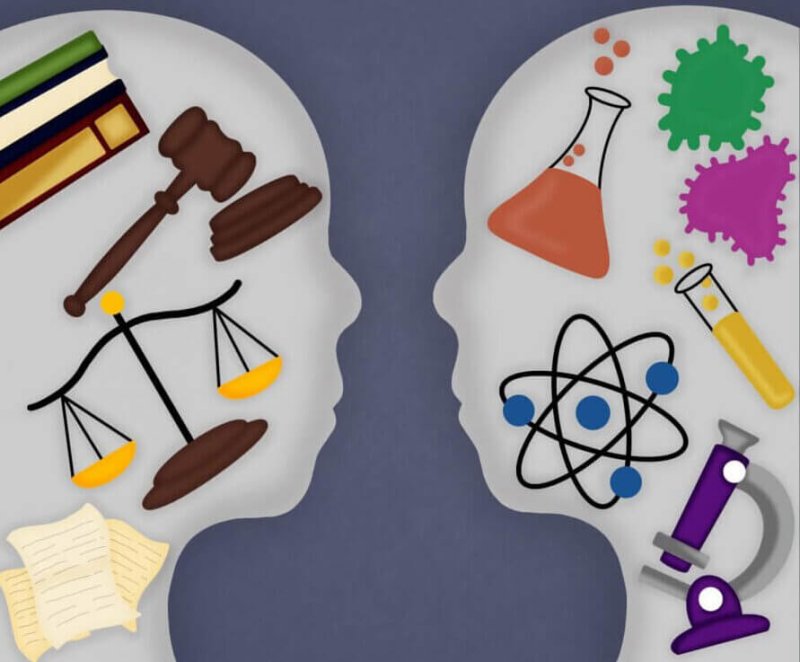
Podcast: Do facts matter when we we make policy decisions about sustainable agriculture? That’s being tested as the public debate over the benefits of gene editing in food and farming ramps up

Science v. politics, who will win? Credit: Stephanie Cortez
Innovation Forum founder Toby Webb talks with Jon Entine, executive director of the Genetic Literacy Project, about the rise of the use of gene editing in agriculture.

What distinguishes CRISPR and other new breeding techniques, including gene editing, from transgenic GMOs?

How are the public and regulators receiving these latest innovations?

Will Europe, long resistant to genetic innovation in the agricultural sector, break from its past as the UK and many individual countries want to greenlight more research and adoption of sustainable agricultural techniques?

Follow the latest news and policy debates on sustainable agriculture, biomedicine, and other ‘disruptive’ innovations. Subscribe to our newsletter.

In a wide-ranging discussion, they also highlight how the war in Ukraine is significantly impacting global food supply for humans and livestock, enhancing the case for GMO grain to help ease the pressures. Will politics or science win out?
Jon Entine is the founding editor of the Genetic Literacy Project, and winner of 19 major journalism awards. He has written two best-sellers, Taboo: Why Black Athletes Dominate Sports and Why We’re Afraid to Talk About It, and Abraham’s Children: Race, Genetics, and the DNA of The Chosen People. You can follow him on Twitter @JonEntine

Toby Webb is the founder of Innovation Forum, which focuses on analysis and convening meetings on the most difficult questions facing large companies. Toby also teaches Corporate Responsibility & Sustainability at Birkbeck College, University of London and King’s College London. He is now a visiting lecturer at Kings on corporate sustainability, supply chains and innovation. Find Toby on Twitter @webb_tobias

View the original post here

{{ reviewsTotal }}{{ options.labels.singularReviewCountLabel }}
{{ reviewsTotal }}{{ options.labels.pluralReviewCountLabel }}
{{ options.labels.newReviewButton }}
{{ userData.canReview.message }}

Related Articles

Infographic: Global regulatory and health research agencies on whether glyphosate causes cancer

Infographic: Global regulatory and health research agencies on whether glyphosate causes cancer

Does glyphosate—the world's most heavily-used herbicide—pose serious harm to humans? Is it carcinogenic? Those issues are of both legal and ...

Most Popular

ChatGPT Image Jun 3, 2026, 03_54_37 PM
Viewpoint: “Turn on, tune in, drop out”—Kennedy embraces the Timothy Leary psychedelic revolution
ChatGPT-Image-Jun-11-2026-01_15_03-PM
Selective Pressure, Selective Silence
Screenshot-2026-06-11-at-3.40.06-PM
'Toxin' detox: A gastroenterologist weighs in on $71 billion health trend
Screenshot-2026-06-05-at-2.12.30-PM
Some plants can poison you. So how did humans figure out what is safe to eat?
Screenshot-2026-06-05-at-1.44.09-PM
Viewpoint: Scientists have scrapped the worst-case climate scenario. Is that proof that climate change is a hoax, as Trump claims?
Screenshot-2026-06-11-at-4.00.17-PM
Gen Z burned by sunscreen misinformation and tanning myths
ChatGPT-Image-Jun-11-2026-10_34_44-AM-2
Will hi-tech genetic fortune-telling really help parents make healthier children?
Screenshot 2026-05-26 at 10.15
Viewpoint: Double standard—Why does the wellness industry get a free pass while Big Healthcare is treated as morally suspect?
Screenshot-2026-06-03-at-3.33.44-PM
Viewpoint: Vaccine deniers are attacking a life-saving Vitamin K shot for newborns that isn’t even a vaccine
Screenshot-2026-06-08-at-1.35.30-PM
Viewpoint: Social media and fake natural health propaganda fuel surge in use of mostly useless supplements

Sorry. No data so far.

glp menu logo outlined

Get news on human & agricultural genetics and biotechnology delivered to your inbox.