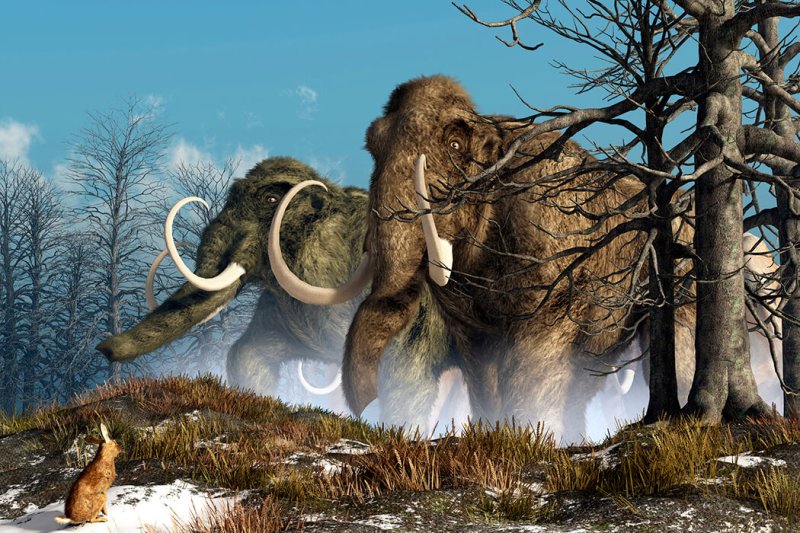
How did ancient animals evolve to be so giant?

Credit: JSTOR Daily
Credit: JSTOR Daily

Prehistoric giants used to populate the Earth. These behemoths included mighty dinosaurs, airplane-size pterosaurs, massive crocodiles and snakes, and even armadillos the size of cars. But today, there are just a few big animals on our planet.

What happened? Why aren’t there many giants left anymore?

Follow the latest news and policy debates on sustainable agriculture, biomedicine, and other ‘disruptive’ innovations. Subscribe to our newsletter.

Several major differences between dinosaurs and today’s largest animals, the mammals, may help explain the loss of behemoths… In dinosaurs, air sacs likely extended from their lungs to their bones, creating sturdy but light scaffolding, Edinburgh University paleontologist Steve Brusatte told Scientific American.

That gave dinosaurs skeletons that were “still strong and still flexible, but lightweight. That helped them get bigger and bigger and bigger,” Brusatte said. “The same way that skyscrapers are getting bigger and bigger and bigger because of the internal support structures.”

โ€ฆ

Brewers of gigantism shouldn’t forget the crucial ingredient of time, either. Though animal lineages tend to get larger over the generations, it takes a vast amount of evolutionary time to reach giant sizes, [paleobiologist Greg] Erickson said. And mass extinction events tend to wipe out larger creatures, [geobiology professor Geerat] Vermeij said, so these events can leave giant-animal slots unfilled for tens or hundreds of millions of years. “It took about 25 million years for the first mammals to reach a ton in weight,” he said.


This is an excerpt. Read the original post here.ย 

{{ reviewsTotal }}{{ options.labels.singularReviewCountLabel }}
{{ reviewsTotal }}{{ options.labels.pluralReviewCountLabel }}
{{ options.labels.newReviewButton }}
{{ userData.canReview.message }}

Related Articles

Infographic: Global regulatory and health research agencies on whether glyphosate causes cancer

Infographic: Global regulatory and health research agencies on whether glyphosate causes cancer

Does glyphosateโ€”the world's most heavily-used herbicideโ€”pose serious harm to humans? Is it carcinogenic? Those issues are of both legal and ...

Most Popular

Credit: ACSH
Viewpoint: Who and whatโ€™s to blame for the surge in vaccine-preventable diseases?
ChatGPT-Image-May-28-2026-12_56_54-PM
Viewpoint: Vaccines' non-specific effects? The โ€˜shoddyโ€™ Danish couple whose 'researchโ€™ inspires RFK, Jr.โ€™s health delusion
Organic-Produce
Viewpoint: Why you should ignore organic food advocatesโ€™ advice to avoid โ€˜pesticide soakedโ€™ conventional fruits and vegetables
ChatGPT Image Jun 3, 2026, 03_14_43 PM
Viewpoint: How Earthjustice became the poster child for the abuse of special interest activist funding
Screenshot-2026-06-05-at-2.12.30-PM
Some plants can poison you. So how did humans figure out what is safe to eat?
Screenshot-2026-06-08-at-11.05.51-AM
Can vaping lead to cancer? New โ€˜association studyโ€™ raises questions of โ€œlinks"
Screenshot-2026-06-05-at-3.30.20-PM
Republican lawmakers spread misinformation claiming solar farms permanently destroy potato farms
Screenshot-2026-06-08-at-10.19.30-AM
โ€˜Naturalโ€™ wellness supplements linked to liver injury
ChatGPT-Image-Jun-5-2026-01_17_48-PM
GLP-1 weight-loss drugs may reshape our desires and emotions
edb7f6d7-2370-418f-9578-74e29678e35c
Facts & Fallacies Podcast: Nicotine vapingโ€”public health miracle, or risk to children? Professor Cliff Douglas
ChatGPT-Image-Jun-5-2026-02_48_23-PM
Viewpoint: How Dr.TikTok (falsely) convinced me that cortisol was running my health
ChatGPT-Image-Mar-10-2026-01_39_01-PM
Viewpointโ€”โ€œMiracle moleculeโ€ debunked: Why acemannan supplements donโ€™t work
glp menu logo outlined

Get news on human & agricultural genetics and biotechnology delivered to your inbox.