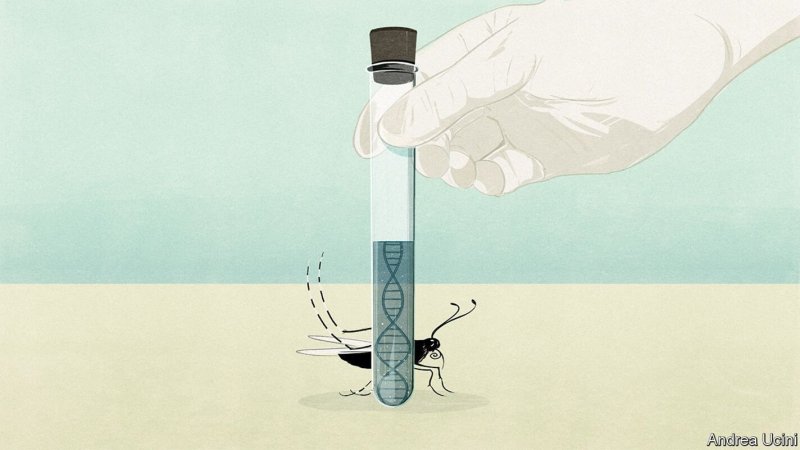
What could go wrong? Analyzing the merits and consequences of gene drives

Credit: Andrea Ucini

ISAAA Inc., in partnership with the Outreach Network for Gene Drive Research, launched a policy brief that tackles the importance of science-based and case-by-case risk assessment for gene drives.

The policy brief, titledย Risk Assessment for Gene Drive Organisms, is the first of a series that aims to present proposed policy options that address issues relating to gene drive technology. The following questions were answered in the first policy brief:

  • What is a risk assessment?
  • Who oversees gene drive research?
  • Are we ready to assess the risk and benefits from gene drive technologies?
Follow the latest news and policy debates on sustainable agriculture, biomedicine, and other ‘disruptive’ innovations. Subscribe to our newsletter.

The brief recommends that risk assessments must be consistent with the principle of case-by-case assessment since there are various types of gene drive constructs developed for different applications and contexts. The involvement of stakeholders must also be considered as a vital part of the process to address their concerns appropriately.

Download the policy brief from theย ISAAA Inc. websiteย for more details.

This is an excerpt. Read the original post here

{{ reviewsTotal }}{{ options.labels.singularReviewCountLabel }}
{{ reviewsTotal }}{{ options.labels.pluralReviewCountLabel }}
{{ options.labels.newReviewButton }}
{{ userData.canReview.message }}

Related Articles

Infographic: Global regulatory and health research agencies on whether glyphosate causes cancer

Infographic: Global regulatory and health research agencies on whether glyphosate causes cancer

Does glyphosateโ€”the world's most heavily-used herbicideโ€”pose serious harm to humans? Is it carcinogenic? Those issues are of both legal and ...

Most Popular

Screenshot 2026-05-26 at 10.15
Viewpoint: Double standardโ€”Why does the wellness industry get a free pass while Big Healthcare is treated as morally suspect?
ChatGPT-Image-Jun-4-2026-11_49_36-AM-2
โ€˜You donโ€™t understand Tolkienโ€™: Skeptic Pope trolls tech giants about the exaggerated, risk-less benefits of AI
Screenshot-2026-06-04-at-12.05.08-PM
Cases of brain inflammation surge as U.S. measles pandemic approaches 2000
ChatGPT-Image-Jun-4-2026-01_27_58-PM
Viewpointโ€”N.A.D.+: Why Gwenyth Paltrowโ€™s heralded anti-aging supplement doesnโ€™t work
Screenshot 2025-07-30 at 10.48
Can gene editing eliminate Down syndrome? Scientists have done it in lab-grown cells
ChatGPT Image May 26, 2026, 08_42_17 AM (1)
Viewpoint: Greenpeace and poison: How environmental advocacy groups rely on compliant (and often ignorant) journalists to spread disinformation and spark litigation
ChatGPT-Image-Mar-10-2026-01_39_01-PM
Viewpointโ€”โ€œMiracle moleculeโ€ debunked: Why acemannan supplements donโ€™t work
Screenshot-2026-06-03-at-1.24.46-PM
Challenging anti-GMO disinformation: Why genetically-tweaked crops offer bushels of benefits
ChatGPT Image May 26, 2026, 08_21_36 AM
Limiting gender affirming interventions: Trump administration targets Texas even though it already bans youth access
tick-DNA
GLP podcast: Spread meat allergy with gene-edited ticks? Bioethicists pose vile โ€˜thought experimentโ€™
Screenshot 2026-06-04 at 12.43
Viewpoint: Doctors who are battling Ebola are incredulous that U.S. government is not utilizing specially designed emergency health units meant to fight virulent disease
glp menu logo outlined

Get news on human & agricultural genetics and biotechnology delivered to your inbox.