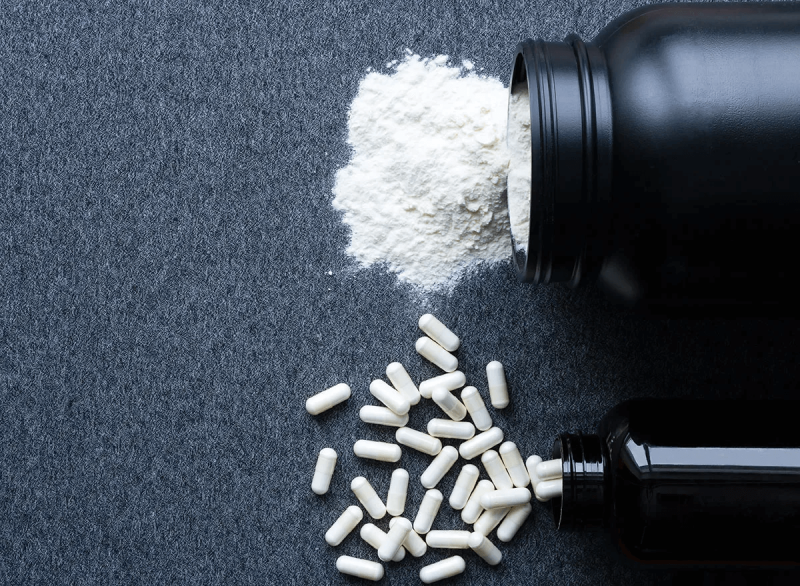
Do you take creatine as a workout supplement? It could soon be used to treat depression

Credit: Getty Images

A bounty of evidence shows that taking creatine supplements raises the threshold of fatigue, which particularly comes in handy for explosive activities like weightlifting and sprinting. 

Follow the latest news and policy debates on sustainable agriculture, biomedicine, and other ‘disruptive’ innovations. Subscribe to our newsletter.

But what once just caught the attention of gym rats and competitive athletes has, over the past couple decades, peaked the interest of health experts. Researchers have found significant stores of creatine not only in skeletal muscles, but also in the brain, hinting that consuming more of the compound could yield unforeseen advantages.

Animal studies showed promise, so scientists have more recently started conducting experiments in humans. Taking five grams of creatine per day for six weeks was found to drastically enhance both working memory and intelligence in a double-blind, placebo-controlled study of 45 young adult vegetarians. A systematic review of other human trials backed this result up. There’s also evidence that creatine intake can shorten symptoms of concussion. 

By far the most compelling potential use for creatine outside of exercise is for the treatment of depression. A decade ago, a small, eight-week study conducted in South Korea had 52 women take either an antidepressant or that same anti-depressant with creatine. By the end of the study, half of the women in the creatine group were depression-free, a success rate double that of the group only receiving the antidepressant.


This is an excerpt. Read the original post here

{{ reviewsTotal }}{{ options.labels.singularReviewCountLabel }}
{{ reviewsTotal }}{{ options.labels.pluralReviewCountLabel }}
{{ options.labels.newReviewButton }}
{{ userData.canReview.message }}

Related Articles

Infographic: Global regulatory and health research agencies on whether glyphosate causes cancer

Infographic: Global regulatory and health research agencies on whether glyphosate causes cancer

Does glyphosate—the world's most heavily-used herbicide—pose serious harm to humans? Is it carcinogenic? Those issues are of both legal and ...

Most Popular

ChatGPT-Image-Mar-10-2026-01_39_01-PM
Viewpoint—“Miracle molecule” debunked: Why acemannan supplements don’t work
ChatGPT-Image-Jun-25-2026-01_14_50-PM
Viewpoint: Disinformation grift: The wellness industry is a lucrative and mostly worthless marketplace of ‘balms, brews, and baloney’
ChatGPT-Image-Jun-25-2026-12_23_17-PM
No, Bill Gates did not secretly engineer ticks to promote veganism
ChatGPT-Image-Jun-30-2026-01_09_47-PM
Viewpoint: As MAHA blows up over Supreme Court ruling limiting glyphosate litigation, Trump offers toothless plan to reduce pesticides in food
Screenshot-2026-06-05-at-2.12.30-PM
Some plants can poison you. So how did humans figure out what is safe to eat?
ChatGPT-Image-Mar-4-2026-09_39_03-AM
Transgender female athletes and Title IX: Separating ‘policy’ from ‘legality’
ChatGPT-Image-Jun-23-2026-12_19_35-PM
Ideological red flag: Led by anti-vax doctor, Tennessee is now the U.S. epicenter selling potent ivermectin shown worthless to prevent or treat Covid
ChatGPT-Image-May-18-2026-12_06_18-PM-2
Defying death: The immortality movement goes mainstream
marijuana-pot-in-hand-nveri-st-xpm-t-abq-fkifeos-s-rws-cmpx-
Facts & Fallacies podcast: Legalized weed drives drug addiction, psychosis?

Sorry. No data so far.

glp menu logo outlined

Get news on human & agricultural genetics and biotechnology delivered to your inbox.