Activists love to cite Einstein quote that without bees, life on Earth would soon perish. Snopes fact checking finds ideologues made it up

image

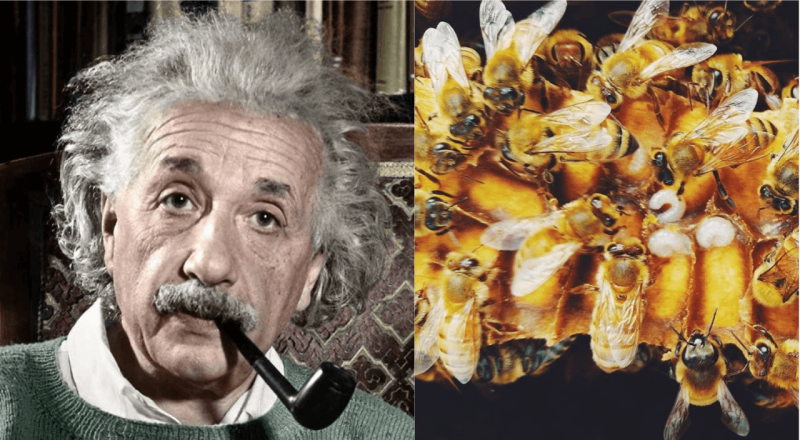
In 2002, Snopes came across a quote about bees’ importance to the global ecosystem that the Nobel Prize-winning theoretical physicist Albert Einstein supposedly once said or wrote, reading: “If the bee disappeared off the surface of the globe, then man would only have four years of life left.”

One tried-and-true method for getting people to pay attention to words is to put them into the mouth of a well-known, respected figure whom the public perceives as being an expert in the subject at hand.

Follow the latest news and policy debates on sustainable agriculture, biomedicine, and other ‘disruptive’ innovations. Subscribe to our newsletter.

Did Einstein sagely foresee an environmental crisis we’re only just now beginning to notice?

To answer that last question (without denying the importance of the honeybees), we have to consider the related question, “Did Einstein really say this?” First off, searches of Einstein’s writings and speeches and public statements, as well as of (scholarly) compilations of Einstein quotations, reveal nary a reference to the “four years” phrase or any other statement mentioning bees (save for a brief comparison between humans and colony insects such as ants and bees).

The best answer probably lies in examining the context in which the earliest citations of this putative quote (that we’ve found so far) appeared: a January 1994 political protest staged by European beekeepers over the issues of competition from lower-priced honey imports, artificially high prices for sugar (used as winter feed for bees), and a proposed reduction of tariffs that would make imported honey products even cheaper.


This is an excerpt. Read the original post here

{{ reviewsTotal }}{{ options.labels.singularReviewCountLabel }}
{{ reviewsTotal }}{{ options.labels.pluralReviewCountLabel }}
{{ options.labels.newReviewButton }}
{{ userData.canReview.message }}

Related Articles

Infographic: Global regulatory and health research agencies on whether glyphosate causes cancer

Infographic: Global regulatory and health research agencies on whether glyphosate causes cancer

Does glyphosate—the world's most heavily-used herbicide—pose serious harm to humans? Is it carcinogenic? Those issues are of both legal and ...

Most Popular

Picture1
The Orange Bowl without oranges: Can CRISPR save Florida citrus?
global warming
‘Implausible’: Top climate scientists reject worst-case scenario—soaring temperatures and fast-rising sea levels
Screenshot 2026-05-22 at 11.31
‘Realistic and durable’: EPA proposes loosening restrictions on some PFAS ‘forever chemicals.’
ChatGPT Image May 26, 2026, 12_06_53 PM
Fake Ebola cure promoters already cashing in as disinformation videos flood social media
Screenshot-2026-05-21-at-12.15.17-PM
UK gene-editing milestone: Livestock barley that increases ruminant value and reduces methane emissions is first-approved CRISPR crop
Screenshot-2026-04-22-at-12.21.32-PM
Viewpoint: Why the retracted Monsanto glyphosate study doesn’t change the science—the world’s most popular herbicide is safe 
ChatGPT Image May 24, 2026, 03_16_36 PM
Here come the biohackers' Enhanced Games—The Olympics for athletes doping up on steroids, hormones and peptides. What’s wrong with that?
ChatGPT-Image-May-26-2026-09_19_32-AM
Viewpoint— “A safe space to chat, flirt, and be intimate without sex”: Are new AI companies exploiting vulnerable asexuals?
glp menu logo outlined

Get news on human & agricultural genetics and biotechnology delivered to your inbox.