Can you damage your body by regularly donating blood?

Ben Kay MBE (England and Leicester rugby player) donating blood. Credit: NPR

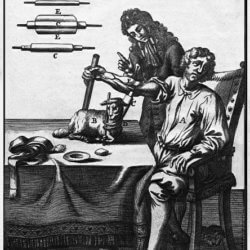
One question has plagued the field of blood donation for as long as there have been transfusions: Are we harming blood donors by taking blood from them?

Our iron stores are largely self-conserved: Our bodies recycle iron from old red blood cells to make new red blood cells. Iron that’s in use doesn’t tend to exit the body unless a person loses blood, whether through menstruation, bleeding from trauma, illness — or through donation.

Mis- and disinformation are distorting science and public policy. Subscribe to our Daily and Weekly Digests for incisive coverage of ‘disruptive’ innovations in AI, agricultural biotechnology, food, chemicals, nuclear energy, vaccines, and other disruptive innovations.

Eldad Hod, associate professor of pathology and cell biology and vice chair of laboratory medicine at Columbia University Irving Medical Center, led a study investigating whether the blood from iron-deficient repeat blood donors continued to meet Food and Drug Administration standards, and whether low-iron status affected the donors’ quality of life or cognitive ability.

…
Hod and his team of researchers were surprised to find that there was not a measurable effect on either the blood’s transfusion quality, the iron-deficient donors’ cognitive performance, or their quality of life compared to the iron-replete donors.

“The answer doesn’t fit our preconception, but is actually better for public health because it suggests that what we’re doing is not harming our donors,” said Steven Spitalnik, executive vice chairman for laboratory medicine at Columbia’s department of pathology and cell biology and a co-author on the paper.


This is an excerpt. Read the original post here. 

Related Articles

Infographic: Global regulatory and health research agencies on whether glyphosate causes cancer

Infographic: Global regulatory and health research agencies on whether glyphosate causes cancer

Does glyphosate—the world's most heavily-used herbicide—pose serious harm to humans? Is it carcinogenic? Those issues are of both legal and ...

Most Popular

ChatGPT-Image-Mar-10-2026-01_39_01-PM
Viewpoint—“Miracle molecule” debunked: Why acemannan supplements don’t work
AI Doctor with a Digital Neural Head
Utah becomes first state to empower AI to bypass doctors and prescribe certain drugs
Screenshot-2026-10-07-at-2.00.02-PM
9 wellness myths busted
Screenshot-2026-09-22-at-12.26.15-PM
‘Forever chemical’ concerns: Separating hysteria from reasonable concern in the debate over PFAS danger
Screenshot-2026-10-06-at-11.13.59-AM
RFK Jr.’s plan to curb America’s appetite for ultra-processed foods and artificial dyes blocked by the White House
AI-Force-Uniform-Insignia-Close-Up
Trump wants an AI Force like Space Force, but that could make AI’s risks harder to manage
Screenshot-2026-10-08-at-2.32.00-PM
Abortion rights opponents outraged after FDA says its “safety review” of the already-found-safe mifepristone abortion pill will continue into 2027
Concerned-Farmer-at-Golden-Hour
GAHA: The corporate-created “healthier America” movement challenging what it claims is MAHA misinformation about modern farming, chemicals, and food
Screenshot-2026-10-02-at-9.11.36-AM
The genetics of personality
glp menu logo outlined

Get news on human & agricultural genetics and biotechnology delivered to your inbox.