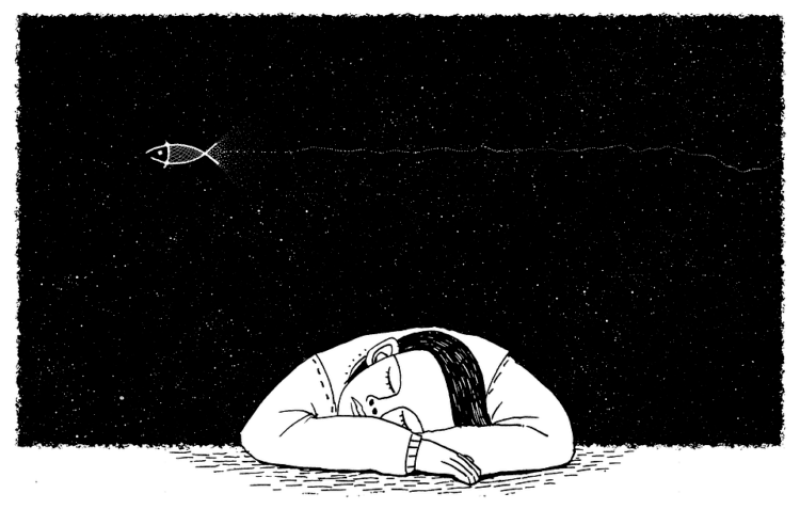
‘Sleep is a need, but it’s also a ritual’: Exploring the scientific mystery of snoozing

‘Sleep is a need, but it’s also a ritual’: Exploring the scientific mystery of snoozing
Credit: Pixabay/ CDD20

Why do living things sleep? “Ask researchers this question, and listen as, like clockwork, a sense of awe and frustration creeps into their voices,” Veronique Greenwood wrote in 2018.

“In a way, it’s startling how universal sleep is,” she continued. “In the midst of the hurried scramble for survival, across eons of bloodshed and death and flight, uncountable millions of living things have laid themselves down for a nice, long bout of unconsciousness. This hardly seems conducive to living to fight another day … That such a risky habit is so common, and so persistent, suggests that whatever is happening is of the utmost importance.”

Follow the latest news and policy debates on sustainable agriculture, biomedicine, and other ‘disruptive’ innovations. Subscribe to our newsletter.

In other words, Greenwood writes, “whatever sleep gives to the sleeper is worth tempting death over and over again, for a lifetime.” Whatever sleep gives us is also worth the many hours, and large amounts of money, that humans now spend figuring out how to maximize our slumber. Sixty percent of America’s adults report experiencing sleep problems every night or most nights, Amanda Mull noted in 2019, and a variety of industries have sprung up to help us sleep longer and better.

Sleep is a need, but it’s also a ritual: Where we sleep, when we sleep, and who we sleep next to say a lot about who we are and what we want.


This is an excerpt. Read the full article here 

{{ reviewsTotal }}{{ options.labels.singularReviewCountLabel }}
{{ reviewsTotal }}{{ options.labels.pluralReviewCountLabel }}
{{ options.labels.newReviewButton }}
{{ userData.canReview.message }}

Related Articles

Infographic: Global regulatory and health research agencies on whether glyphosate causes cancer

Infographic: Global regulatory and health research agencies on whether glyphosate causes cancer

Does glyphosate—the world's most heavily-used herbicide—pose serious harm to humans? Is it carcinogenic? Those issues are of both legal and ...

Most Popular

ChatGPT-Image-Jun-11-2026-01_15_03-PM
Selective Pressure, Selective Silence
ChatGPT Image Jun 3, 2026, 03_54_37 PM
Viewpoint: “Turn on, tune in, drop out”—Kennedy embraces the Timothy Leary psychedelic revolution
Screenshot-2026-06-05-at-1.44.09-PM
Viewpoint: Scientists have scrapped the worst-case climate scenario. Is that proof that climate change is a hoax, as Trump claims?
Screenshot-2026-06-11-at-3.40.06-PM
'Toxin' detox: A gastroenterologist weighs in on $71 billion health trend
Screenshot-2026-06-11-at-4.00.17-PM
Gen Z burned by sunscreen misinformation and tanning myths
Screenshot 2026-05-26 at 10.15
Viewpoint: Double standard—Why does the wellness industry get a free pass while Big Healthcare is treated as morally suspect?
Screenshot-2026-06-05-at-2.12.30-PM
Some plants can poison you. So how did humans figure out what is safe to eat?
ChatGPT-Image-Jun-11-2026-10_34_44-AM-2
Will hi-tech genetic fortune-telling really help parents make healthier children?
Screenshot-2026-06-03-at-3.33.44-PM
Viewpoint: Vaccine deniers are attacking a life-saving Vitamin K shot for newborns that isn’t even a vaccine
Screenshot-2026-06-08-at-1.35.30-PM
Viewpoint: Social media and fake natural health propaganda fuel surge in use of mostly useless supplements
ChatGPT Image Jun 3, 2026, 03_14_43 PM
Viewpoint: How Earthjustice became the poster child for the abuse of special interest activist funding
Credit: ACSH
Viewpoint: Who and what’s to blame for the surge in vaccine-preventable diseases?
glp menu logo outlined

Get news on human & agricultural genetics and biotechnology delivered to your inbox.