Making moths avoid apples? Gene-edited bio-pesticides in development

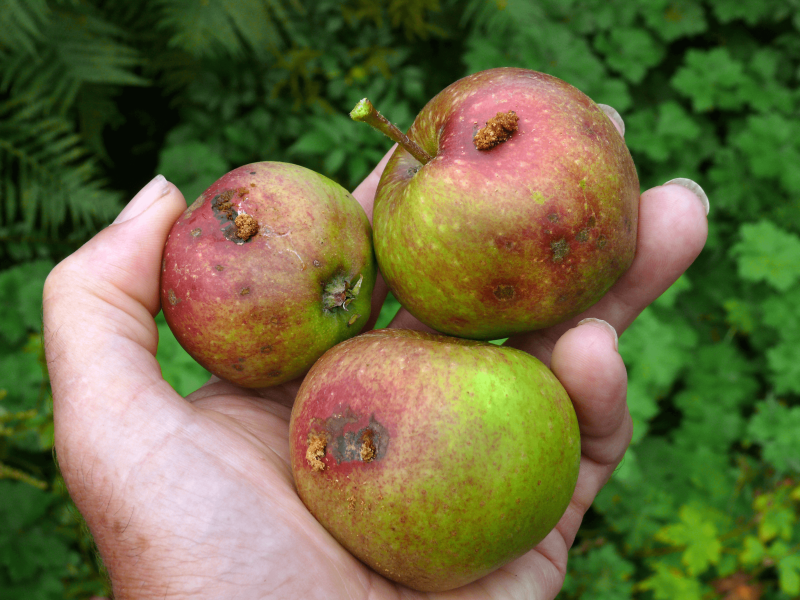
Apples damaged by coddling moth. Credit: Patrick Clement via CC-BY-2.0

William Walker of the Agricultural Research Service laboratory in Wapato, Washington, has three projects underway that aim to use genetic manipulation to thwart one of the Northwest apple industryโ€™s most loathed pests.

Follow the latest news and policy debates on sustainable agriculture, biomedicine, and other ‘disruptive’ innovations. Subscribe to our newsletter.

One of Walkerโ€™s experiments uses CRISPR gene editing to alter a female mothโ€™s sense of โ€œsmell,โ€ so she does not like apples as a place to lay eggs. Another aims to create a biopesticide that interrupts the genetic code translation and shuts down a moth larvaโ€™s ability to manufacture a protein critical for survival. This approach is called RNA interference, and itโ€™s already been commercialized for other pests. The third involves altering the genes of existing virus-based pesticides to make them more effective.

The CRISPR project has reached the end of its three-year research commission funding, but Walker says he has enough results to warrant continuing with his ARS budget.

If the ideas work and reach commercialization โ€” and if they are cost-effective โ€” some of Walkerโ€™s techniques may someday replace tried-and-true pheromone disruption, especially the protein silencing spray, said [Teah] Smith, who also serves on the research commission.


This is an excerpt. Read the original post here

{{ reviewsTotal }}{{ options.labels.singularReviewCountLabel }}
{{ reviewsTotal }}{{ options.labels.pluralReviewCountLabel }}
{{ options.labels.newReviewButton }}
{{ userData.canReview.message }}

Related Articles

Infographic: Global regulatory and health research agencies on whether glyphosate causes cancer

Infographic: Global regulatory and health research agencies on whether glyphosate causes cancer

Does glyphosateโ€”the world's most heavily-used herbicideโ€”pose serious harm to humans? Is it carcinogenic? Those issues are of both legal and ...

Most Popular

ChatGPT-Image-Jun-15-2026-11_00_13-AM-2
Glucosamine alert: Alzheimerโ€™s progresses faster among those taking the popular supplement
Screen Shot at AM
Facts & Fallacies Podcast: Right-wing politics bad for your health? Separating speculation from science
ChatGPT-Image-Jun-9-2026-01_11_37-PM
Turmeric supplements: More risks than benefits
ChatGPT-Image-Jun-15-2026-12_13_41-PM
Viewpoint: Behind the effort to re-purpose the tobacco attack strategy to fight ultra-processed foods
ChatGPT-Image-Jun-3-2026-04_29_13-PM
Viewpoint: While unvaccinated children are dying overseas, Congress challenges Trump and Kennedyโ€™s block on aid
Screenshot-2026-06-12-at-2.10.55-PM
Physician warns online statin myths delay care and raise heart risk
ChatGPT-Image-Mar-10-2026-01_39_01-PM
Viewpointโ€”โ€œMiracle moleculeโ€ debunked: Why acemannan supplements donโ€™t work
Screenshot-2026-06-14-at-9.14.26-AM
โ€˜Humanitarian catastropheโ€™: Trumpโ€™s USAID shutdown could help drive nearly 23 million deaths โ€” including 5.4 million children โ€” by 2030, Lancet study warns
ChatGPT-Image-Jun-14-2026-09_41_44-AM-2
Viewpointโ€”โ€˜The gleeful efficiency of an arsonistโ€™: Administrationโ€™s health and science research cuts are โ€˜sabotagingโ€™ Americaโ€™s future
ChatGPT-Image-Jun-15-2026-10_42_06-AM
Viewpoint: โ€˜Steroid Olympicsโ€™ marketing stunt: โ€˜It seemed less like a sporting event and more like a loss leader to peddle testosterone injections, GLP-1s, and peptidesโ€™
ChatGPT-Image-Jun-11-2026-01_15_03-PM
Selective Pressure, Selective Silence
Screenshot-2026-06-05-at-2.12.30-PM
Some plants can poison you. So how did humans figure out what is safe to eat?
glp menu logo outlined

Get news on human & agricultural genetics and biotechnology delivered to your inbox.