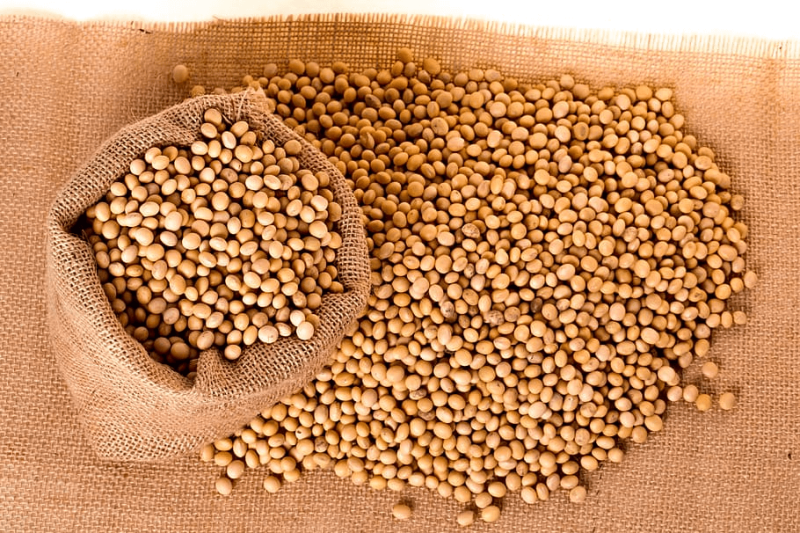
China approves its first gene-edited crop, a soybean that raises the level of healthy fat oleic acid in the plant

Credit: Wallpaper Flare (Public Domain)

China has approved the safety of a gene-edited soybean, its first approval of the technology in a crop, as the country increasingly looks to science to boost food production.

The soybean, developed by privately owned Shandong Shunfeng Biotechnology Co., Ltd, has two modified genes, significantly raising the level of healthy fat oleic acid in the plant.

Follow the latest news and policy debates on sustainable agriculture, biomedicine, and other ‘disruptive’ innovations. Subscribe to our newsletter.

Shunfeng claims to be the first company in China seeking to commercialise gene-edited crops.

It is currently researching around 20 other gene-edited crops, including higher yield rice, wheat and corn, herbicide-resistant rice and soybeans and vitamin C-rich lettuce, said a company representative.

United States-based company Calyxt also developed a high oleic soybean, producing a healthy oil that was the first gene-edited food to be approved in the U.S. in 2019.

Several additional steps are needed before China’s farmers can plant the novel soybean, including approvals of seed varieties with the tweaked genes.

The approval comes as trade tensions, erratic weather and war in major grain exporter Ukraine have increased concerns in Beijing over feeding the country’s 1.4 billion people.


This is an excerpt. Read the original post here

{{ reviewsTotal }}{{ options.labels.singularReviewCountLabel }}
{{ reviewsTotal }}{{ options.labels.pluralReviewCountLabel }}
{{ options.labels.newReviewButton }}
{{ userData.canReview.message }}

Related Articles

Infographic: Global regulatory and health research agencies on whether glyphosate causes cancer

Infographic: Global regulatory and health research agencies on whether glyphosate causes cancer

Does glyphosate—the world's most heavily-used herbicide—pose serious harm to humans? Is it carcinogenic? Those issues are of both legal and ...

Most Popular

ChatGPT Image Jun 3, 2026, 03_14_43 PM
Viewpoint: How Earthjustice became the poster child for the abuse of special interest activist funding
ChatGPT Image Jun 3, 2026, 03_54_37 PM
Viewpoint: “Turn on, tune in, drop out”—Kennedy embraces the Timothy Leary psychedelic revolution
ChatGPT-Image-Jun-11-2026-01_15_03-PM
Selective Pressure, Selective Silence
Screenshot-2026-06-05-at-2.12.30-PM
Some plants can poison you. So how did humans figure out what is safe to eat?
Screenshot 2026-05-26 at 10.15
Viewpoint: Double standard—Why does the wellness industry get a free pass while Big Healthcare is treated as morally suspect?
Screenshot-2026-06-03-at-1.24.46-PM
Challenging anti-GMO disinformation: Why genetically-tweaked crops offer bushels of benefits
ChatGPT Image May 28, 2026, 08_16_38 PM
Viewpoint: Why the EPA mismeasures cancer risk of chemicals and what should be done to fix it
ChatGPT Image Jun 1, 2026, 11_39_17 AM
Viewpoint: When food myths go viral, farmers pay the price
ChatGPT Image May 26, 2026, 08_42_17 AM (1)
Viewpoint: Greenpeace and poison: How environmental advocacy groups rely on compliant (and often ignorant) journalists to spread disinformation and spark litigation

Sorry. No data so far.

glp menu logo outlined

Get news on human & agricultural genetics and biotechnology delivered to your inbox.