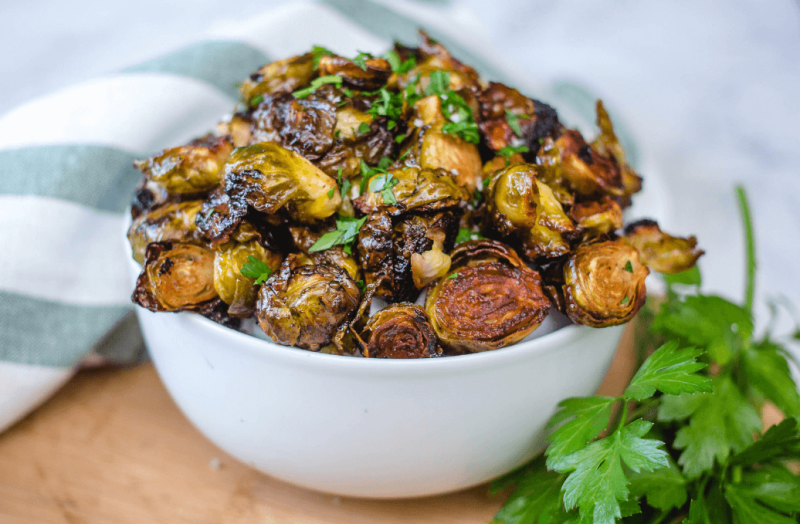
Removing bitterness: Why do today’s Brussels sprouts taste so much better than when we were children?

Credit: Marco Verch Professional Photography via CC-BY-2.0

Indeed, it’s not just in your imagination that the Brussels sprouts you ate in your adolescence were, uh, potent, to say the least. In fact, although you may have been attributing it to your mother’s mediocre cooking skills or your maturing palate that has developed with age (hello, newfound love for black olives), it’s likely not the case at all. Rather, innovations in science can be thanked for the more palatable Brussels sprouts we know and love today.

Mis- and disinformation are distorting science and public policy. Subscribe to our Daily and Weekly Digests for incisive coverage of ‘disruptive’ innovations in AI, agricultural biotechnology, food, chemicals, nuclear energy, vaccines, and other disruptive innovations.
[In] the 1990s a Dutch scientist named Hans Van Doorn identified the chemicals that make Brussels sprouts bitter: sinigrin and progoitrin. After discovering this, the scientist worked to identify Brussels sprouts seeds and varieties with lower levels of these bitter chemicals. Then, Van Doorn bred out as much of the…ick factor…as possible (by using these less-bitter Brussels sprout seeds) and crossbred them with higher-producing varieties. The result? More Brussels sprouts that were less bitter. Genius.

Rants and Rocks goes on to point out that by the 2010s, the once nearly impossible-to-eat bitter sprouts were no longer to be found, otherwise known as an effective use of genetically modified organisms (GMOs).

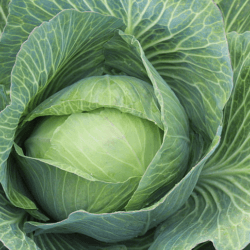
This is an excerpt. Read the original post here

Related Articles

Infographic: Global regulatory and health research agencies on whether glyphosate causes cancer

Infographic: Global regulatory and health research agencies on whether glyphosate causes cancer

Does glyphosate—the world's most heavily-used herbicide—pose serious harm to humans? Is it carcinogenic? Those issues are of both legal and ...

Most Popular

ChatGPT-Image-Mar-10-2026-01_39_01-PM
Viewpoint—“Miracle molecule” debunked: Why acemannan supplements don’t work
ChatGPT-Image-Sep-10-2026-10_36_07-AM
Viewpoint: Even lousy scientific articles can shield authors when they hype dubious health claims and products
sorghum farmers in kenya FARMERS TREND
Here are all the ways CRISPR gene editing is transforming Africa’s staple crops—and there’s a lot more innovation to come
Screenshot-2026-10-01-at-11.21.27-AM
Vaccine hesitancy, like malaria, surges globally, topping 35% in some countries
ChatGPT-Image-Sep-30-2026-01_11_07-PM
How U.S. teamed with Russia to block global human AI weapons oversight
ChatGPT-Image-Sep-30-2026-01_25_34-PM
Blood tests for Alzheimer’s? The latest grifter, social media scam.
ChatGPT-Image-Sep-21-2026-03_15_09-PM
Viewpoint: Chipotle-inspired lesson: 10,000 sick customers suggest that processed foods can be safer than fresh ones
ChatGPT-Image-Sep-30-2026-01_38_36-PM
Viewpoint: Died “with measles” vs. died “from measles”: RFK, Jr.’s dangerously subversive word games
Screenshot-2026-09-28-at-1.16.38-PM
Defying public perceptions, U.S. cancer deaths plunged 35% since 1991
ChatGPT-Image-Sep-29-2026-12_16_42-PM
Social media influencers are driving food misinformation across Europe
glp menu logo outlined

Get news on human & agricultural genetics and biotechnology delivered to your inbox.