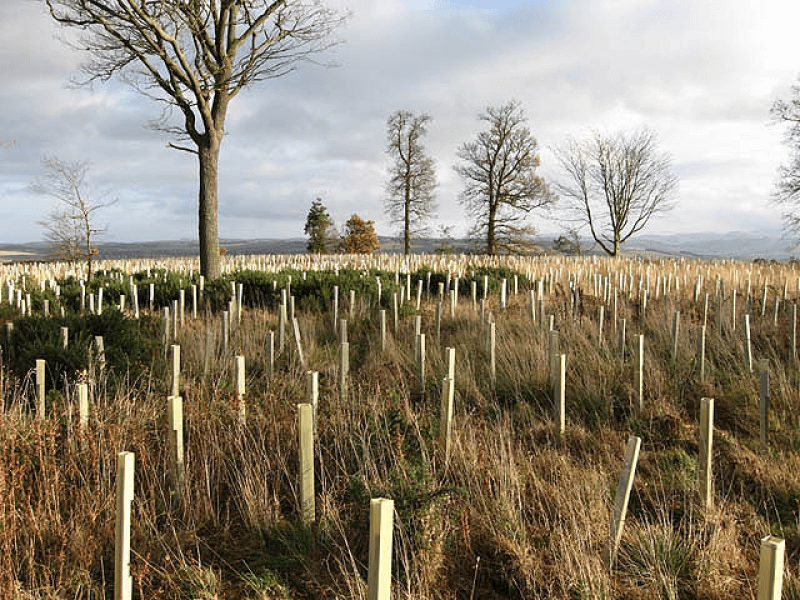

Public dialogue has emphasized potential benefits of tree planting while downplaying pitfalls and limitations that are well established by social and ecological research.
To motivate this shift in focus, we highlight ten pitfalls and misperceptions that arise when large-scale tree planting campaigns fail to acknowledge the social and ecological complexities of the landscapes they aim to transform. We then describe more ecologically effective and socially just strategies to improve climate mitigation efforts.
…
Forests can regrow on deforested land without tree planting
In most places where reforestation is desirable, forests can regenerate naturally from seeds or resprouts, even in landscapes that appear to be highly degraded. Because natural regeneration requires little human intervention, it is usually much less expensive than tree planting.
…
Trees can reduce water availability
Advocates of tree planting often assume that trees improve ground and surface water recharge, but the reality is more complicated: In the wrong places, planted forests deplete ground water and can cause streams to dry up.




…
Trees can warm the atmosphere
Trees, particularly evergreen conifers, are darker and taller than most other land covers, and therefore absorb more visible and ultraviolet sunlight (shortwave radiation) compared to highly reflective bare ground, snow, or grasses.
…
Natural climate solutions that count saplings rather than address both the ecological and social drivers of ecosystem destruction are unlikely to succeed.