
CRISPR gene editing is already reshaping Africa’s most important food crops, from disease-resistant bananas to less toxic cassava, and a sweeping new review argues the biggest payoffs are still ahead—if the continent can close gaps in infrastructure, funding, regulation and seed delivery. As Bioengineer reports, the review comes from researchers at Ethiopia’s Debre Markos University and the Ethiopian Institute of Agricultural Research.
The disease-fighting results are hard to ignore. Editing the MusaDMR6 gene has given bananas stronger resistance to Banana Xanthomonas Wilt, “one of the most destructive bacterial diseases in East and Central Africa.” Other edits permanently disable banana streak virus sequences lurking in the plant’s own genome and slow fruit ripening.
Cassava is getting a double upgrade. Edited lines are less vulnerable to cassava brown streak disease, which costs East Africa an estimated $100 million a year, while knocking out the MeCYP79D1 gene lowers the toxic cyanogenic compounds in the roots.
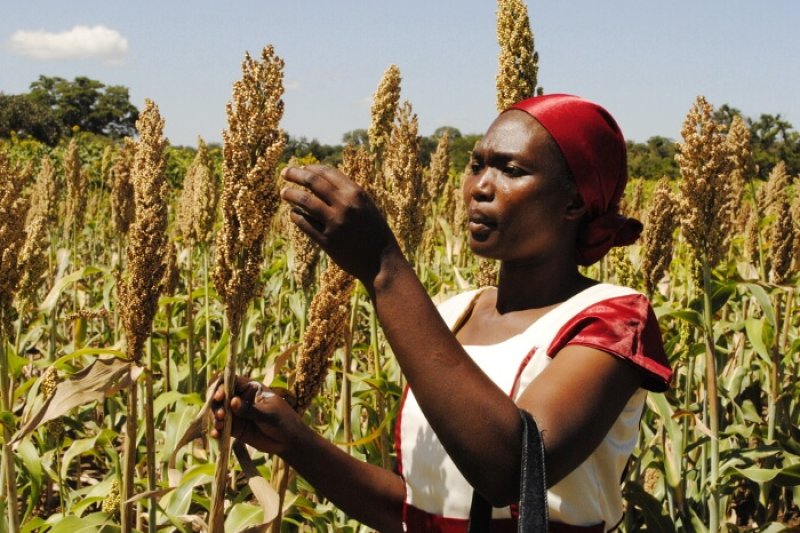
Cereals are in the pipeline too. Maize edits targeting ARGOS8 boost drought tolerance, and researchers are chasing resistance to maize lethal necrosis, which can destroy up to 90 percent of a crop. Sorghum is being edited to fend off Striga, a parasitic weed that “can wipe out between 30 and 100 percent of sorghum yields in affected fields in Kenya and Ethiopia.”
In teff, Ethiopian scientists are targeting semi-dwarfing genes like TefSD1 to keep the grain from toppling in wind and rain. Powdery mildew–resistant wheat and nutrient-boosted rice, potatoes, sweet potatoes and tomatoes round out the list.



Regulation, however, remains a patchwork. Kenya has become a research hub, Nigeria has issued leading biosafety guidelines, and Ethiopia’s 2025 genome editing rules separate SDN-1 edits containing no foreign DNA from transgenic GMOs.
Technical bottlenecks persist, including plant transformation, off-target validation and limited phenotyping capacity. The authors of the review, published in Discover Agriculture, call for harmonized regulations, stronger infrastructure, AI-guided guide RNA design and more research on Africa’s neglected “orphan” crops.