Latest CRISPR food innovation: South Korea develops tomato with enhanced levels of provitamin D3. Will it go to market?

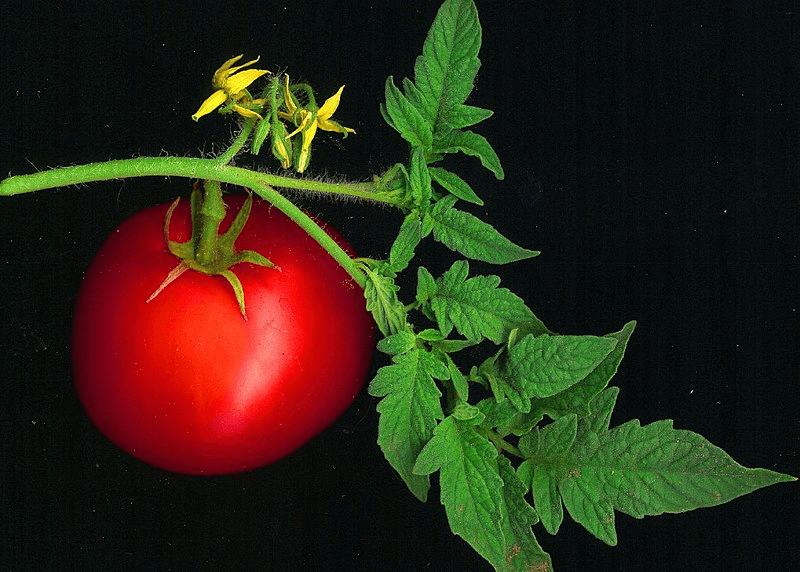
Credit: David Besa via CC-BY-2.0

In a new report published in GEN Biotechnology (the sister journal to GEN), researchers from Seoul National University (SNU) in South Korea have applied CRISPR gene editing to produce tomato fruits with enhanced levels of provitamin D3 (ProVitD3).

In humans, ProVitD3 is a precursor for the synthesis of biologically active vitamin D3 and serves as a protective agent against ultraviolet radiation on the skin. Circulatory vitamin D often falls below desirable levels, particularly among individuals with limited exposure to sunlight. While dietary supplements help address this deficiency, natural vitamin D sources are restricted to a few animal-derived sources, such as fish, egg yolks, and beef liver, as fruits and vegetables have historically shown limited capacity for ProVitD3 production.

Follow the latest news and policy debates on sustainable agriculture, biomedicine, and other ‘disruptive’ innovations. Subscribe to our newsletter.

The burning question remains: What are the regulatory and scale-up hurdles that impact whether these tomatoes head to the market? [Researcher Sunghwa] Choe states that in many countries, there is a growing consideration that CRISPR genome-edited crops may be exempt from conventional GMO regulations.

Choe says that lawmakers in Korea are actively engaged in discussions regarding this issue, indicating a willingness to explore and potentially relax regulations surrounding CRISPR-edited crops in the coming years.


This is an excerpt. Read the original post here

{{ reviewsTotal }}{{ options.labels.singularReviewCountLabel }}
{{ reviewsTotal }}{{ options.labels.pluralReviewCountLabel }}
{{ options.labels.newReviewButton }}
{{ userData.canReview.message }}

Related Articles

Infographic: Global regulatory and health research agencies on whether glyphosate causes cancer

Infographic: Global regulatory and health research agencies on whether glyphosate causes cancer

Does glyphosate—the world's most heavily-used herbicide—pose serious harm to humans? Is it carcinogenic? Those issues are of both legal and ...

Most Popular

Screenshot 2026-05-26 at 10.15
Viewpoint: Double standard—Why does the wellness industry get a free pass while Big Healthcare is treated as morally suspect?
Screenshot-2026-06-03-at-3.33.44-PM
Viewpoint: Vaccine deniers are attacking a life-saving Vitamin K shot for newborns that isn’t even a vaccine
Screenshot-2026-06-05-at-1.44.09-PM
Viewpoint: Scientists have scrapped the worst-case climate scenario. Is that proof that climate change is a hoax, as Trump claims?
px extra strength tylenol and tylenol pm
Why ‘null-findings’ on Tylenol’s safety for pregnant women barely move the needle on countering misinformation
Screenshot-2026-06-08-at-1.35.30-PM
Viewpoint: Social media and fake natural health propaganda fuel surge in use of mostly useless supplements
Screenshot-2026-06-08-at-10.19.30-AM
‘Natural’ wellness supplements linked to liver injury
ChatGPT-Image-Jun-10-2026-12_57_24-PM
Viewpoint: Why gene-editing babies is moral and certain to happen
ChatGPT-Image-May-28-2026-12_56_54-PM
Viewpoint: Vaccines' non-specific effects? The ‘shoddy’ Danish couple whose 'research’ inspires RFK, Jr.’s health delusion
Screenshot 2025-08-25 203032
Mazzenga’s 20-year old muscles: How a still-going-strong 92-year old sprinter wins every race she enters
Screenshot-2026-06-05-at-2.12.30-PM
Some plants can poison you. So how did humans figure out what is safe to eat?
Credit: ACSH
Viewpoint: Who and what’s to blame for the surge in vaccine-preventable diseases?
ChatGPT Image May 26, 2026, 08_42_17 AM (1)
Viewpoint: Greenpeace and poison: How environmental advocacy groups rely on compliant (and often ignorant) journalists to spread disinformation and spark litigation
Screen Shot at AM
Facts & Fallacies Podcast: Right-wing politics bad for your health? Separating speculation from science
glp menu logo outlined

Get news on human & agricultural genetics and biotechnology delivered to your inbox.