Analysis: Europe’s proposed new gene editing regulations are more convoluted and burdensome than plant scientists had hoped for

Credit: European Public Health Alliance

In 2018, after a ruling of the European Court of Justice put the latest breeding methods under the burdensome EU GMO legislation, the Volume 5, Issue 3 edition of European Seed (Aug. 2018) was titled: “Rest in Peace Plant Breeding Innovation”. Since the EU proposed new regulations for certain new genomic techniques (NGTs) on 5 July 2023, faith in the resurrection of plant breeding innovation in the EU may just start to return. The European plant breeding and seed production sector welcomes that the Commission proposal finally recognizes the need for a differentiated regulatory approach to certain plants and products from NGTs from the GMO legislation.

Mis- and disinformation are distorting science and public policy. Subscribe to our Daily and Weekly Digests for incisive coverage of ‘disruptive’ innovations in AI, agricultural biotechnology, food, chemicals, nuclear energy, vaccines, and other disruptive innovations.

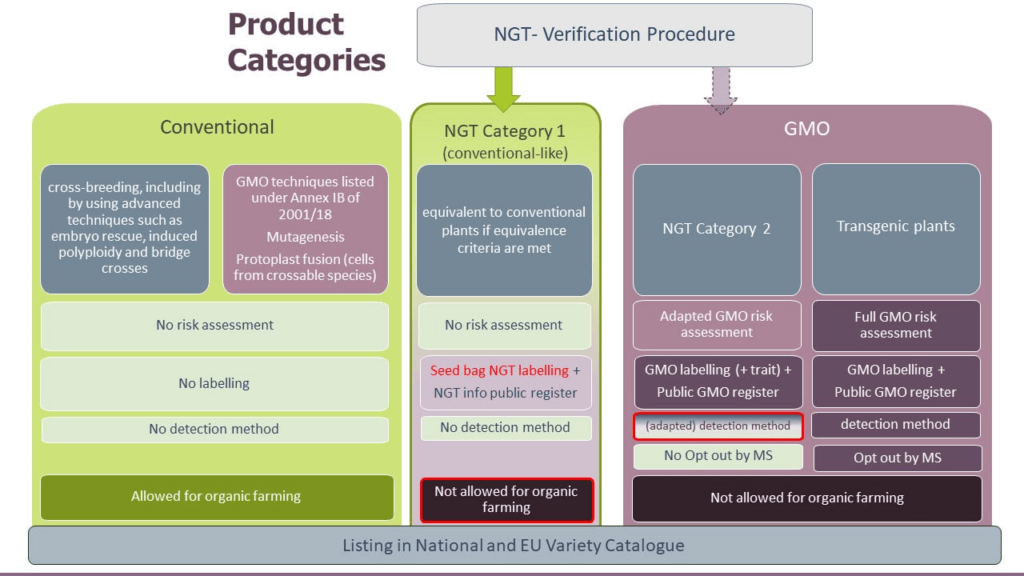
The regulatory approach taken by the EU Commission does not exclude NGT plants and products from the GMO legislation but is considered a “lex specialis” with regard to the EU GMO legislation. It introduces specific provisions for NGT plants and products and with this creates a distinct product category for conventional-like NGT plants and products, including specifically blocking organic farming to utilize verified conventional-like NGT plants.

Breeding companies invest up to 20 per cent of their turnover in research and development. They rely on legal certainty for their investments. The verification process should therefore be based on clear criteria and the scientific expertise of member states’ competent authorities. Any interventions by member states or the Commission should be limited to scientifically justified “comments” only and not be based on political considerations.


This is an excerpt. Read the original post here

Related Articles

Infographic: Global regulatory and health research agencies on whether glyphosate causes cancer

Infographic: Global regulatory and health research agencies on whether glyphosate causes cancer

Does glyphosate—the world's most heavily-used herbicide—pose serious harm to humans? Is it carcinogenic? Those issues are of both legal and ...

Most Popular

ChatGPT-Image-Sep-17-2026-12_28_43-PM
Vitamin D, omega-3 fish oil and glucosamine supplements could cause brain damage 
ChatGPT-Image-Mar-10-2026-01_39_01-PM
Viewpoint—“Miracle molecule” debunked: Why acemannan supplements don’t work
ChatGPT-Image-Sep-17-2026-10_17_15-AM
Viewpoint: Why are the less intelligent more likely to be conservative—and smarter people more socially liberal?
Screenshot-2026-09-10-at-12.20.19-PM
'Jet fuel didn't melt the steel': 9/11 conspiracy theories debunked
Screenshot-2026-08-12-at-11.31.46-AM
AI is helping develop new vaccines
Screenshot-2026-09-16-at-12.07.47-PM
The heated debate over trans athletes in the WNBA
ChatGPT-Image-Sep-9-2026-02_48_24-PM
Viewpoint: Trump-RFK Jr. report on “Gender Ideology & Left-wing Ideology’ targets LGBTQ community—and science
ChatGPT-Image-Sep-15-2026-12_15_00-PM
Viewpoint: Women, depression and empathy: Explaining the gender gap in views about child-murderer Lindsay Clancy
Screenshot-2026-09-17-at-10.24.54-AM
Viewpoint: Dubious environmental fears: Why the AI buildout is critical to America’s ecological future
Screenshot 2026-09-11 at 12.39
Child-monitoring apps: When the cure is worse than the harm—and how the technology could be tweaked
ChatGPT-Image-Sep-15-2026-11_36_23-AM
Doomsday cult? Why we should be suspicious of end-of-the-world claims
glp menu logo outlined

Get news on human & agricultural genetics and biotechnology delivered to your inbox.