Could another species of humans evolve? Yes, if we begin populating other planets

Could yet another species of humans evolve? Yes, if we begin populating other planets
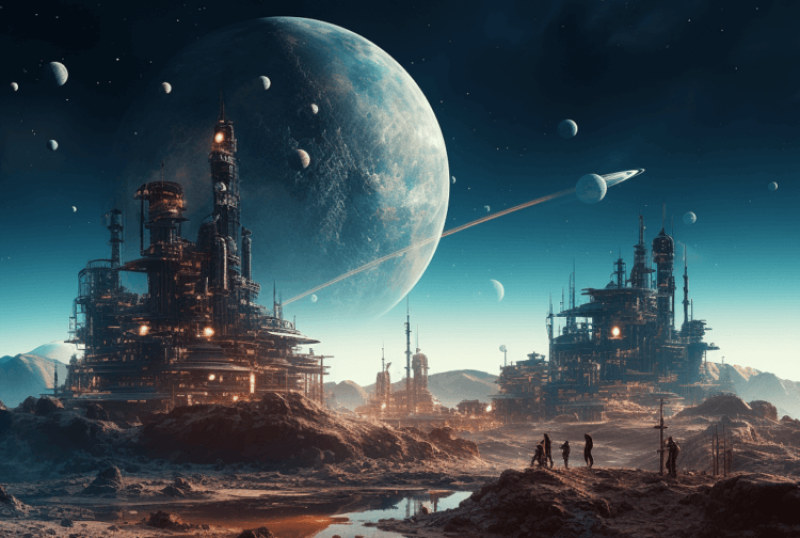
Credit: Midjourney/ Heenan

Throughout our history, humans have routinely migrated to far-flung locations, crossing ice plains, lava fields, oceans, and mountains to set shop in a part of the world, cut off from others. Despite this, no new human species have evolved at least in the past 300,000 years.

[Scott Solomon, an evolutionary biologist at Rice University and author of the book Future Humans: Inside the Science of Our Continuing Evolution], explained: “One possible explanation [is] there wasn’t enough time for them to do that. They weren’t isolated long enough. Another possible answer is they were isolated, but not maybe completely isolated.”

Mis- and disinformation are distorting science and public policy. Subscribe to our Daily and Weekly Digests for incisive coverage of ‘disruptive’ innovations in AI, agricultural biotechnology, food, chemicals, nuclear energy, vaccines, and other disruptive innovations.

Another scenario (which is vaguely less dystopian) would be the prospect of colonizing other parts of the solar system and beyond. Humans are deeply intertwined on Earth and it’s hard to imagine a geographical factor that could divide humans into two populations exposed to vastly different evolutionary pressures. Even a continent splitting in two wouldn’t be much trouble for plane-faring, boat-building humans.
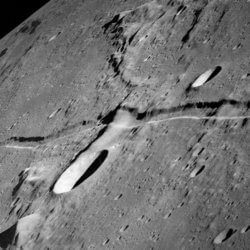
However, the colonization of other planets could be this catalyst.

This is an excerpt. Read the full article here

Related Articles

Infographic: Global regulatory and health research agencies on whether glyphosate causes cancer

Infographic: Global regulatory and health research agencies on whether glyphosate causes cancer

Does glyphosate—the world's most heavily-used herbicide—pose serious harm to humans? Is it carcinogenic? Those issues are of both legal and ...

Most Popular

ChatGPT-Image-Mar-10-2026-01_39_01-PM
Viewpoint—“Miracle molecule” debunked: Why acemannan supplements don’t work
Stern-Profile-and-Marked-U.S.-Map
RFK Jr.’s collapsing legacy: U.S. poised to lose measles elimination status
Colorful GLP-1 Pens with Clocks_tagger
Biohacker influencers are claiming GLP-1 weight loss drugs extend lifespan. One mice experiment suggests there may be some truth to the claim
Screenshot-2026-11-04-at-11.31.42-AM
Uneasy allies: Are MAHA and American agriculture careening toward a breakup?
Screenshot-2026-11-06-at-11.44.47-AM
'Gattaca stack': The eugenic, technological push to 'improve the human stock'
Children’s Health Defense Press Conference
As measles deaths among the unvaccinated hit a 35-year high, Kennedy-founded Children’s Health Defense bizarrely blames doctors for slow-walking a cure
Neon Binary Code Bacteriophage
AI medicine breakthrough: Could ‘good viruses’ created by AI, cure deadly viruses?
Teal Hexagon Technology Icons
4 key ways the Blue Wave will upend science policy
Supplement Rain Wellness Illustration
Viewpoint: Bedeviled by “toxic inflammation”? How wellness grifters turn this scientific gray zone into a supplement jackpot
Bayer Crop Circle in Golden Wheat
Making fertilizer from thin air: Bayer’s gene-editing innovation could dramatically cut chemical fertilizer use in growing food
glp menu logo outlined

Get news on human & agricultural genetics and biotechnology delivered to your inbox.