How China’s decision to aggressively expand GMO soybean planting and imports is reshaping geopolitical trade and food wars

image t
Credit: DTN

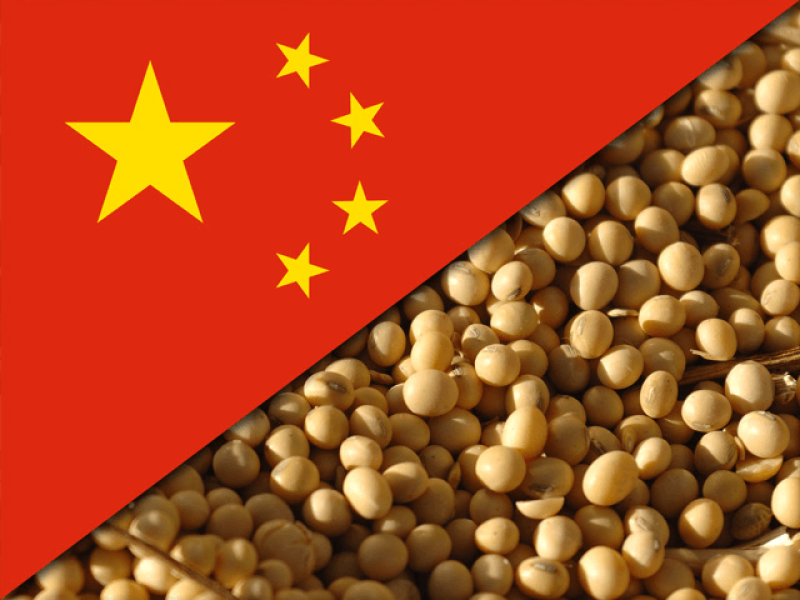
China’s recent decision to expand the pilot planting of genetically modified soybeans has the potential to reshape the global soybean trade.

Soybeans, crucial in animal feed, human food and industrial products, are immensely important in China. Although the country is a major soybean producer soybean production at 20 million tonnes, China is remains the world’s largest importer, accounting for more than 60% of global demand.

Mis- and disinformation are distorting science and public policy. Subscribe to our Daily and Weekly Digests for incisive coverage of ‘disruptive’ innovations in AI, agricultural biotechnology, food, chemicals, nuclear energy, vaccines, and other disruptive innovations.

In 2021 alone, China imported more than 100 million tonnes of soybeans, mainly from Brazil, the US and Argentina. This was a 13.3% year-on-year increase from 2020.

…

The pressure of testy US–China relations has made it imperative for China’s policymakers to increase local soybean production, including through GM seeds. Soybeans play a crucial role in China’s economy and Beijing consistently emphasises the need for increased local production in its policy measures, targets and five-year plans. Recent efforts, like draft rules on registration requirements for herbicides used on GM crops and the 14th Five-Year Plan on Bioeconomy (2021-2025), have highlighted the government’s commitment to exploring agricultural biotechnology for human consumption at scale.


…

To achieve a higher usage of GM technology in agriculture it has commenced GM pilot programs to gradually introduce domestically-produced GM soybeans and other crops into the market for human consumption.


This is an excerpt. Read the original post here

Related Articles

Infographic: Global regulatory and health research agencies on whether glyphosate causes cancer

Infographic: Global regulatory and health research agencies on whether glyphosate causes cancer

Does glyphosate—the world's most heavily-used herbicide—pose serious harm to humans? Is it carcinogenic? Those issues are of both legal and ...

Most Popular

ChatGPT-Image-Mar-10-2026-01_39_01-PM
Viewpoint—“Miracle molecule” debunked: Why acemannan supplements don’t work
Screenshot-2026-09-17-at-1.07.08-PM
'We are dangerously addicted to antidepressants': Should we heed RFK Jr.’s sobering warning?
ChatGPT-Image-Sep-2-2026-02_03_32-PM
How much of a problem is AI’s water use?
Screenshot-2026-09-10-at-12.20.19-PM
'Jet fuel didn't melt the steel': 9/11 conspiracy theories debunked
Screenshot-2026-09-17-at-12.00.30-PM
Investigative group ProPublica finds links between ectopic pregnancy deaths and abortion bans
ChatGPT-Image-Sep-22-2026-10_32_46-AM
There has been a slew of recent reports of food recalls and foodborne outbreaks. Do we face an escalating problem?
Screenshot-2026-08-19-at-6.19.42-PM
Facts & Fallacies podcast: 'Regenerative farming'? RFK Jr.’s federal push romanticizes the past and risks food security
Screenshot-2026-09-03-at-10.51.20-AM
Viewpoint: Why do online health lies outlive the evidence that debunks them? Read "Everyone Else Is Lying to You"
eaeb d b
Viewpoint: The organic food industry is a $180 billion marketing fraud
Screenshot-2026-09-16-at-3.14.20-PM
19%: Plunging support for Trump-RFK, Jr. measles vaccine safety oversight
ChatGPT-Image-Sep-23-2026-01_52_03-PM
Viewpoint: 4 very real AI doomsday scenarios
glp menu logo outlined

Get news on human & agricultural genetics and biotechnology delivered to your inbox.