Organic is not for everyone: Availability and affordability limit organic produce to higher-income households

organic scaled
Credit: Michigan State University

The University of California-Davis conducted a study that revealed an interesting finding: people who consistently choose healthy foods end up spending nearly 20 percent more on groceries.

Follow the latest news and policy debates on sustainable agriculture, biomedicine, and other ‘disruptive’ innovations. Subscribe to our newsletter.

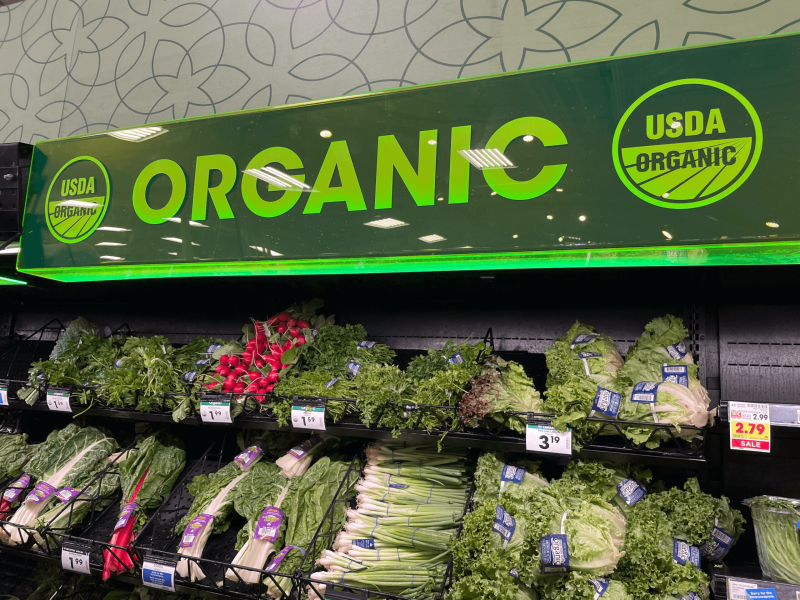
One of the major reasons why people arenโ€™t buying into organic food products is the lack of availability, particularly in low-income areas. Many communities with limited access to grocery stores or supermarkets find it difficult to find organic options. This lack of availability contributes to the low consumption of organic food among low-income individuals and families.

In addition to limited availability, there are also challenges in accessing organic options for low-income individuals. The higher price of organic food products compared to conventional options can be a barrier for those with limited financial resources. Studies have shown that the higher price of healthier choices can consume a significant portion of a low-income familyโ€™s grocery budget, making it difficult to afford organic food consistently.

Furthermore, the study mentioned in the previous section highlights that organic doesnโ€™t necessarily mean the food is free of potentially toxic elements. This can create skepticism among consumers, especially when they have limited options and are already facing financial constraints.


This is an excerpt. Read the original post here

{{ reviewsTotal }}{{ options.labels.singularReviewCountLabel }}
{{ reviewsTotal }}{{ options.labels.pluralReviewCountLabel }}
{{ options.labels.newReviewButton }}
{{ userData.canReview.message }}

Related Articles

Infographic: Global regulatory and health research agencies on whether glyphosate causes cancer

Infographic: Global regulatory and health research agencies on whether glyphosate causes cancer

Does glyphosateโ€”the world's most heavily-used herbicideโ€”pose serious harm to humans? Is it carcinogenic? Those issues are of both legal and ...

Most Popular

wuhan institute of virology main entrance
โ€‹โ€‹COVID lab leak? Making a case that the Wuhan market origins theory is wrong
ChatGPT-Image-Mar-10-2026-01_39_01-PM
Viewpointโ€”โ€œMiracle moleculeโ€ debunked: Why acemannan supplements donโ€™t work
ChatGPT-Image-Jun-9-2026-01_11_37-PM
Turmeric supplements: More risks than benefits
Screenshot-2026-06-05-at-2.12.30-PM
Some plants can poison you. So how did humans figure out what is safe to eat?
ChatGPT Image May 26, 2026, 08_42_17 AM (1)
Viewpoint: Greenpeace and poison: How environmental advocacy groups rely on compliant (and often ignorant) journalists to spread disinformation and spark litigation
Screenshot-2026-06-17-at-9.44.03-AM
Viewpoint: Embryos are becoming the newest battleground of love, loss, and legal uncertainty
ChatGPT-Image-Jun-11-2026-01_15_03-PM
Selective Pressure, Selective Silence
ChatGPT-Image-Jun-14-2026-09_41_44-AM-2
Viewpointโ€”โ€˜The gleeful efficiency of an arsonistโ€™: Administrationโ€™s health and science research cuts are โ€˜sabotagingโ€™ Americaโ€™s future

Sorry. No data so far.

glp menu logo outlined

Get news on human & agricultural genetics and biotechnology delivered to your inbox.