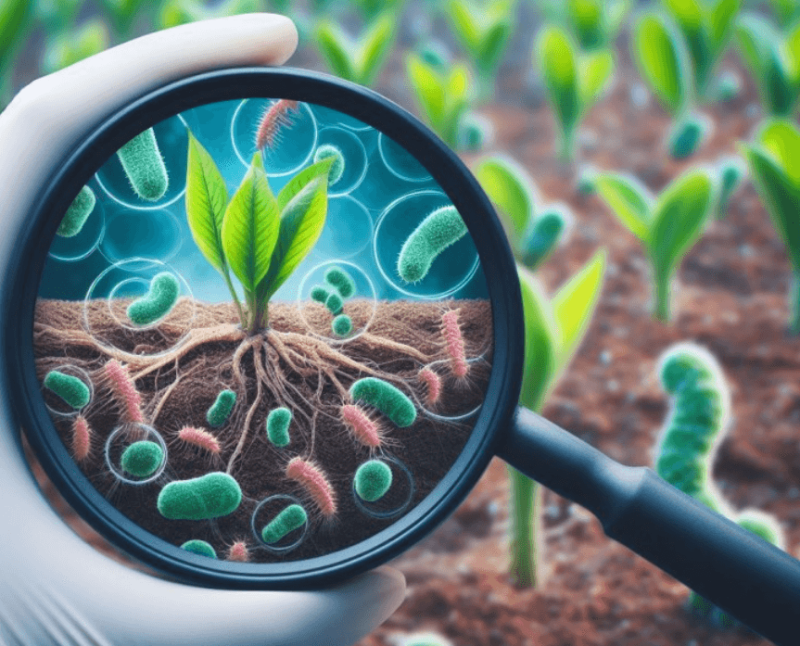
Boost to regenerative agriculture: Nanotechnology-enhanced bacterial fertilizer might could reduce farmers’ synthetic chemical dependency

screenshot pm
Credit: Yanki Turan/LinkedIn

Claims we may only have 60 harvests left appear to be hyperbole but the fact remains that our agricultural land is suffering due to micronutrient depletion.

Chemical fertilisers are unable to stem the tide, while microbial fertilisers, which replenish the nutrients removed as plants grow, bring with them their own hurdles.

Microbial fertilisers are mostly in use at large-scale commercial farms in Brazil, where farmers have seen equivalent or higher yields, as well as small “boutique” farms in the US. Costs can be prohibitive for many farmers though, with on-site fermenters and skilled staff needed to grow and disperse microbes.

Mis- and disinformation are distorting science and public policy. Subscribe to our Daily and Weekly Digests for incisive coverage of ‘disruptive’ innovations in AI, agricultural biotechnology, food, chemicals, nuclear energy, vaccines, and other disruptive innovations.

However, Ariel Furst, based in the Department of Chemical Engineering at the Massachusetts Institute of Technology (MIT), US, believes access to microbial fertilisers can be improved through nanotechnology.

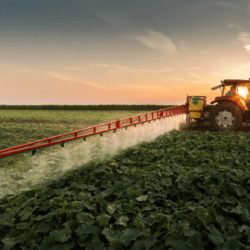
“Our goal is to enable everyone to have access to these microbial tools, without needing to actually grow the microbes on site,” she says. Using food-grade chemicals, Furst’s group has developed coatings that can protect the microbes until they are applied to the soil, while enabling transport in a dried form that prevents difficult and expensive liquid transport and avoids the need for cold chain. Comprising a metal and the organic compound polyphenol, the metal-phenol network coatings self-assemble under the right conditions.


This is an excerpt. Read the original post here

Related Articles

Infographic: Global regulatory and health research agencies on whether glyphosate causes cancer

Infographic: Global regulatory and health research agencies on whether glyphosate causes cancer

Does glyphosate—the world's most heavily-used herbicide—pose serious harm to humans? Is it carcinogenic? Those issues are of both legal and ...

Most Popular

ChatGPT-Image-Mar-10-2026-01_39_01-PM
Viewpoint—“Miracle molecule” debunked: Why acemannan supplements don’t work
ChatGPT-Image-Sep-23-2026-02_36_39-PM
Viewpoint: After firing the entire National Science Board, Trump reshapes funding initiatives. Here’s the good and the bad.
generated-1790707585414
Facts & Fallacies podcast: America's health care system is broken. A doctor explains how to fix it
ChatGPT-Image-Sep-2-2026-02_03_32-PM
How much of a problem is AI’s water use?
Screenshot-2026-09-29-at-11.06.43-AM
Astrology, homeopathy, vaccine rejectionism, creationism: Why pseudoscience thrives as science advances
Screenshot-2026-09-17-at-1.07.08-PM
'We are dangerously addicted to antidepressants': Should we heed RFK Jr.’s sobering warning?
Screenshot-2026-09-25-at-9.24.04-AM
What constitutes a measles death? RFK, Jr. maneuvers to restrict definition to make pandemic seem less dire
ChatGPT-Image-Sep-22-2026-11_17_31-AM
The exploding controversy over AI’s built-in survival drive
Screenshot-2026-09-28-at-2.41.21-PM
Viewpoint: 7-OH controversy: An opioid is available over-the-counter–even at gas stations. Should we be concerned?
ChatGPT-Image-Sep-28-2026-11_51_41-AM
Energy-sucking data centers are unpopular across the political spectrum. Could moving them into space change the equation?
glp menu logo outlined

Get news on human & agricultural genetics and biotechnology delivered to your inbox.