How long is forever? Chemical manufacturers challenge what they believe are unscientific attacks on PFAS — what environmental activists call ‘forever chemicals’

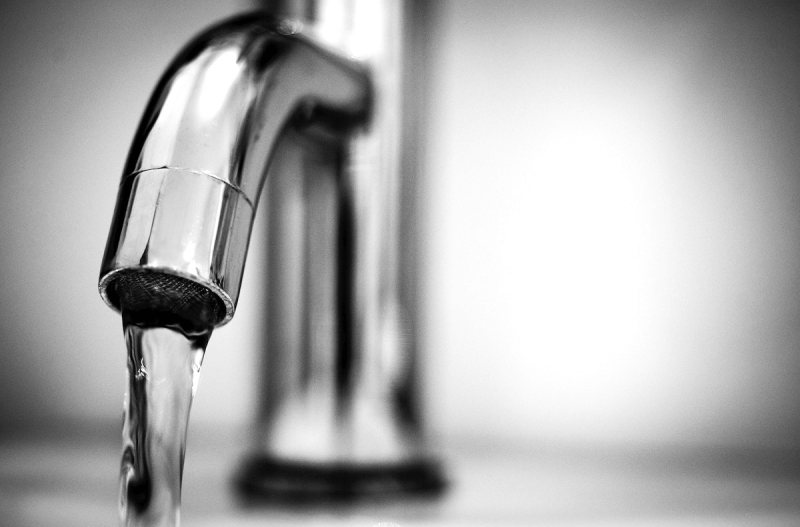
tap water
Credit: Rawpixel (Public Domain)

Chemical and manufacturing groups sued the federal government [June 10] over a landmark drinking-water standard that would require cleanup of so-called forever chemicals linked to cancer and other health risks.

The industry groups said that the government was exceeding its authority under the Safe Drinking Water Act by requiring that municipal water systems all but remove six synthetic chemicals, known by the acronym PFAS, that are present in the tap water of hundreds of millions of Americans.

The Environmental Protection Agency has said that the new standard, put in place in April, will prevent thousands of deaths and reduce tens of thousands of serious illnesses.

Follow the latest news and policy debates on sustainable agriculture, biomedicine, and other ‘disruptive’ innovations. Subscribe to our newsletter.
[T]he American Chemistry Council and National Association of Manufacturers said the E.P.A. rule was “arbitrary, capricious and an abuse of discretion.” The petition was filed in the Court of Appeals for the District of Columbia.

In a separate petition, the American Water Works Association and the Association of Metropolitan Water Agencies said the E.P.A. had “significantly underestimated the costs” of the rule. Taxpayers could ultimately foot the bill in the form of increased water rates, they said.

The E.P.A. estimates that it would cost water utilities about $1.5 billion annually to comply with the rule, though utilities have said the costs could be twice that amount. States and local governments have successfully sued some manufacturers of PFAS for contaminating drinking water supplies.

President Biden’s bipartisan infrastructure law, passed in 2021, sets aside $9 billion to help communities address PFAS contamination.


This is an excerpt. Read the original post here

{{ reviewsTotal }}{{ options.labels.singularReviewCountLabel }}
{{ reviewsTotal }}{{ options.labels.pluralReviewCountLabel }}
{{ options.labels.newReviewButton }}
{{ userData.canReview.message }}

Related Articles

Infographic: Global regulatory and health research agencies on whether glyphosate causes cancer

Infographic: Global regulatory and health research agencies on whether glyphosate causes cancer

Does glyphosate—the world's most heavily-used herbicide—pose serious harm to humans? Is it carcinogenic? Those issues are of both legal and ...

Most Popular

Screenshot 2025-08-25 203032
Mazzenga’s 20-year old muscles: How a still-going-strong 92-year old sprinter wins every race she enters
Screenshot-2026-06-08-at-10.19.30-AM
‘Natural’ wellness supplements linked to liver injury
ChatGPT-Image-May-28-2026-12_56_54-PM
Viewpoint: Vaccines' non-specific effects? The ‘shoddy’ Danish couple whose 'research’ inspires RFK, Jr.’s health delusion
Screenshot-2026-06-05-at-2.12.30-PM
Some plants can poison you. So how did humans figure out what is safe to eat?
Credit: ACSH
Viewpoint: Who and what’s to blame for the surge in vaccine-preventable diseases?
Screen Shot at AM
Facts & Fallacies Podcast: Right-wing politics bad for your health? Separating speculation from science
Screenshot-2026-06-05-at-1.44.09-PM
Viewpoint: Scientists have scrapped the worst-case climate scenario. Is that proof that climate change is a hoax, as Trump claims?
ChatGPT-Image-Jun-9-2026-03_24_05-PM
Misinformed parents overdosing children with Vitamin A to fight measles
Screenshot 2025-07-30 at 10.48
Can gene editing eliminate Down syndrome? Scientists have done it in lab-grown cells
ChatGPT-Image-Mar-10-2026-01_39_01-PM
Viewpoint—“Miracle molecule” debunked: Why acemannan supplements don’t work
ChatGPT-Image-Jun-9-2026-11_54_59-AM
Why weight-loss drugs might be reducing cancer rates and making treatment more effective
Screenshot-2026-06-08-at-11.05.51-AM
Can vaping lead to cancer? New ‘association study’ raises questions of “links"
glp menu logo outlined

Get news on human & agricultural genetics and biotechnology delivered to your inbox.