[su_panel color=”#3A3A3A” border=”1px solid #3A3A3A” radius=”2″ text_align=”left”]
What is Daubert? This essay on the Cornell University website explains it well.
The “Daubert Standard” provides a systematic framework for a trial court judge to assess the reliability and relevance of expert witness testimony before it is presented to a jury. Established in the 1993 U.S. Supreme Court case Daubert v. Merrell Dow Pharmaceuticals Inc., 509 U.S. 579 (1993), this standard transformed the landscape of expert testimony by placing the responsibility on trial judges to act as “gatekeepers” of scientific evidence.
The Daubert case introduced a more comprehensive approach that requires judges to scrutinize not only the expert’s methodology but also the underlying scientific principles. This shift aimed to curtail the admission of pseudoscientific or unreliable expert testimony. Judges are required to assess the methodology and reasoning behind an expert’s opinions, rather than simply relying on the expert’s credentials or reputation.
Under the Daubert Standard, the trial court considers the following factors to determine whether the expert’s methodology is valid:
- Whether the technique or theory in question can be, and has been tested;
- Whether it has been subjected to publication and peer review;
- Its known or potential error rate;
- The existence and maintenance of standards controlling its operation; and
- Whether it has attracted widespread acceptance within a relevant scientific community.
[/su_panel]
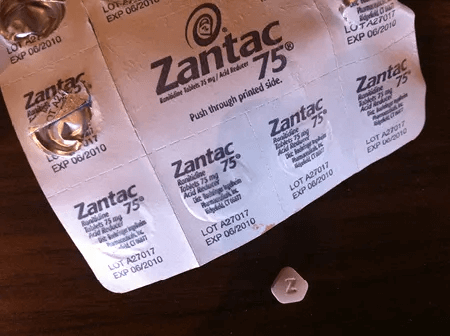
The Delaware state court case concerns 70,000-plus plaintiffs alleging ten different cancers were caused by their consumption of the heartburn medicine Zantac. [1] In December 2022, Judge Robin Rosenberg of Florida considered virtually the same evidence in multi-district litigation (MDL), consolidating 50,000 plaintiffs from across the country. In her 337-page decision, Judge Rosenberg found that none of the evidence proffered by the plaintiff’s experts was sufficiently sound to be put before a jury — and dismissed the case.
Delaware’s Judge Medinilla thumbs her nose at Justice Rosenberg’s findings –repeatedly protesting that she isn’t bound by them. Sadly, she disregards the wisdom of a recent Round Up ruling:
[P]art of the point of centralizing cases like these in an MDL is that the Court… can develop a fluency in the relevant scientific literature. Where that fluency helps identify serious problems in an expert opinion, it doesn’t make sense for the Court to ignore them.
Medinilla’s ruling surprises us with the notion that Delaware’s Daubert standard differs from other states and federal courts. Her reasoning also differs from other jurists, including New York’s Judge Denise Cote, who rejected the plaintiffs’ experts’ testimony in the “Tylenol causes autism” case, Judge Nancy J. Rosenstengel in the paraquat MDL, and Judge Chhabria’s RoundUp decision of June 20. [2]
Plaintiffs themselves limit their claims
To be sure, the Florida Zantac litigation concerned only five cancers (liver, stomach, esophagus, pancreas, and bladder), and Judge Medinilla is correct that evidence regarding the other five (breast, prostate, kidney, lung, or colorectal cancer) wasn’t heard by that court. But that’s because the plaintiffs’ attorneys decided the evidence wasn’t strong enough and removed the latter group from litigation.
The significance of Delaware’s diluted Daubert is ominous, as pointed out by the defendants in their petition for an interlocutory (intermediate) appeal. [3]
The Opinion would mark a major shift in Delaware’s Daubert jurisprudence, permitting general-causation experts to reach a jury so long as they can claim a product contains a toxic substance in some undefined amount, even when the experts’ methods are at odds with those generally accepted by scientists and regulators.
Should this ruling be allowed to stand, Delaware, the incorporation capital of America, will also find itself the litigation capital of the country as plaintiffs invade the state where Daubert has been undone.
Daubert has a history and a purpose
Judge Medinilla’s explanation for her idiosyncratic approach is troubling – and erroneous. Rather than evidencing an understanding of the history and purpose of Daubert– to exclude the junk science that bankrupted industries, Judge Medinilla proposes a different purpose:
Although Daubert may have been intended to streamline expert practice under Rule 702, this case, like many around the country, suggests that goal has proven elusive.”
Nothing could be further from the truth. The gatekeeper responsibility requires excluding “junk science” that once flooded the courts – right under the noses of science-illiterate judges bamboozled by experts with fancy credentials.
To implement this evidentiary standard, the district court acts as a “gatekeeper” to “ensure that any and all scientific testimony … is not only relevant, but reliable.”
– Daubert, 509 U.S. at 58
The tests for a Daubert determination:
Evaluating expert testimony is a two-step process that first assesses the methodology used to reach the conclusions. This must be rigorously examined for reliability. , meaning the likelihood the results are reproducible or repeatable
“To assess the reliability of a qualified expert’s testimony, the Seventh Circuit instructs district courts to consider, at a minimum, four factors that track the Daubert considerations:
- whether the proffered theory can be and has been tested
- whether the theory has been subjected to peer review
- whether the theory has been evaluated in light of potential rates of error
- whether the theory has been accepted in the relevant scientific community.”
While these “Daubert tests” are not mandatory nor exclusive, most courts use them to assist in their deliberation. Judge Rosenberg, in her opinion, suggested other factors to be considered, including :
- lack of documentation on how experiments were conducted
- lack of substantiation for analytical leaps
- lack of statistically significant data
- lack of internally consistent, objective, science-based standards for the evenhanded evaluation of data.
Delaware law holds that statistical significance is “not necessary to prove causality.
– Judge Medinilla
Medinilla didn’t utilize any of these prompts. To provide cover for her Daubert recalcitrance, she proudly proclaims various idiosyncratic mantras, such as that Delaware doesn’t require statistical significance, the sine qua non of scientific reliability. Nor does she utilize judicially adopted “signals” to ferret out sound from sham science – such as “cherry-picking” the data on which opinions will be based. Instead, she readily accepts the plaintiffs’ experts’ “jerry-rigged” data, even as her judicial colleagues jettison such evidence faster than one can toss an exploding botulism can.





Conspicuous by its absence are the specifics of the studies Medinilla ostensibly analyzed. One can almost see her upthrown hands at each impasse; determining every expert dispute is one of credibility, enabling her to dump her gatekeeping responsibilities into the laps of a jury.
Conclusions, too, must be vetted, per the Joiner case
The Daubert standard that an expert testifies to scientific knowledge—with conclusions supported by solid evidence for each step in the analysis—means that any step that renders the analysis unreliable under the Daubert factors renders the expert’s testimony inadmissible.
Medinilla would have it otherwise, writing: “It is not the role of this Court to substitute its scientific conclusions for those of an expert scientist.”
Wrong.
While expert conclusions (i.e., opinions on the causation issue) are not subject to the same reliability tests as methodology, conclusions must flow directly from the data under the Joiner case. The judge cannot simply turn her head and say these are credibility issues. In other words, the judge must first determine if the opinions wander too far astray from the data – as data and opinion must be logically and tightly tethered.
Blame the ninth circuit
Without shame, Medinilla ascribes to Delaware a more relaxed Daubert standard than other courts, allowing greater deference to experts, seeking comfort in and hiding under old Ninth Circuit cases.
Wrong again. And in 2021, the Ninth Circuit itself pointedly disabuses us of this notion:
As an initial matter, this court [the Ninth Circuit] is not an outlier following a more flexible Daubert approach than other circuits.
Moreover, if she is going to try to turn to the Ninth Circuit for cover, even mistakenly, she should at least refrain from legal “cherry-picking.” For Example, Medinilla rejects human epidemiology in proving general causation. [4] However, the Ninth Circuit requires human epidemiology! Then, the Medinilla glosses over the issue of proving that there is a sufficient dose to establish causation. Again, the Ninth Circuit disagrees, holding proof of adequate exposure is essential:
“To establish general causation, … experts needed to show that [a substance] can cause [cancer] at exposure levels people realistically may have experienced.”
The question of exposure, a reflection of an available dose, is probably the most sensitive issue in this case, as ample evidence exists that the plaintiffs artificially manufactured the data – torturing the pseudo-samples (the actual pills are not available) by excessive heat (to levels just short of the temperature on Mars) rather than using human stomach temperature and simulating real-life conditions.
A finger wag to the defense bar
While the defendants properly castigated the judge for her warm and fuzzy hospitality message to the plaintiffs’ bar, this is hardly the proper objection to be raised on appeal. Instead, the judge should be called out for cherry-picking and misrepresenting the legal standards most courts require in a Daubert analysis. By picking the loosest evidentiary requirements across various criteria (the Chinese menu method of analysis), the court idiosyncratically morphs into a ‘donkey-like’ Daubert, undoing three decades of legal progress.
Notes:
[1] Of these plaintiffs, 99.6% live outside Delaware. Typically, in state court cases, only state court residents sue. Here, most of the plaintiffs take advantage of the incorporation status of the defendants. [2] Since Medinilla says Judge Rosenberg’s decision was 200 pages, perhaps she hadn’t read the entire order; she doesn’t mention Judge Cote’s order or Judge Rosenstengel’s April 2024 decision, instead relying on older cases. [3] Delaware follows federal court procedure for appealing decisions that are not final, i.e., those that do not end the litigation. These interlocutory rulings require the deciding judge’s permission before appellate review. Such permission is rarely granted. [4] One cannot be faulted for surmising there is something amiss here, as all 16 existing epidemiological studies conducted to date show no relationship between Zantac and cancer.Dr. Barbara Pfeffer Billauer, JD MA (Occ. Health) Ph.D. is Professor of Law and Bioethics in the International Program in Bioethics of the University of Porto and Research Professor of Scientific Statecraft at the Institute of World Politics in Washington DC.
A version of this article was originally posted at The American Council on Science and Health and has been reposted here with permission. Any reposting should credit the original author and provide links to both the GLP and the original article. Find ACSH on X @ACSHorg