
Viewpoint: Challenging yet another scientifically silly article claiming Black domination of sprinting and long distance running has nothing to do with genetics and ancestry

Screenshot 2024-07-24 at 9.53.21 AM

The latest effort to disprove racial differences in athletic ability is a paper by Tade Souaiaia and colleagues titled ‘Revisiting Stereotypes: Race and Running’. Specifically, these authors challenge the “racialist paradigm” that West Africans have an inherent advantage in sprinting and East Africans have an inherent advantage in long-distance running.

Mis- and disinformation are distorting science and public policy. Subscribe to our Daily and Weekly Digests for incisive coverage of ‘disruptive’ innovations in AI, agricultural biotechnology, food, chemicals, nuclear energy, vaccines, and other disruptive innovations.
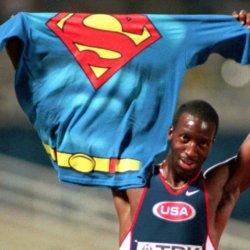
[I]n the 100m, 97 of the top 100 times were achieved by men with West/South African ancestry. And in the marathon, 96 of the top 100 times were achieved by men with East African ancestry. In other words, West/South Africans still overwhelmingly dominate sprinting, while East Africans still overwhelmingly dominate long-distance running.

…

As an alternative to the supposedly erroneous “racialist paradigm”, Souaiaia and colleagues propose the “psychocultural hypothesis”. It’s not entirely clear what they mean, but they seem to be saying that stereotypes and role model effects explain the patterns in the data. Although I can’t rule out such effects completely, this seems to me an extremely unlikely explanation.

…

[T]he evidence that West/South Africans have an inherent advantage in sprinting and East Africans have an inherent advantage in long-distance running remains highly compelling, while the notion that racial gaps in athletic performance are the result of stereotypes and role model effects is totally implausible. Some groups are better at certain things than other groups – and that’s okay.


This is an excerpt. Read the full article here

Related Articles

Infographic: Global regulatory and health research agencies on whether glyphosate causes cancer

Infographic: Global regulatory and health research agencies on whether glyphosate causes cancer

Does glyphosate—the world's most heavily-used herbicide—pose serious harm to humans? Is it carcinogenic? Those issues are of both legal and ...

Most Popular

ChatGPT-Image-Mar-10-2026-01_39_01-PM
Viewpoint—“Miracle molecule” debunked: Why acemannan supplements don’t work
Screenshot-2026-10-14-at-11.45.36-AM
Viewpoint: RFK Jr.’s stacked FDA advisory council endorses multicancer screening test from ethically- questionable company that would increase false positives and waste billions of dollars
Screenshot-2026-10-08-at-10.41.33-AM
Viewpoint: Wellness patches: Most vitamin supplements are useless and sometimes even dangerous, but this craze is even worse
newborn baby spit up gerd
Vaccine-preventable congenital infections are a leading driver of autism
Misinformation-Shatters-the-Clockwork-Mind
Viewpoint: The price Americans pay for science denialism
Screenshot-2026-10-15-at-12.13.33-PM
Ahead of the midterms, Meta has paid at least 29 anti-LGBTQ accounts for their posts
Crossed-Out-Calendar-with-Milk-Carton
Viewpoint: The shocking consequences after a year of Robert F. Kennedy Jr.'s distortions, deceptions, and flat-out falsehoods
glp menu logo outlined

Get news on human & agricultural genetics and biotechnology delivered to your inbox.















