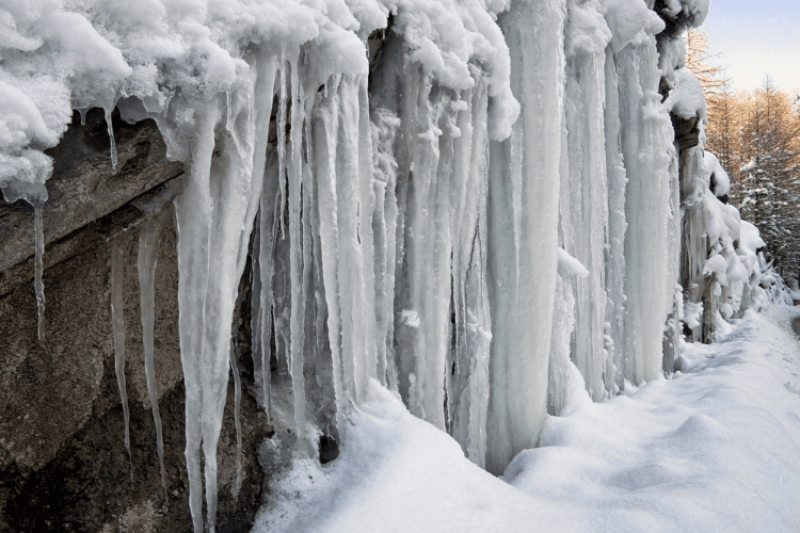
As ancient humans moved north, how did they survive the cold?

As ancient humans moved north, how did they survive the cold?
Credit: Pixabay/ Camera-man

Modern humans migrated out of Africa around 70,000 years ago, and almost all people currently living outside the continent are thought to have descended from those early pioneers.

Since Africa protected human ancestors from the extreme cold conditions of past ice ages, they lost their thick body hair and adapted to the continent’s heat.

But as humans migrated to colder regions, they went from being hunter gatherers to forming agricultural and pastoral societies. The changes compelled them to adapt and played a pivotal role in shaping human evolution and diversity.

Follow the latest news and policy debates on sustainable agriculture, biomedicine, and other ‘disruptive’ innovations. Subscribe to our newsletter.

Studies over the past two decades suggested that DNA variations within the fat mass and obesity-associated gene FTO were linked to the reduced heat-generating capacity of a set of human fat cells.

Humans with this gene variation could have had enhanced body heat generation in cold climates, giving them a substantial survival advantage.

This could be one of the many gene variations that helped early humans adapt to cold environments, scientists said, adding that further studies on this trajectory of human evolution were needed.

“Much like the rock paintings adorning the walls of the Blombos Cave, our DNA serves as a faithful recorder of every notable event along the intricate path of human evolution,” scientists said.


This is an excerpt. Read the full article here

{{ reviewsTotal }}{{ options.labels.singularReviewCountLabel }}
{{ reviewsTotal }}{{ options.labels.pluralReviewCountLabel }}
{{ options.labels.newReviewButton }}
{{ userData.canReview.message }}

Related Articles

Infographic: Global regulatory and health research agencies on whether glyphosate causes cancer

Infographic: Global regulatory and health research agencies on whether glyphosate causes cancer

Does glyphosate—the world's most heavily-used herbicide—pose serious harm to humans? Is it carcinogenic? Those issues are of both legal and ...

Most Popular

wuhan institute of virology main entrance
​​COVID lab leak? Making a case that the Wuhan market origins theory is wrong
ChatGPT-Image-Mar-10-2026-01_39_01-PM
Viewpoint—“Miracle molecule” debunked: Why acemannan supplements don’t work
Screenshot-2026-06-18-at-11.41.51-AM
Viewpoint—Protecting baloney science: Far right senators move to protect the phony homeopathy industry
artificial intelligence brain think illustration md
Viewpoint — Digital gods and human extinction: Will we be the first species ever to design our own descendants?

Sorry. No data so far.

glp menu logo outlined

Get news on human & agricultural genetics and biotechnology delivered to your inbox.