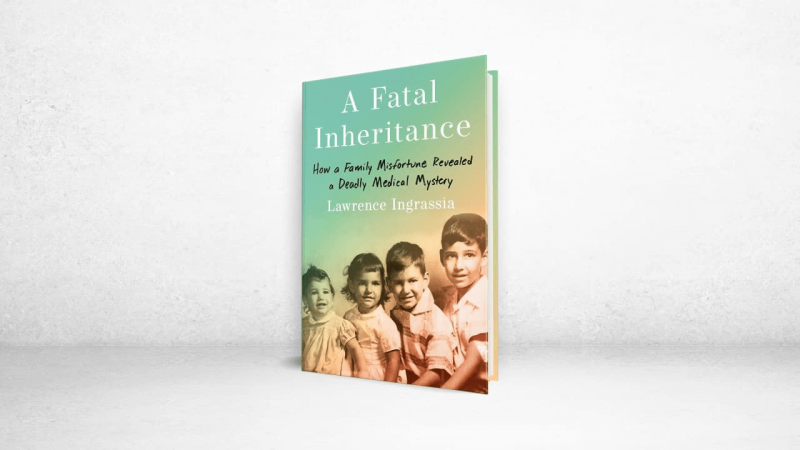
A Fatal Inheritance: Book review — Cancer-stricken family survivor recounts legacy of tragic genetic lineage

image - 2024-08-13T223521.630

When it’s working, p53 acts as a tumor suppressor, stamping out malignancies before they can grow and spread. This gene is so important that one scientist called it the “guardian of the genome.” People with the mutation, which causes an extremely rare disorder called Li-Fraumeni Syndrome, have a defective p53 gene, which means no brakes on tumors flourishing in their bodies. Families with this syndrome often lose a cascade of loved ones to breast cancer, lung cancer, pancreatic cancer, and more.

Mis- and disinformation are distorting science and public policy. Subscribe to our Daily and Weekly Digests for incisive coverage of ‘disruptive’ innovations in AI, agricultural biotechnology, food, chemicals, nuclear energy, vaccines, and other disruptive innovations.

Lawrence Ingrassia hails from one of these families. He was spared the p53 mutation, but he lost his mother, two sisters, his brother, and a nephew to various cancers. Ingrassia, a Pulitzer Prize-winning journalist formerly with The New York Times and The Wall Street Journal, decided to chronicle his family story as well as explore the discovery of Li-Fraumeni Syndrome and cancer research in general. The result is “A Fatal Inheritance: How A Family Misfortune Revealed a Deadly Medical Mystery,” a braided narrative in which Ingrassia charts the loss of his family as well as the tale of the scientists who turned cancer from an obscure yet burgeoning public health issue into one of the most-studied diseases of our time.

At its heart, the book creates a tense frisson as it chronicles a series of massive scientific breakthroughs, none of which successfully saved Ingrassia’s family or the other families in this narrative. Ingrassia describes it aptly when he writes, “The story of Li-Fraumeni Syndrome and, more broadly, of cancer research isn’t one story, but two. It is both a heartbreaking story of family loss and an inspiring story of human achievement.”


This is an excerpt. Read the original post here

Related Articles

Infographic: Global regulatory and health research agencies on whether glyphosate causes cancer

Infographic: Global regulatory and health research agencies on whether glyphosate causes cancer

Does glyphosate—the world's most heavily-used herbicide—pose serious harm to humans? Is it carcinogenic? Those issues are of both legal and ...

Most Popular

ChatGPT-Image-Sep-17-2026-12_28_43-PM
Vitamin D, omega-3 fish oil and glucosamine supplements could cause brain damage 
ChatGPT-Image-Mar-10-2026-01_39_01-PM
Viewpoint—“Miracle molecule” debunked: Why acemannan supplements don’t work
ChatGPT-Image-Sep-17-2026-10_17_15-AM
Viewpoint: Why are the less intelligent more likely to be conservative—and smarter people more socially liberal?
Screenshot-2026-09-10-at-12.20.19-PM
'Jet fuel didn't melt the steel': 9/11 conspiracy theories debunked
Screenshot-2026-09-16-at-12.07.47-PM
The heated debate over trans athletes in the WNBA
Screenshot-2026-09-10-at-11.50.46-AM
Did COVID vaccines kill 2,500 service members? RFK Jr. hires an investigator who compares vaccine promoters to Nazi doctors
Screenshot 2026-07-29 at 10.40
The COVID vaccine turbo cancer scare is back. Science still proves it’s wrong.
ChatGPT-Image-Aug-28-2026-03_33_46-PM
Viewpoint: Bad science—Five bogus Trump administration claims about vaccines and autism
glp menu logo outlined

Get news on human & agricultural genetics and biotechnology delivered to your inbox.