By studying the genomes of more than 3,000 people across Japan, researchers have shed light on the population’s complex ancestry. The work may also pave the way for future precision medicine.
Researchers discovered that the genetic lineage of Japan’s population includes three ancestral groups, revising the previous understanding of just two. By using whole-genome sequencing of over 3,200 individuals from across Japan, the study identified significant genetic variations and ties to north-east Asia, particularly the Emishi people.
Genetic Diversity in Japan
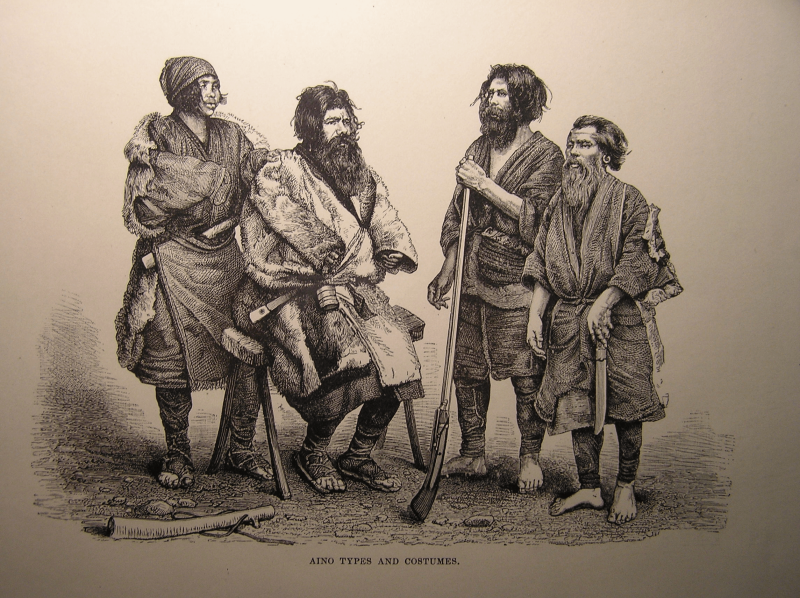
A genetic study led by scientists from RIKEN’s Center for Integrative Medical Sciences has uncovered evidence that people in Japan descend from three ancestral groups.[1] The findings, published recently in the journal Science Advances, challenge the longstanding belief that there were two main ancestral groups in Japan: the indigenous Jomon hunter-gatherer-fishers and the rice-farming migrants from [E]ast Asia.
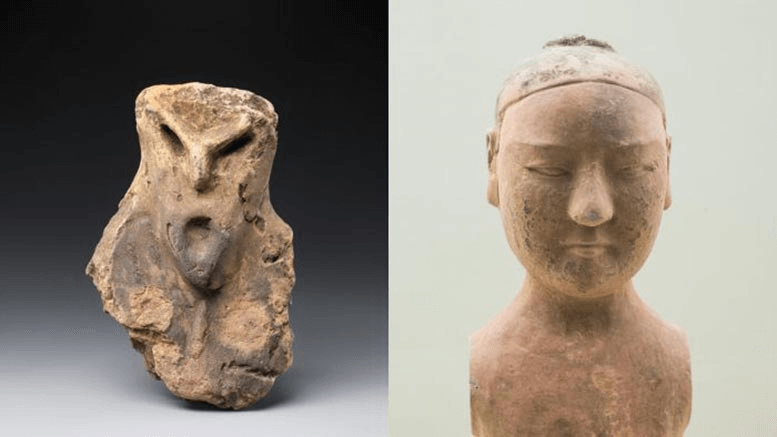
Instead, the researchers identified a third group with potential ties to north-east Asia—the so-called Emishi people, thus lending further credence to a ‘tripartite origins’ theory first suggested in 2021.[2] The Japanese population isn’t as genetically homogenous as everyone thinks, says RIKEN’s Chikashi Terao, who led the study. “Our analysis revealed Japan’s subpopulation structure on a fine scale, which is very beautifully classified according to geographical locations in the country.”
Combing for Clues
Terao’s team arrived at their conclusions after sequencing the DNA of more than 3,200 people across seven regions of Japan, running the length of the country from Hokkaido in the north to Okinawa in the south. It is one of the largest genetic analyses of a non-European population to date.
The researchers used a technique called whole-genome sequencing, which reveals an individual’s complete genetic makeup—all three billion DNA base pairs. It provides roughly 3,000 times more information than the DNA microarray method, which up until now has been used more widely. “Whole-genome sequencing gives us the chance to look at more data, which helps us find more interesting things,” says Terao.
Exploring Ancestral Links and Rare Gene Variants
To further enhance the data’s usefulness and examine the potential links between genes and certain diseases, he and his collaborators combined the DNA information obtained with relevant clinical data, including disease diagnoses, test results, and information on both medical and family history. They collated all of this into a database known as the Japanese Encyclopedia of Whole-Genome/Exome Sequencing Library (JEWEL).
One topic of particular interest to [Terao] was the study of rare gene variants. “We reasoned that rare variants can sometimes be traced back to specific ancestral populations, and could be informative in revealing fine-scale migration patterns within Japan,” he explains.

Their hunch proved right, helping to reveal the geographic distribution of Japanese ancestry. Jomon ancestry, for instance, is most dominant in the southern, subtropical shores of Okinawa (found in 28.5% of samples) while lowest in the west (just 13.4% of samples). By contrast, people living in western Japan have more genetic affinity with Han Chinese people—which Terao’s team believes is likely associated with the influx of migrants from [E]ast Asia between the year 250 and year 794 and is also reflected in the comprehensive historical adoption of Chinese-style legislation, language, and educational systems in this region.
Emishi ancestry, on the other hand, is most common in northeastern Japan, decreasing to the west of the country.

Insights From Archaic Human DNA
The researchers also examined JEWEL for genes inherited from Neanderthals and Denisovans, two groups of archaic humans that interbred with Homo sapiens. “We are interested in why ancient genomes are integrated and kept in modern human DNA sequences,” says Terao, who explains that such genes are sometimes associated with certain traits or conditions.
For instance, other researchers have shown that people in Tibet have Denisovan-derived DNA within a gene called EPAS1, which is believed to have aided their colonization of high-altitude environments.[3] More recently, scientists discovered that a cluster of Neanderthal-inherited genes on chromosome 3—a trait that is present in roughly half of all [S]outh Asians—is linked to a higher risk of respiratory failure and other severe symptoms of [COVID-19].[4]
The analysis by Terao’s team shed light on 44 ancient DNA regions present in Japanese people today, most of which are unique to East Asians. These include a Denisovan-derived one, located within the NKX6-1 gene, known to be associated with type 2 diabetes, which the researchers say could affect a person’s sensitivity to semaglutide, an oral medication used to treat the disease. They also identified 11 Neanderthal-derived segments linked to coronary artery disease, prostate cancer, rheumatoid arthritis, and four other conditions.
The Future of Personalized Medicine
The RIKEN-led researchers also used data on rare genetic variants to uncover the potential causes of diseases. For example, they found that one variant of a gene called PTPRD has the potential to be “highly damaging” because it could be linked with hypertension, kidney failure, and myocardial infarction, says Xiaoxi Liu, a senior scientist in Terao’s lab and the study’s first author.
Additionally, the scientists noted significant incidence of variants—also called loss-of-function variants—in the GJB2 and ABCC2 genes, which are associated with hearing loss and chronic liver disease, respectively. Teasing out the relationship between genes, their variants, and how these impact traits, including disease predisposition, could one day play a role in helping scientists develop personalized medicine, says Terao.
“What we’ve tried to do is to find and catalog loss-of-function gene variants that are very specific to Japanese people, and to understand why they are more likely to have some specific traits and diseases,” he says. “We’d like to connect population differences with differences in genetics.”
In the future, he hopes to expand JEWEL and include even more DNA samples in the dataset. For the longest time, large-scale genomic studies have focused on analyzing data from people of European descent. But Terao says it’s “quite important to expand this to the Asian population so that in the long run, the results can benefit us too.”
References:
- “Decoding triancestral origins, archaic introgression, and natural selection in the Japanese population by whole-genome sequencing” by Xiaoxi Liu, Satoshi Koyama, Kohei Tomizuka, Sadaaki Takata, Yuki Ishikawa, Shuji Ito, Shunichi Kosugi, Kunihiko Suzuki, Keiko Hikino, Masaru Koido, Yoshinao Koike, Momoko Horikoshi, Takashi Gakuhari, Shiro Ikegawa, Kochi Matsuda, Yukihide Momozawa, Kaoru Ito, Yoichiro Kamatani and Chikashi Terao, 17 April 2024, Science Advances.
DOI: 10.1126/sciadv.adi8419 - “Ancient genomics reveals tripartite origins of Japanese populations” by Niall P. Cooke, Valeria Mattiangeli, Lara M. Cassidy, Kenji Okazaki, Caroline A. Stokes, Shin Onbe, Satoshi Hatakeyama, Kenichi Machida, Kenji Kasai, Naoto Tomioka, Akihiko Matsumoto, Masafumi Ito, Yoshitaka Kojima, Daniel G. Bradley, Takashi Gakuhari and Shigeki Nakagome, 17 September 2021, Science Advances.
DOI: 10.1126/sciadv.abh2419 - “Altitude adaptation in Tibetans caused by introgression of Denisovan-like DNA” by Emilia Huerta-Sánchez, Xin Jin, Asan, Zhuoma Bianba, Benjamin M. Peter, Nicolas Vinckenbosch, Yu Liang, Xin Yi, Mingze He, Mehmet Somel, Peixiang Ni, Bo Wang, Xiaohua Ou, Huasang, Jiangbai Luosang, Zha Xi Ping Cuo, Kui Li, Guoyi Gao, Ye Yin, Wei Wang, Xiuqing Zhang, Xun Xu, Huanming Yang, Yingrui Li, Jian Wang, Jun Wang and Rasmus Nielsen, 2 July 2014, Nature.
DOI: 10.1038/nature13408 - “The major genetic risk factor for severe COVID-19 is inherited from Neanderthals” by Hugo Zeberg, and Svante Pääbo, 30 September 2020, Nature.
DOI: 10.1038/s41586-020-2818-3