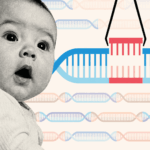
Viewpoint: Overhauling the teaching of genetics is necessary to eliminate the concept of race

Credit: Genetics Digest

On a lengthy busย ride in the early 1970s, University of Chicago geneticistย Richard Lewontinย passed the time by doing some novel math.

Using available data, he computed how protein differences [were] mapped across people around the globe. Contrary to what scientists assumed at the time, he found that most differences existed in every populationโ€”meaning the underlying genetic variation was shared across humanity, not sorted by geographic region or prevailing โ€œracialโ€ categories.

Lewontin published his calculationsย in a short paper in 1972 that ended with this definitive conclusion: โ€œSince โ€ฆ racial classification is now seen to be of virtually no genetic or taxonomic significance either, no justification can be offered for its continuance.โ€

Follow the latest news and policy debates on sustainable agriculture, biomedicine, and other ‘disruptive’ innovations. Subscribe to our newsletter.

But despite huge strides in genetics researchโ€”leaving no doubt about the validity of Lewontinโ€™s conclusionsโ€”genetics curricula taughtย in U.S. secondary and post-secondary schools still largely reflect a pre-1970s view.

Increasingly, genomics plays a leading roleย in health care, criminal justice, and our sense of identity and connection to others. At the same time,ย scientific racismย is on the rise, reaching more people than everย thanks to social media. Outdated education fails to dispel this disinformation.

From the basic genetics taught in Kโ€“12 schools to university courses, biology curricula desperately need an overhaul.

This is an excerpt. Read the original post here

{{ reviewsTotal }}{{ options.labels.singularReviewCountLabel }}
{{ reviewsTotal }}{{ options.labels.pluralReviewCountLabel }}
{{ options.labels.newReviewButton }}
{{ userData.canReview.message }}

Related Articles

Infographic: Global regulatory and health research agencies on whether glyphosate causes cancer

Infographic: Global regulatory and health research agencies on whether glyphosate causes cancer

Does glyphosateโ€”the world's most heavily-used herbicideโ€”pose serious harm to humans? Is it carcinogenic? Those issues are of both legal and ...

Most Popular

ChatGPT Image Jun 3, 2026, 03_54_37 PM
Viewpoint: โ€œTurn on, tune in, drop outโ€โ€”Kennedy embraces the Timothy Leary psychedelic revolution
ChatGPT-Image-Jun-11-2026-01_15_03-PM
Selective Pressure, Selective Silence
Screenshot-2026-06-05-at-2.12.30-PM
Some plants can poison you. So how did humans figure out what is safe to eat?
Screenshot-2026-06-11-at-3.40.06-PM
'Toxin' detox: A gastroenterologist weighs in on $71 billion health trend
Screenshot-2026-06-05-at-1.44.09-PM
Viewpoint: Scientists have scrapped the worst-case climate scenario. Is that proof that climate change is a hoax, as Trump claims?
Screenshot-2026-06-11-at-4.00.17-PM
Gen Z burned by sunscreen misinformation and tanning myths
ChatGPT-Image-Jun-11-2026-10_34_44-AM-2
Will hi-tech genetic fortune-telling really help parents make healthier children?
Screenshot-2026-06-03-at-3.33.44-PM
Viewpoint: Vaccine deniers are attacking a life-saving Vitamin K shot for newborns that isnโ€™t even a vaccine
Screenshot-2026-06-08-at-1.35.30-PM
Viewpoint: Social media and fake natural health propaganda fuel surge in use of mostly useless supplements
Screenshot 2026-05-26 at 10.15
Viewpoint: Double standardโ€”Why does the wellness industry get a free pass while Big Healthcare is treated as morally suspect?

Sorry. No data so far.

glp menu logo outlined

Get news on human & agricultural genetics and biotechnology delivered to your inbox.