
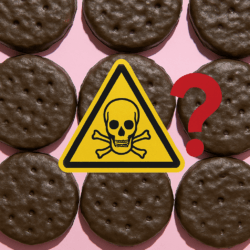
Girl Scout 25-cookie “study” by crack science organization Moms Across America alleging ‘dangerous’ level of pesticide residues sparks class action tort case

The Girl Scouts have been sued by consumers over the alleged presence of “heavy metals” and pesticides in its popular Thin Mints and other cookies. A class action lawsuit was filed on March 10  in federal court in the New York City borough of Brooklyn against the 113-year-old nonprofit and the cookies’ licensed producers, ABC Bakers and Ferrero USA’s Little Brownie Bakers.

It cited a December 2024 study commissioned by GMO Science and Moms Across America that tested samples of 25 cookies from three U.S. states.

Follow the latest news and policy debates on sustainable agriculture, biomedicine, and other ‘disruptive’ innovations. Subscribe to our newsletter.
The study said Girl Scout cookies contained at least four of five heavy metals – aluminum, arsenic, cadmium, lead and mercury – that can harm people’s health or the environment, often at levels exceeding regulators’ recommended limits.
It also said all samples contained glyphosate,, a pesticide used in some weed killers, with Thin Mints containing the highest levels. “While the entire sales practice system for Girl Scout Cookies is built on a foundation of ethics and teaching young girls sustainable business practices, defendants failed to uphold this standard themselves,” the lawsuit said.

Girl Scouts, short for Girl Scouts of the United States of America, addressed the study in a February 6 blog post. It said heavy metals occur naturally in soil, with trace amounts not a safety issue, while glyphosate is found “nearly everywhere” in the food chain…

This is an excerpt. Read the original post here

{{ reviewsTotal }}{{ options.labels.singularReviewCountLabel }}
{{ reviewsTotal }}{{ options.labels.pluralReviewCountLabel }}
{{ options.labels.newReviewButton }}
{{ userData.canReview.message }}

Related Articles

Infographic: Global regulatory and health research agencies on whether glyphosate causes cancer

Infographic: Global regulatory and health research agencies on whether glyphosate causes cancer

Does glyphosate—the world's most heavily-used herbicide—pose serious harm to humans? Is it carcinogenic? Those issues are of both legal and ...

Most Popular

ChatGPT Image Jun 3, 2026, 03_54_37 PM
Viewpoint: “Turn on, tune in, drop out”—Kennedy embraces the Timothy Leary psychedelic revolution
ChatGPT-Image-Jun-11-2026-01_15_03-PM
Selective Pressure, Selective Silence
Screenshot-2026-06-05-at-2.12.30-PM
Some plants can poison you. So how did humans figure out what is safe to eat?
ChatGPT Image Jun 3, 2026, 03_14_43 PM
Viewpoint: How Earthjustice became the poster child for the abuse of special interest activist funding
Screenshot-2026-06-11-at-3.40.06-PM
'Toxin' detox: A gastroenterologist weighs in on $71 billion health trend
Screenshot-2026-06-11-at-4.00.17-PM
Gen Z burned by sunscreen misinformation and tanning myths
Screenshot-2026-06-03-at-1.24.46-PM
Challenging anti-GMO disinformation: Why genetically-tweaked crops offer bushels of benefits
ChatGPT Image May 28, 2026, 08_16_38 PM
Viewpoint: Why the EPA mismeasures cancer risk of chemicals and what should be done to fix it
artificial intelligence brain think illustration md
Viewpoint — Digital gods and human extinction: Will we be the first species ever to design our own descendants?
ChatGPT Image Jun 1, 2026, 11_39_17 AM
Viewpoint: When food myths go viral, farmers pay the price

Sorry. No data so far.

glp menu logo outlined

Get news on human & agricultural genetics and biotechnology delivered to your inbox.