Viewpoint: From farm to famine? Kenya risks a Sri Lanka-style collapse over pesticide politics

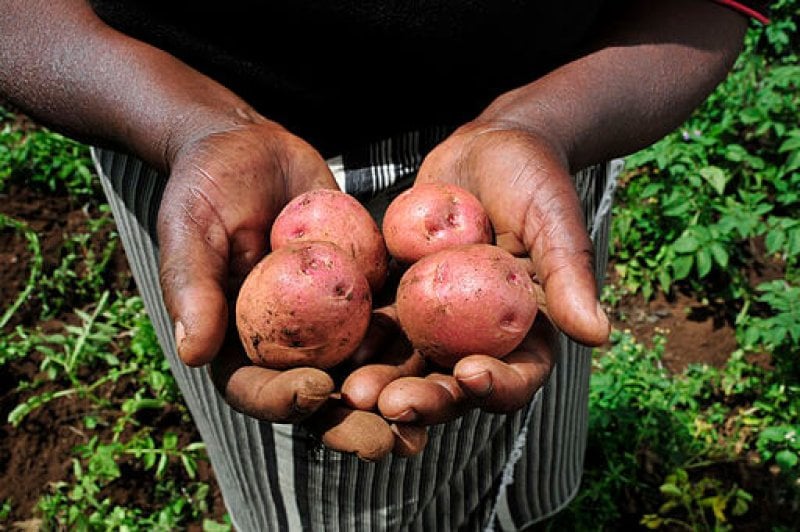
Potatoes from a Kenyan farm
Image Credit: CIAT

In 2025, Kenya, its farmers, and its consumers will deliver a world demonstration of why scientists have been pleading for government policies on pest control to be evidence-based, as they are instead swept up in a tide of misinformation.

A case in point is the pesticide chlorothalonil, one of the world’s most widely used fungicides. In Kenya, it has been the crop protection of choice for diseases such as potato and tomato blight, mildew, botrytis, and black spot, as well as stem rust on wheat, and coffee berry disease.

Mis- and disinformation are distorting science and public policy. Subscribe to our Daily and Weekly Digests for incisive coverage of ‘disruptive’ innovations in AI, agricultural biotechnology, food, chemicals, nuclear energy, vaccines, and other disruptive innovations.

The campaign against pesticides in Kenya focused on Chlorothalonil precisely because it is widely used, with initiatives such as testing vegetables to demonstrate detectable residues.

However, no one would believe that residues are less toxic than a cup of coffee, so they needed to present Chlorothalonil as poisonous.

The only remaining question is whether we will have to face a similar situation to Sri Lanka, with spiralling food prices, starving families, and havoc to lives, human health, and livelihoods, to realise that pests destroy food.


This is an excerpt. Read the original post here

Related Articles

Infographic: Global regulatory and health research agencies on whether glyphosate causes cancer

Infographic: Global regulatory and health research agencies on whether glyphosate causes cancer

Does glyphosate—the world's most heavily-used herbicide—pose serious harm to humans? Is it carcinogenic? Those issues are of both legal and ...

Most Popular

ChatGPT-Image-Mar-10-2026-01_39_01-PM
Viewpoint—“Miracle molecule” debunked: Why acemannan supplements don’t work
ChatGPT-Image-Sep-2-2026-02_03_32-PM
How much of a problem is AI’s water use?
ChatGPT-Image-Sep-10-2026-01_44_53-PM
Viewpoint: Why medical and health nonsense spreads so casually on pop culture media
ChatGPT-Image-Aug-26-2026-12_46_16-PM
Viewpoint: The fake controversy over whether combining childhood vaccines is dangerous— a debate science resolved 25 years ago
ChatGPT-Image-Sep-22-2026-10_32_46-AM
There has been a slew of recent reports of food recalls and foodborne outbreaks. Do we face an escalating problem?
ChatGPT-Image-Sep-18-2026-01_38_09-PM
Microsoft exec: AI is a ‘doom loop’ scraping the ‘largest theft of labor in human history'
Screenshot-2026-09-17-at-12.00.30-PM
Investigative group ProPublica finds links between ectopic pregnancy deaths and abortion bans
Screenshot-2026-09-16-at-3.14.20-PM
19%: Plunging support for Trump-RFK, Jr. measles vaccine safety oversight
ChatGPT-Image-Sep-23-2026-11_47_32-AM
Facing pressure from Trump administration, fewer hospitals offer medical treatment for transgender minors
ChatGPT-Image-Sep-21-2026-03_41_02-PM
Viewpoint: Does IQ really measure intelligence? BBC gets it wrong.
Screenshot-2026-09-16-at-2.26.42-PM
Viewpoint: How to ecologically damage America’s forests: Ban glyphosate
ChatGPT-Image-Sep-17-2026-11_03_54-AM-2
AI sparks a bioweapons race
ChatGPT-Image-Sep-17-2026-12_28_43-PM
Vitamin D, omega-3 fish oil and glucosamine supplements could cause brain damage 
glp menu logo outlined

Get news on human & agricultural genetics and biotechnology delivered to your inbox.