Lab-grown meat labels: USDA finalizing rules on cell-cultivated meat amid protests

Screenshot 2025-07-16 at 3.12.04 PM
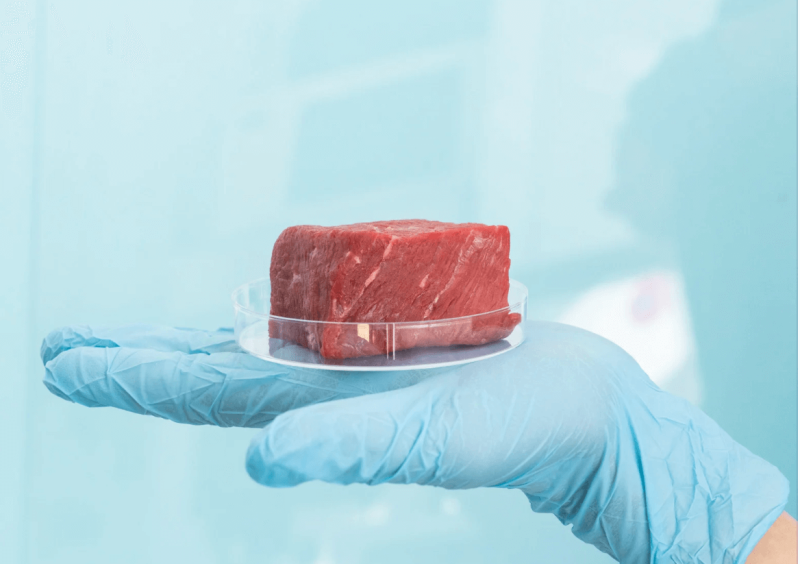
[The] U.S. Department of Agriculture (USDA) is finalizing new national rules for labeling and marketing lab-grown meat, also known as cell-cultivated meat. The change comes as a growing number of states, including Texas, move to ban the product entirely, while consumer awareness of this emerging category remains low.

At the heart of the debate is a term many Americans haven’t yet heard: “cell-cultivated.” That’s the label the USDA has proposed using in official guidance, aligning with language adopted by the Food and Drug Administration (FDA) and supported by industry groups like the Good Food Institute (GFI).

Follow the latest news and policy debates on sustainable agriculture, biomedicine, and other ‘disruptive’ innovations. Subscribe to our newsletter.

Unlike traditional meat, which comes from slaughtered animals, cultivated meat is grown from animal cells in food-safe, brewery-like facilities using nutrients to form real muscle and fat tissue. The USDA’s guidance aims to clarify how these products appear on packaging, particularly as more companies prepare to scale.

According to the USDA, the proposed terminology is designed to strike a balance between consumer clarity, scientific accuracy, and fair marketing as this emerging category enters the market.


This is an excerpt. Read the original post here

{{ reviewsTotal }}{{ options.labels.singularReviewCountLabel }}
{{ reviewsTotal }}{{ options.labels.pluralReviewCountLabel }}
{{ options.labels.newReviewButton }}
{{ userData.canReview.message }}

Related Articles

Infographic: Global regulatory and health research agencies on whether glyphosate causes cancer

Infographic: Global regulatory and health research agencies on whether glyphosate causes cancer

Does glyphosate—the world's most heavily-used herbicide—pose serious harm to humans? Is it carcinogenic? Those issues are of both legal and ...

Most Popular

Screenshot-2026-04-23-at-11.00.36-AM
Regulators' dilemma: Thalidomide, Metformin, and the cost of getting drug approvals wrong
Picture1-5
Science Disinformation Gap: The transatlantic battle over social media and censorship
ChatGPT-Image-May-13-2026-11_56_08-AM
After slashing global health aid by $19 Billion, Trump moves to tap $2.1 billion more—to cover shutdown costs
ChatGPT-Image-May-12-2026-08_39_41-PM
GLP podcast: Big Pharma, Big Ag, Big Food—health harming industries or life-saving innovators?
ChatGPT-Image-May-7-2026-12_16_37-PM-2
Viewpoint: Are cancer rates ‘skyrocketing’ as RFK, Jr. and MAHA claims? The evidence says mostly the opposite
Screenshot-2026-02-20-at-10.48.04-AM
Deepfakes raise profound ethical questions in science
Picture1-1
Cooling the planet with balloons: Could a geoengineering gamble slow global warming?
Screenshot-2026-04-22-at-10.46.29-AM
Viewpoint: How to counter science disinformation? Science journalist offers 12 practical tips
ChatGPT-Image-Apr-13-2026-02_20_22-PM
Viewpoint: Misinformation infodemic? Why assessing evidence is so challenging 
png-pill-omega-Supp-fish-oil
Millions take omega-3 fish oil for brain health. New research suggests it may do the opposite.
Screenshot-2026-05-01-at-1.29.41-PM
Viewpoint: What happens when whole grains meet modern food manufacturing? Labels don’t tell the whole story.
Screenshot-2026-05-12-at-9.58.31-PM
'He seems fine': Marty Makary out as FDA commissioner
Screenshot-2026-05-12-at-10.05.11-AM
Pro-vaccine “hero” vs. an anti-vax “villain”: ‘Bad Vaxx’ video stirs MAHA backlash
ChatGPT Image May 10, 2026, 08_16_59 PM 2
Overmedicalization? RFK Jr.’s antidepressant crackdown raises conflict questions over his fee stake in Wisner Baum, the tort firm built on suing drug makers
glp menu logo outlined

Get news on human & agricultural genetics and biotechnology delivered to your inbox.